Scientists just found sugar in space. Not candy. The chemical kind. Specifically erythrulose. It’s in raspberries and kiwis on Earth but apparently hangs out in a gas cloud near the Milky Way’s heart too. Twenty-six thousand light-years away. It is the first time anyone has ever seen a sugar molecule drifting between stars.
The paper landed in Nature Astronomy. Now comes the hard part.
How did it get there?
Sugars are essential for life. They store energy. They build DNA and RNA. They’re fragile though. Hard to make from scratch. Whether on early Earth or deep in a void. Molecular clouds change the equation. Izaskun Jiménez-Serra calls them huge chemical factories. She works for the Spanish National Research Council. She leads the study.
These clouds aren’t just dusty piles. They incubate stars. And planets. And now apparently recipes.
The cloud itself is named G+0.693.0.027. Jiménez-Serra thinks it is a stellar laboratory. The dust does the heavy lifting. It blocks ultraviolet light. UV rays rip molecules apart. Dust grains shield the chemistry happening in the dark. Temperatures drop. Ices form. Water. Carbon dioxide. Complex structures start stacking up.
Two big dishes in Spain looked inside. The Yebes 40-meters and the IRAM 30-meters. They shot radio waves through the cloud. Radio waves pass right through the gas. Some molecules caught in the shockwaves from old supernovas spun. When they spun they emitted radio light. Each molecule leaves a signature. A barcodelike pattern in the spectrum.
Nick Indriolo calls these patterns combs. The teeth show frequencies. But there’s a catch.
“Finding individual molecules can get complicated.”
There are hundreds of other signals screaming at once. You have to know exactly what you are looking for. On Earth. First.
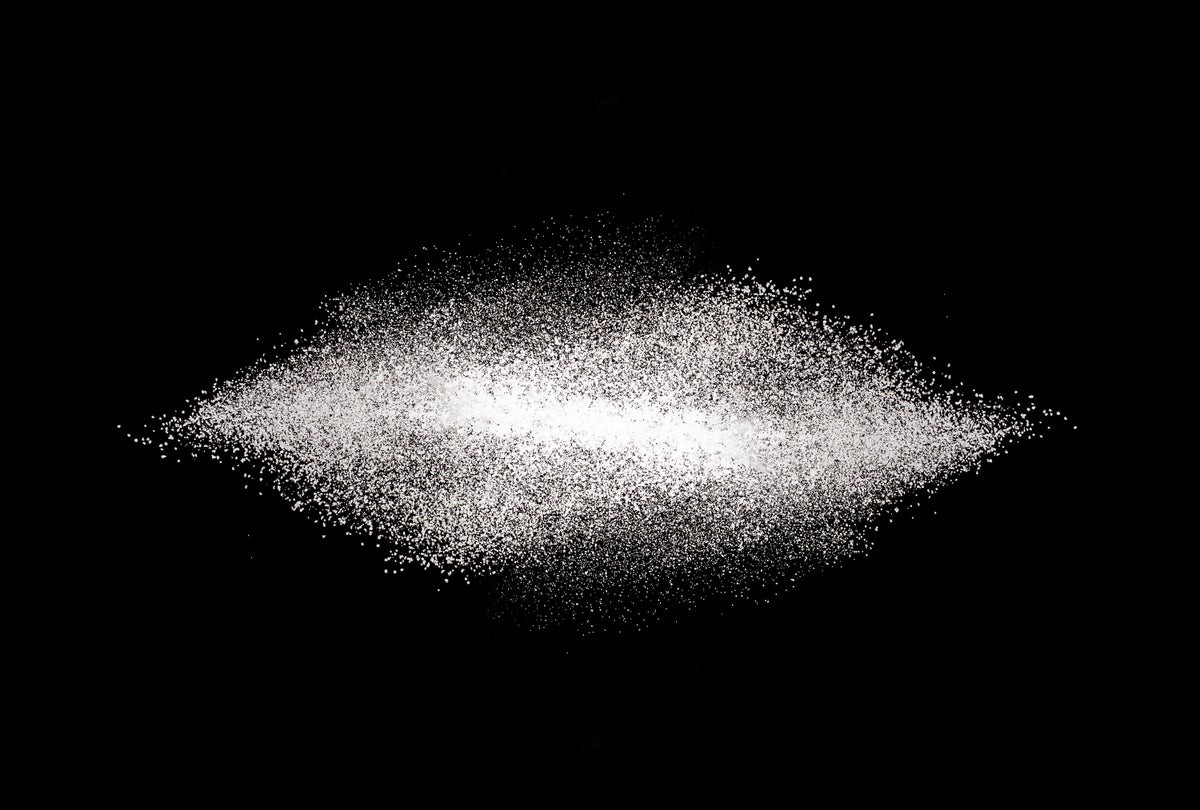
Sugars are tricky to measure. They’re syrupy. They burn before you can read their patterns. Researchers figured out a trick recently. They mixed sugar with talcum powder. Turned it into a solid. Laser vaporized it. Got the diagnostic print.
Then Jiménez-Serra’s team looked at their data. They found erythrulose everywhere. Four carbon atoms. But they found almost nothing else. No three-carbon sugars.
That breaks the old rule.
The old idea said sugars grew one carbon at a time. Like beads on a string. The new data says no. Two smaller molecules met in the middle. Glycolaldehyde. Ethylene glycol. Each had two carbons. They snapped together to make erythrulose.
The team is chasing bigger sugars now. Testing how the stuff handles UV light. Because eventually the star turns on. And the light gets there.
Whether this sugar survives to land on a planet? Or if it’s just floating there waiting for a crash we haven’t seen yet. Nobody knows.