Adam Hartstone-Rose knew better than to expect much from a solar eclipse. Or at least, that’s what he told himself in 2017. He was a biologist then, based at the University of South Carolina, standing in the path of totality. He’d been tasked with watching how the local zoo’s residents handled the moon swallowing the sun. His hypothesis was dry, logical, and completely wrong. The eclipse lasted minutes. That’s not enough time for deep behavioral shifts, right? Maybe a passing cloud would cause more drama.
It turns out that’s not how nature works.
“It was amazing,” Hartstone-Rose admits now. The behaviors he documented were not subtle. Baboons clumped together. Flamingos circled their young like protective shields. Giraffes bolted. A Komodo dragon ran erratic laps in its enclosure. Siamangs (gibbons) let out weird, atypical barks. And perhaps the most baffling observation of all: a pair of Galapagos tortoises started mating on the spot.
If you’ve ever wondered why animal behavior during a solar eclipse seems so chaotic, you’re not alone. These anomalies weren’t just random glitches in the biological matrix. They pointed to something else entirely.
The Human Variable
The 2020 paper Hartstone-Rose co-authored didn’t just list these oddities; it highlighted a critical variable the science community often overlooked. The zoo was packed.
Thousands of humans had gathered to stare at the sky. We clapped. We gasped. We lay on the ground. We behaved, frankly, like jerks.
The animals weren’t just reacting to the dark. They were reacting to the panic, the excitement, the sheer volume of strange, loud mammals invading their space. “The animals that do the strangest things during an eclipse, by far, are people,” Hartstone-Rose says.
This human element explains why the 2024 eclipse data looked so different.
Canadian researchers studied zoo animals during the 2024 total eclipse. But there was a catch: the zoos were closed. No crowds. No screaming tourists. The result? Minimal chaos. Japanese macaques climbed higher, sure. Zebras showed some stress. But for the most part, the animals did nothing. Little to no response.
Compare that to Hartstone-Rose’s 2024 field test at the Fort Worth Zoo. Smaller crowds. Subdued reactions. Then, the Dallas Zoo. Huge event. Massive crowds. Much stronger reactions.
It’s a clear correlation. Animals perceive us as acutely as we perceive them. If you act crazy, they act crazy. If you stay quiet, they stay put.
Biological Clocks vs. Social Stress
Not all eclipse behaviors are caused by human noise. Some are rooted in hard-wired biology.
In 2025, researchers published a massive study in Science. They analyzed nearly 100,00 bird calls from the 2024 eclipse. Half of the recorded species started singing their dawn chorus as the sky brightened post-eclipse. It’s a glitch in their internal clocks. The sun dips, the light fades, then returns. The birds assume it’s dawn. They sing.
Insects do the same. Fireflies flash. Orb-weaving spiders tighten their webs. They treat the brief darkness as twilight.
These responses are predictable. But the stress-induced behaviors—like the Galapagos tortoises having sex or the giraffes running—are harder to pin down without context. Without the context of the crowd, those events might have been far less frequent.
The Funding Problem
Why don’t we know more about this? Because eclipses are nightmares for experimental design.
They rarely hit the same spot twice in a human lifetime. The interval between total eclipses at any given location averages around 366 years. You can’t replicate an eclipse experiment. You can’t run a control group. This lack of repeatability makes it nearly impossible to secure grant money.
Hartstone-Rose is skipping this August’s eclipse partly for this reason. Poor viewing conditions. No funds. Just the practical realities of being a scientist.
Citizen Science Awe
Despite the logistical headaches, the public is hungry for this data.
In 2024, hundreds of community scientists joined Hartstone-Rose’s project. They logged animal behaviors across the board—from pets to farm animals to wildlife. The researchers didn’t just track the animals. They tracked the people.
People living closer to the path of totality reported stronger feelings of awe. But here’s the mind-blowing part: those who observed changes in animal behavior felt significantly more awe. They felt more inspired. They felt a stronger sense of belonging in the scientific community.
They contributed to science. Real science.
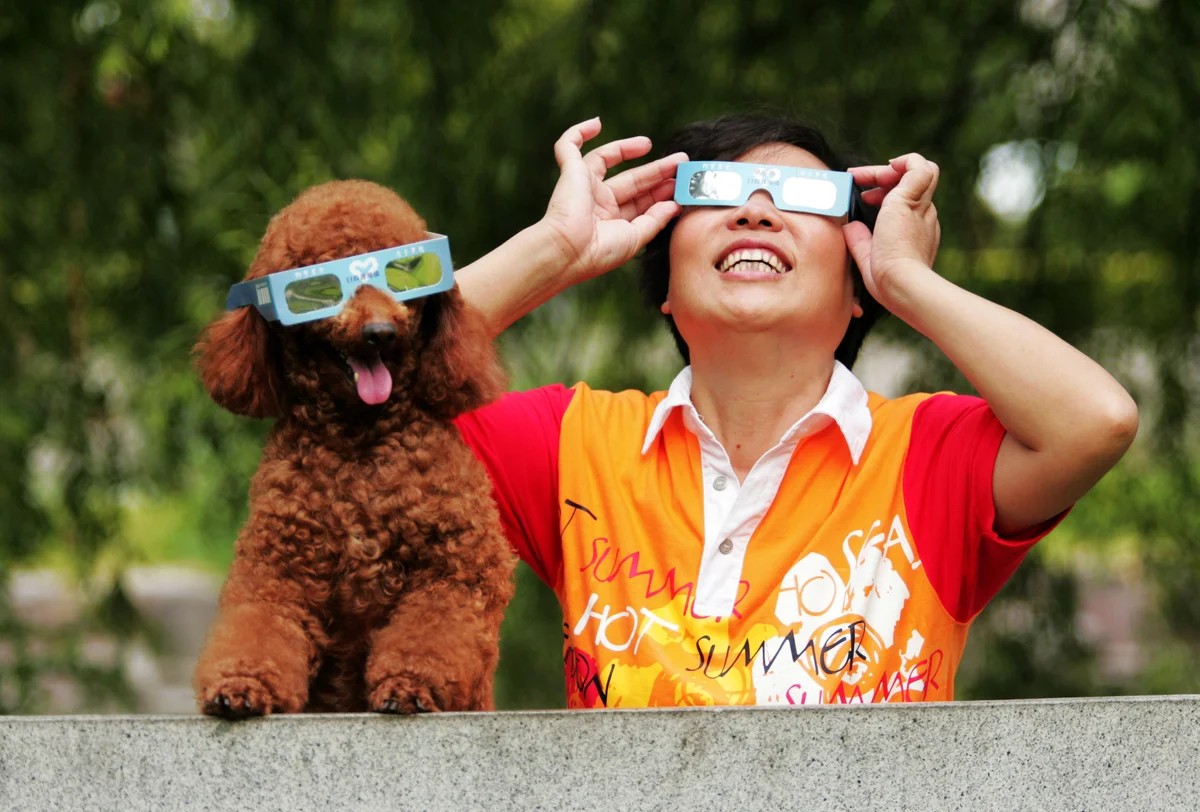
If you’re planning to watch the next eclipse, don’t just look up. Look down. Pay attention to your environment. If you and everyone around you are shouting in excitement, the animals will pick up on that energy. They might get stressed. They might act weird.
Are they reacting to the cosmos? Maybe.
Or are they just reacting to us? Probably.
Hartstone-Rose isn’t interested in cold data alone. He wants people to care about nature. This eclipse experience is a hook. It’s a cool entryway into being part of the world. So if you’re out there, watching the sky go dark, take a breath. Watch the birds. Watch the people.
And remember: the weirdest thing happening might just be you.