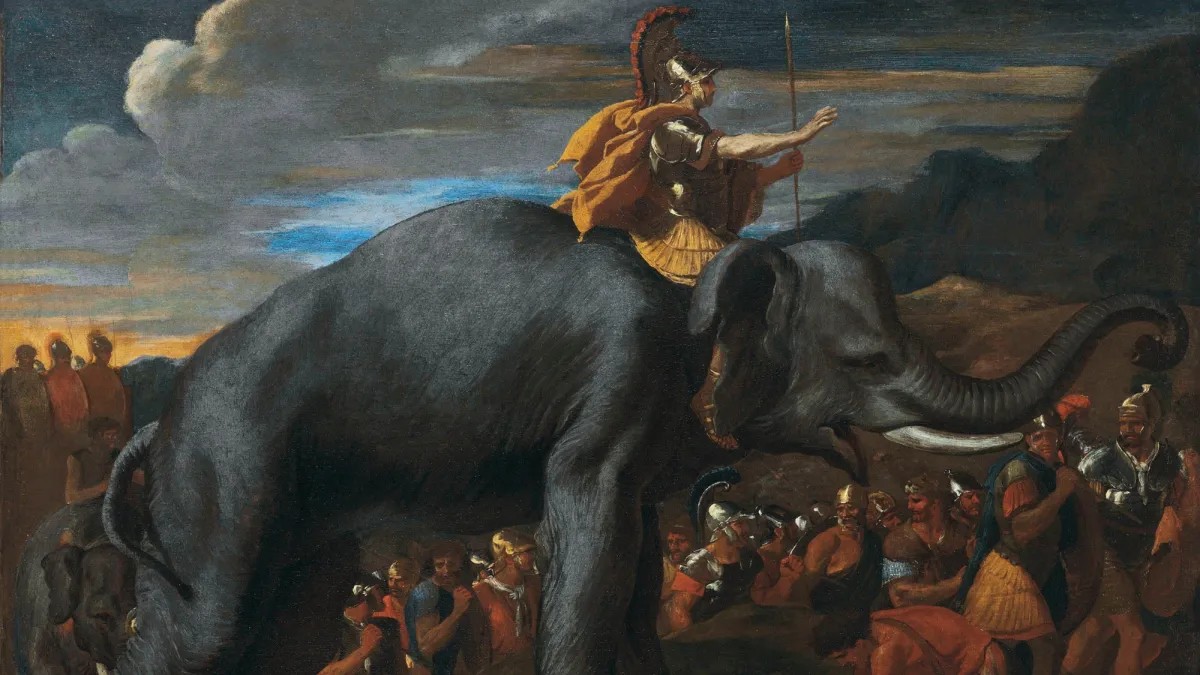
History loves a good tragedy. Hannibal crossing the Alps is one.
It was 218 BCE. He brought thirty-seven war elephants with him. Maybe thirty-eight, nobody is quite sure. He wanted to invade Italy. The Roman Republic didn’t take kindly to visitors from Carthage. Especially ones with giant, angry mammals trudging through snow.
For centuries we argued over the route. Which pass? The Col du Clapier? The Col de Mont Cenis? Scholars have been stuck on this for millennia. They read ancient texts from Polybius and Livy, men who wrote the accounts years—sometimes centuries—after the fact. There is no physical proof left in the ground. No elephant footprints preserved in ice. Just names of places like Skaras and Allobroges that historians try to match to modern maps.
A new study changes the odds. Or at least, it tilts them heavily.
“The question of Hannibal’s exact route have been debated for generations.” — Dr. Emilio Berti
It’s published in PNAS today. A team from Oxford and two German universities looked at the energy costs. Not just for soldiers, but for the beasts. They used elevation data. They used models of modern African elephants to estimate calorie burn. They wanted to know: which route saved the most energy for forty thousand men, seven thousand horses, and those elephants?
The answer points to the Col de la Traversette.
It’s high up. Nine thousand, six hundred sixty-nine feet. Sit right on the border between Italy andFrance. It isn’t easy. It is brutal. But compared to other options? It was the best brutal option.
Why does it matter? Because Livy wrote Hannibal made the crossing in sixteen days. That sounds fast. It was. But the campaign cost him dearly. He lost roughly twenty thousand men. Carthage eventually lost the war too. Rome squeezed them out of the Mediterranean.
We used to think he took the Col du Clapier. It’s lower. Eight thousand feet. But the math says no. Traveling via Montgenèvre would’ve cost eleven percent more energy. Clapier needed sixteen percent more. Mont Cenis required nineteen percent more. Traversette wins by default. It was the shortest. The most efficient.
Think about that.
If they took the Traversette pass, the soldiers lost nineteen percent of their body fat. Just walking up and over those mountains. No wonder so many died later. Starvation is a silent killer. Exhaustion makes you drop your shield.
Here is the weird part. The elephants fared better.
The models show the giants lost only four percent of their fat. Four. They were walking on a much larger reserve. It explains why so many of them survived. We always picture them falling, slipping, freezing to death. Maybe not. They were actually fine. Relatively speaking.
So why bring them anyway?
Was it shock value? To terrify Roman infantry who had never seen a beast that big? Or did Hannibal hope the Celts of northern Italy would see the elephants and decide to join his cause? Maybe he thought the wonder would be enough currency to buy recruits. We don’t know. He doesn’t get a word in. Only the winners write history. Or the people hired by the winners.
The new analysis doesn’t solve everything. There is still ambiguity. Maps from 200 BCE look different than Google Earth. Place names shift. But the energy cost argument is hard to argue with. Biology doesn’t lie. Fat stores run out. Muscles fail.
Hannibal chose a path that saved calories. He traded terrain difficulty for energy efficiency. A gamble.
It didn’t save Carthage. But it got his army over the mountains. For now, until some new archaeological discovery shakes us all apart, Traversette is the winner.
Was it the smartest move in history? Or just the only one that left them standing?
Probably a mix.