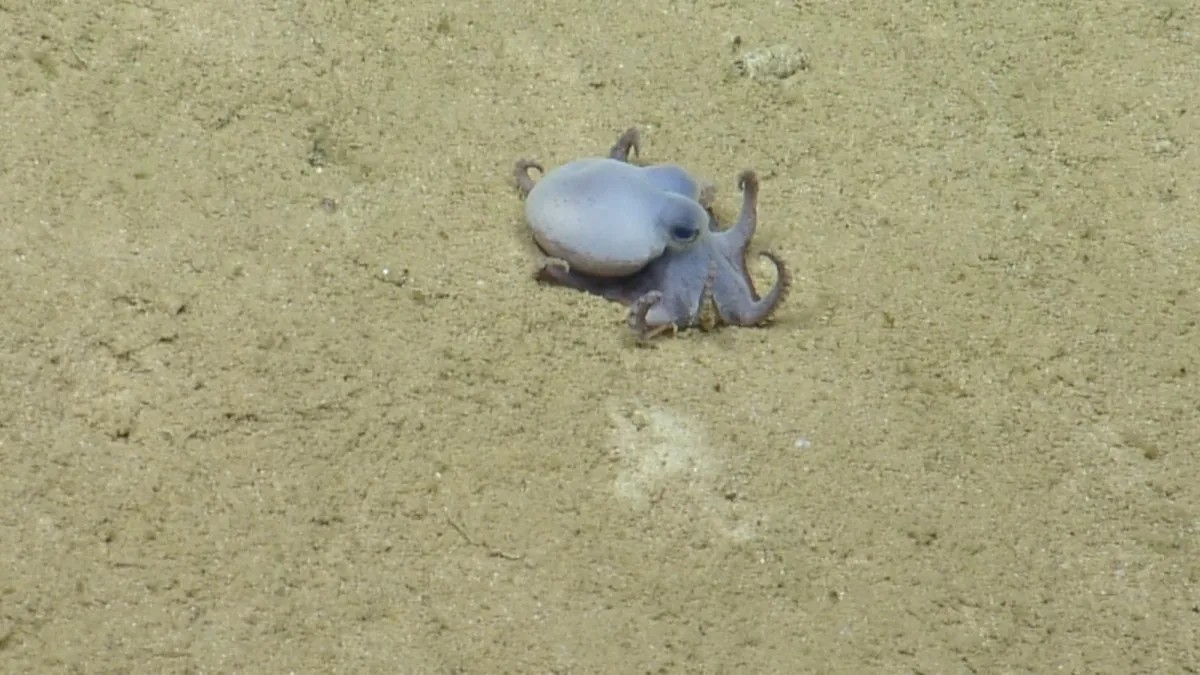
A new species of octopus. Small. Golf-ball sized. Bright blue. You can fit it in your hand. But don’t get excited. You won’t be meeting one anytime soon. Unless you have a submarine and a plane ticket to the Galápagus. Then maybe.
Marine biologists found this little thing in 2015 while working aboard the R/V Nautilus. They were driving a remote vehicle near Darwin Island at nearly 5,800 feet deep. The water was dark, but this octopus popped. Microledone galapagensis —that’s its name now, appearing in today’s issue of Zootaxa. It glowed against the seabed. So blue. One researcher actually laughed on the audio feed.
“Is that a cute little guy, or whatever?”
They grabbed a sample. Two others passed by later. Just three. That was it.
Here is the problem with new species. To name one, you usually have to dissect it. Open it up. Look inside. But you lose the outside in the process. And this was the only specimen they had. A single, precious example of a creature that had never been seen.
They couldn’t sacrifice it. Not yet.
So they turned to tech. Stephanie Smith, who runs the CT lab at the Field Museum, helped them scan the octopus. They took thousands of X-ray slices and stacked them into a 3D model Microledone was never broken open, but we could see right through it. Non-destructive. Vital? No, just smart.
“I get the privilege of virtually opening these rare, beautiful things,” Smith said.
Janet Voight, an octopus expert who has worked for forty years, looked at the scan. She hadn’t seen anything like it before. Microledone became her first official species description in four decades.
“I just feel lucky I got to work with something nobody on Earth has seen,” Voight said.
It took years. A lot of work. But for Salome Buglass of UCLA, the wait was fine. He’d send the specimen to Janet again.
Knowing the ocean gets better, even in tiny blue increments.
🌊