Neanderthals ruled Eurasia for 300,000 long years. Then modern humans showed up. After just a few thousand years, the robust cousins vanished.
Science has a story for that. It’s the one about superior intelligence. Homo sapiens outcompeted them. Better minds won the day.
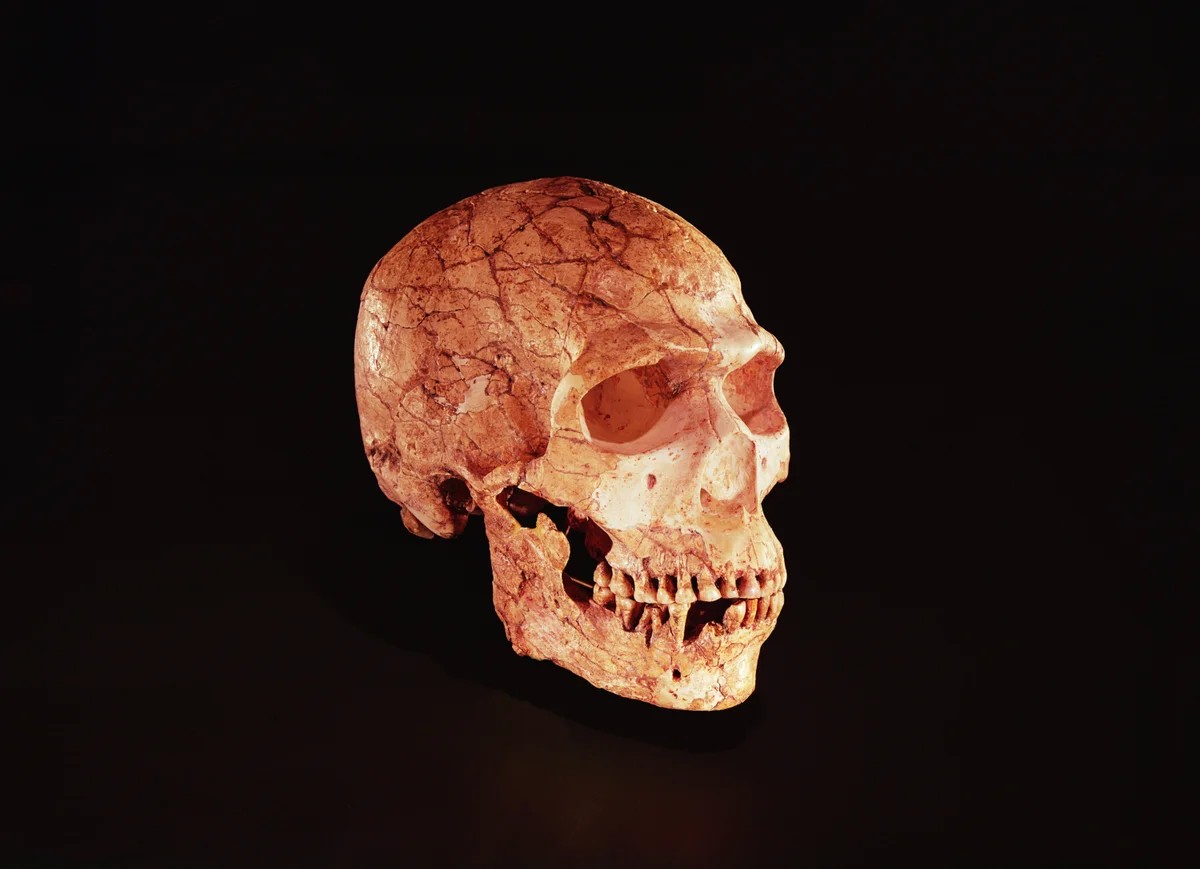
For decades, researchers looked at Neanderthal skulls. They tried to map the inner curves. Their conclusions were harsh. They claimed small brain regions linked to language and memory. The verdict? Feeble linguistic ability. Poor executive function. A mind that just didn’t stack up against us.
It sounds definitive. It also might be wrong.
A new paper in the Proceedings of the National Academy of Sciences flips the script. Tom Schoenemann, anthropologist at Indiana University Bloomington, doesn’t see a cognitive gap. Not really.
Deformation mapping reveals surprising similarities
How do you measure a brain you can’t hold? You can’t ask a Neanderthal to take a scan. Dead tissue shrinks. Bones warp. So you have to get creative.
The new study uses deformation mapping. It creates digital reconstructions of the skull’s inner surface. From that shape, you infer the volume of specific brain regions.
“Possibly the best we’ll get,” Schoenette says. Unless you find a preserved brain in permafrost. That’s not happening soon.
The method has limits. It’s not perfect. But it’s provisional. And the results point to one thing: a modest gap, at best.
“ I don’t think we would detect a difference,” Schoenemann argues. “I think they would fit comfortably with the range of cognitive functioning we see today.”
Who has the bigger brain regions?
To make this stick, the team needed data. They compared Neanderthals against living people. Specifically, they looked at Han Chinese and European descendants. Why those groups? To check for variation in modern humans.
The result? Striking.
In several brain regions, the variation between modern populations was actually larger than the gap between Neanderthals and us.
Think about that. The diversity within our species swamps the difference between us and our extinct relatives. Neuroanatomically, Neanderthals fit right in.
Bigger volume doesn’t equal smarter. The link is faint. We assumed a larger prefrontal cortex meant better planning. Or better social control. But the data doesn’t back that up hard. It suggests an intelligence spectrum. One that Neanderthals shared with H. sapiens.
Why did they really disappear?
This isn’t the first time deformation mapping hit this topic. A 2018 study claimed Neanderthals had smaller cerebellums. The cerebellum matters. It handles language, memory, motor skills. Back then, authors argued this gave humans an edge.
Schoenemann disagrees. Or at least, he questions the logic.
If a smaller cerebellum was evolutionarily decisive for Neanderthals, what do we say about differences between today’s human populations? Are we saying one group is inherently superior because of slight anatomical variance?
“Not supported by the vast majority of recent research,” Schoenemann notes.
He suspects the truth is messier. Not outsmarting. Merging. Interbreeding.
Genetic swamping.
When a small population mixes with a much larger one, the genes get diluted. The distinctiveness fades. Not because they were stupid. Because they were outnumbered and integrated.
Naomichi Ogihara from the University of Tokyo sees it differently. He co-authored the 2018 paper. He agrees about the mixing. But he won’t drop the intelligence argument entirely.
“A minuscule average difference,” Ogihara says, “could have evolutionary significance over many generations.”
Small edge. Repeated over millennia. It adds up.
But is that intelligence? Or just culture? Technology? Social cohesion?
We don’t have the Neanderthal answer. We have bones. We have stone tools. We have DNA. And we have a persistent need to feel like the smartest ones in the room.
Maybe they weren’t dumb. Maybe they just didn’t survive the numbers game. Or maybe the gap was never as wide as we liked to imagine.
The skull doesn’t speak. The mapping suggests they were close. Closer than we wanted to believe.
That’s a hard pill for the supremacy narrative to swallow.