The scramble begins
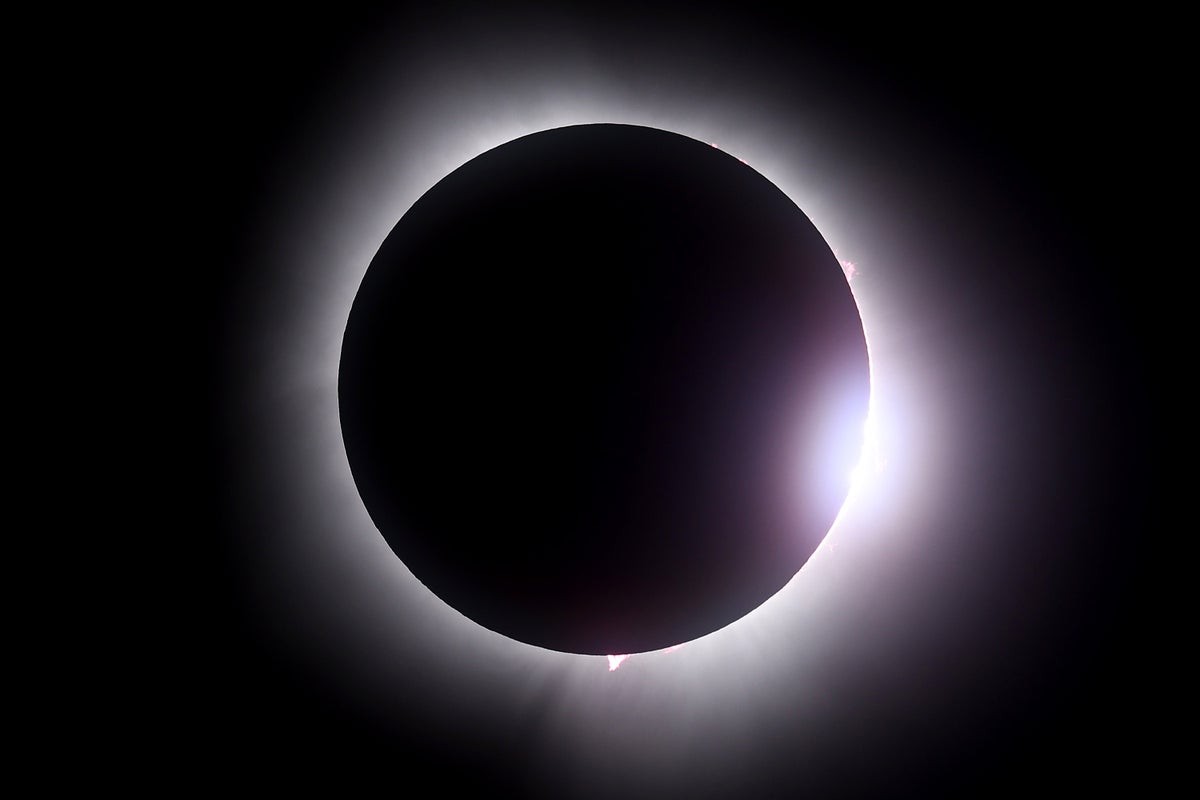
August 12. The sky goes dark for 2 minutes and 18 seconds. At the very least. A swath of the planet—from Greenland to Iceland to northern Spain—holds its breath.
Scientists do not wait for the show. They scramble.
Total solar eclipses are brief. They are rare. They are the only time you can see the sun’s outer layer without burning out your equipment or your eyes. And everyone wants a piece of that data. Heliophysics. Radiation levels. Gravity waves. Even Einstein.
Riding the shadow
NASA isn’t taking chances with clouds. Or time.
Three WB-57 high-altitude jets will cruise over Iceland. These things hit 470 mph. Too slow to outrun the shadow, but fast enough to stay ahead of the ground rush. They fly at 50,00 feet. Way above the water vapor. Way above the noise.
Amir Caspi, a solar physicist, calls it a rare opportunity. He’s not wrong. The sun’s surface is a million times brighter than its corona in visible light. A billion times brighter in others. An eclipse blocks the noise.
“The surface of the sun… is a million times bright,” Caspi notes. “An eclipse gives you that opportunity by blking out something that’s a billion times brigther.”
The jets carry cameras. Visible. Near-infrared. Mid-infrared. They’re chasing the fiery halo. The corona.
Balloons and ripples
While NASA flies high, others float.
The Nationwide Eclipse Ballooning Project launches 80 balloons. Students. From across the US. They target both Spain and Iceland. Over 30 hours, the sky fills with these delicate things.
Angela Des Jardins runs the show from Montana State University. She isn’t looking at the sun. She’s looking at the air below it.
Atmospheric gravity waves. Ripples of sinking air. Undulating clouds. Turbulence. These happen all the time. Storms. Day-night temperature shifts. Even mountains push the air around.
But eclipses? That’s different.
The shadow is cold. Dark. Since the 1970, theorists have suspected it creates special gravity waves. Waves that travel up. Into the stratosphere.
Des Jardins saw evidence of this during the 204 eclipse. Now she wants to know where they start. In the troposphere. It could mean better climate models. A better understanding of pollution. Maybe just a cleaner sky.
“They even come from physical likes like mountain ranges…”
Particles and perspective
Not all balloons carry engineering experiments. Some carry physics questions.
The Spanish Federation of Astronomical associations sends 16 balloons nearly 2 miles up. They pack Geiger counters. Magnetometers. Muon counters.
Muons are tiny. Short-lived. Born from high-energy rays hitting the air. The question? Does a total eclipse change the cosmic radiation hitting Earth?
“We don’t know,” says secretary Alex Mendiolagoita. He’s open-minded. They’ll have the data before they have the answers.
He cares less about the radiation, though, and more about the view. A total eclipse is exciting. Nature’s greatest gift. It’s had spiritual meaning for millennia. His balloons will have video cameras. For everyone to see.
Replaying 191
Then there is the history lesson.
Matthias Harksen is a Ph.D. student. He works at the University of iceland. He plans to repeat an experiment from 1919. The Eddington Experiment.
Arthur Eddington, a British astronomer, wanted to prove Einstein right. Einstein said massive objects bend space-time. Newton said gravity pulls light, but the math was different. Eddington knew he needed a solar eclipse. Only then can you see the stars near the sun during the day.
Eddington went to Príncipe. Others went to Sobral, Brazil. They took pictures. Compared the stars’ positions. Einstein won.
Space-time bends.
Harksen has better tech than 1919 had. He doesn’t expect new physics.
“The purpose of his is basically just to tell ple ‘Hey, y can actually do what is probaby the most famos expeient in human histor.”
It’s about participation. About proving you don’t need a degree to touch history.
The eclipse happens on schedule. The data pours in. The shadows fade.