China just changed the rules of spaceflight.
It wasn’t a landing on legs. It wasn’t a gentle descent onto a flat concrete pad.
It was a net.
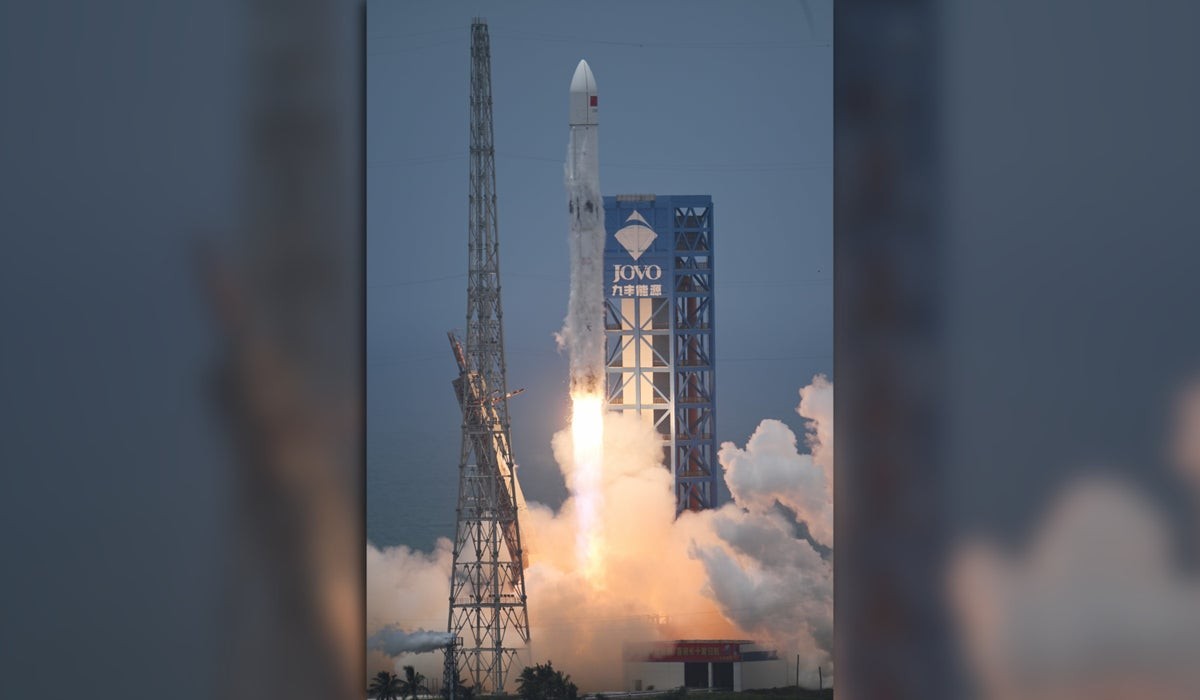
On July 10, at 12:15 A.M. EDT, the Long March 10B rocket launched from the Wenchang Commercial Space LaunchSite in Hainan. About eleven minutes later, the first stage didn’t just come down. It came home.
The booster fired its engines, controlled its fall, and hooked onto a sea-based recovery platform using four lightweight landing hooks. It is the world’s first net-based recovery of a launch vehicle.
This places China in a rare tier. Alongside SpaceX and Blue Origin, they are one of the only entities on Earth to develop and operationalize reusable rocketry. But here is the kicker.
No Western competitor has ever achieved a flawless first-stage recovery on a maiden flight.
“This mission marks our country’s first successful controlled recovery… and the world’s first [net]-based recovery.” — CASC
Why the Net Method Matters for Rocket Reusability
Most reusable rockets, like SpaceX’s Falcon 9, land vertically on retractable legs. It works. It’s reliable. But it’s heavy. Those legs are dead weight you have to carry up to orbit before jettisoning or deploying them.
The Long March 10B skips the legs entirely.
At 63 meters tall with a five-meter-wide payload fairning, the rocket looks vaguely similar to the Falcon 9. But where Falcon 9 uses a ladder-like landing gear system, the Long March 10 relies on the catching net. This makes the first stage lighter. Simpler, maybe.
Why does this distinction matter?
If you want to launch satellite megaconstellations cheaply, you need high flight rates. Heavier boosters mean less payload capacity. Less capacity means more launches to do the same job. The net approach suggests China is prioritizing efficiency over the brute-force landing style that became the industry standard in the West.
China Aerospace Science and Technology Corporation (C ASC) confirmed they plan to fly this same booster again later this year.
They aren’t waiting years to see if the metal holds up.
Long March 10B Specs and Payload Capability
Let’s look at the hard numbers, because they tell you where the strategy is heading.
- Height: 63 meters
- Fairing Width: 5 meters
- LEO Payload Capacity: 16,000 kg
The Long March 10B is a commercial variant of the Long March 10A. The 10A was built for humans—specifically for ferrying crew and cargo to China’s Tiangong space station. The parent vehicle, the Long March 1o, is designed to carry Chinese astronauts to the Moon by 2030.
But the B version? That’s for the satellites.
Think Starlink. SpaceX’s system passed 10,000 inactive spacecraft earlier this year. China wants to do the same thing. The Long March 10B is the engine for that ambition.
How does it compare to the competition?
- SpaceX Falcon 9: Taller (70m). Uses legs. Highly mature reusability.
- Blue Origin New Glenn: Larger fairing (7m). Legged landing. Not yet fully operational for reuse at scale.
- China Long March 10B: Shorter. No legs. Net recovery. First launch, immediate recovery.
Is the net system as robust as legged landings after thousands of cycles?
We don’t know yet. One success isn’t a track record.
What Comes After the Maiden Flight
The launch was a milestone for state-backed aerospace technology, but it is also a direct challenge to Western commercial dominance.
For years, reusability was seen as the “SpaceX moat.” You could launch, catch the rocket, burn it, and launch again faster and cheaper than anyone else. That gap was widening.
China just closed part of it.
The successful recovery on the maiden flight implies a level of engineering maturity that surprised observers. Most companies fly a test rocket to make sure the engine doesn’t explode, then another to see if the software talks to the hardware correctly. China combined them.
Does this mean they will dominate low-Earth orbit logistics soon?
Not overnight. The ecosystem requires more than just one caught booster. It requires a cadence of flights. The ability to refurbish the caught stage quickly. The political will to flood orbit with commercial assets.
CASC says this lays a solid foundation.
Foundations are boring until they hold up a skyscraper. Or a fleet of 10,001 satellites.
The sea-based platform waited in Hainan’s waters. The rocket hit the net. The engines cut off.
The real test is what happens when they light them again.