We bought them. All of them.
For the last decade, US K-12 districts went full-speed with one-to-one devices. The logic was sound, really. You hand a kid a laptop, they can browse the web. They can write a paper. Digital literacy gets a floor, a baseline of access that didn’t exist before.
But floors are not ceilings.
Now the STEM programs are getting older, sharper, hungrier. We are talking about robotics. Cybersecurity. Data science. Engineering.
These fields don’t run on browser tabs.
They demand heavy lifting. Real software. The kind of stuff that makes a $300 Chromebook wheeze.
The Crunch Point
Web-based apps? Great for intro classes. Fine for daily homework. But you want to teach 3D modeling or actual engineering design? You need local power.
Think about SolidWorks.
It is a professional CAD platform. Universities use it. Industries rely on it. When a student builds a multi-part model, the hardware has to render it. It has to run stress tests. If the device isn’t strong enough, the screen freezes. The software lags. Then it crashes.
Classroom flow? Gone.
Insufficient hardware turns teaching into waiting.
This is the problem for tech directors. They bought devices for word processing and PDF viewing. Now the curriculum has shifted. The tools required have shifted.
The hardware didn’t.
Real Steel, Real Speed
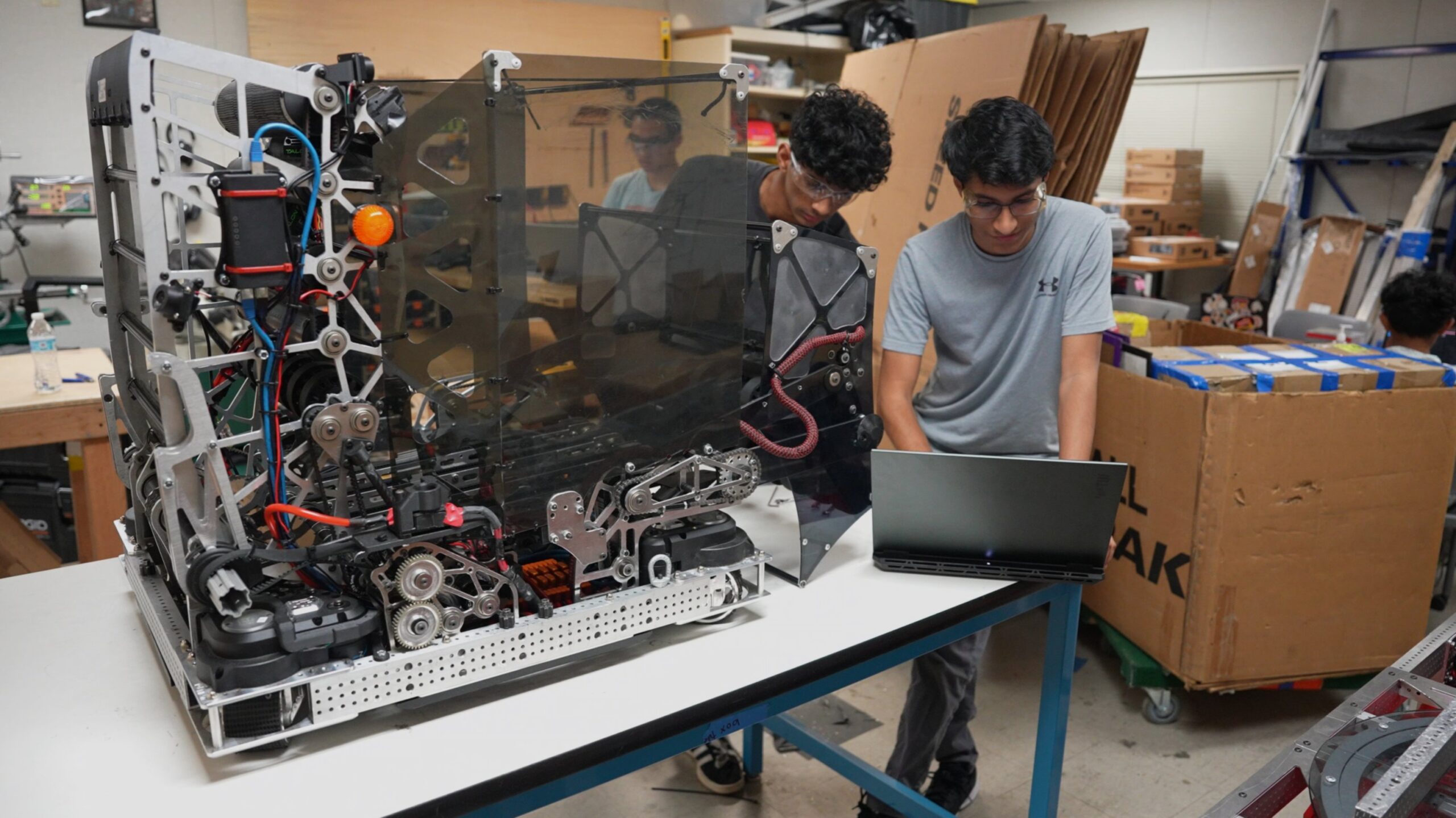
Let’s look at Fremont High in Sunnyvale. The Firebots.
They compete in FIRST Robotics. This isn’t a coding tutorial where you move a character left or right. They build large, complex machines under strict timelines. It is real engineering work.
Mechanical design. Electrical systems. Fabrication. Software dev.
You can’t do this on a netbook. You need a workstation. The Firebots use ASUS TUF Gaming laptops. Why? Because the computer is the workbench.
Students use them for everything:
- CAD modeling
- Code compilation
- Data logging
- Documentation
- Subteam coordination
When the laptop stutters, the project stops.
When the software runs clean, the students stop fixing the tool and start fixing the robot. They spend class time iterating ideas, not staring at loading bars.
It worked. They won the FIRST Excellence in Engineering Award. For design. For system integration. Not for patience while software buffered.
So, What Now?
The one-to-one model is still king for the basics. Keep the iPads. Keep the Chromebooks.
But they have limits.
Districts are figuring this out. Some set up labs with high-power towers. Some stream software from the cloud when possible. Others just admit that specialized work needs specialized iron.
It’s not about tearing down the current setup.
It’s about seeing the mismatch. A single hardware standard cannot serve both the English essay and the mechanical stress test.
We used to buy devices for IT. Now we have to buy them for the work.
What happens when we stop trying to force every task through the same digital door?
Maybe the students actually get to build something.