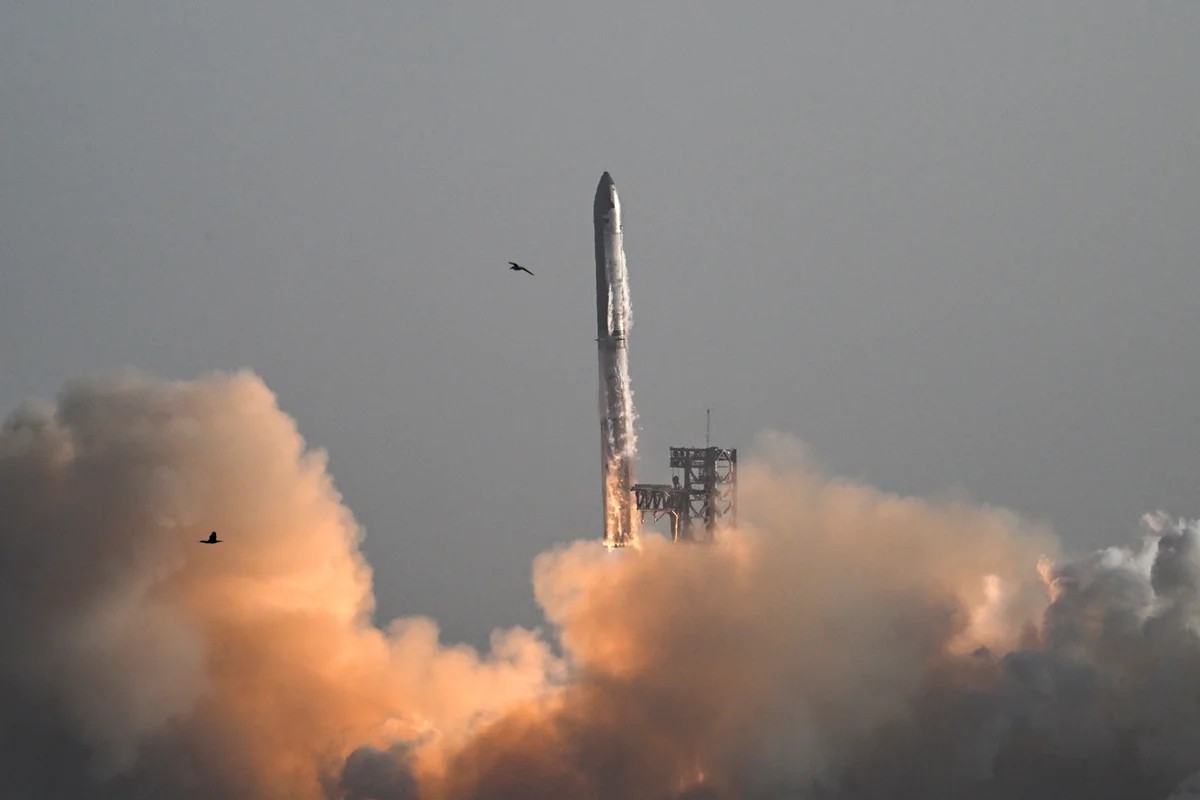
Big news from Starbase tonight. The V3 Starship is going up. It’s the tallest. The most powerful. A new beast entirely.
Liftoff is set for 6:30 P.M. EDT Friday night. Well. If nothing goes wrong. Thursday’s attempt didn’t make it. A hydraulic pin holding a tower arm in place acted up. SpaceX scrubbed just seconds before ignition.
So here we are again. Round twelve of test flights.
“For those who think this is simply another重复 test flight, the engineering changes under rocket hood are substantial,”
Says Joseph Gonzalez, who used to engineer for NASA’s Artemis crew and now teaches aerospace at Illinois Urbana-Champaign. He isn’t just repeating talking points. He means it. The changes are deep. Structural.
V3 stands 408 feet tall. That is over a city block high. It generates 18 million pounds thrust. The new Raptor 3 engines do the heavy lifting here. Designed to carry 100 metric tons into orbit. Reuse is the goal, always the goal, even if the hardware gets toasted each time.
Fins and Thrust
The Super Heavy booster isn’t just taller either. The fins changed. Big change. Four small steering grid fins became three larger reinforced ones positioned lower down. Better control authority. More thermal robustness. Gonzalez notes that almost every aspect of the vehicle’s internal and external design gets stress tested in this single hop.
Watch on the livestream. It starts forty-five minutes before the window opens on May 22nd.
The flight is suborbital. Short but ambitious. The stack launches. Then separation. The Starship heads toward the Indian Ocean splashdown while the booster drops into the Gulf of Mexico. It’s a reusability test. Or rather, a test toward it. Along the ride, the spacecraft drops twenty dummy Starlink sats plus two operational ones. Those working satellites will actually beam back images of Starship’s heat shield during descent. There’s a hope to relight an Raptor engine while in the dark. Just for science. Maybe.
On reentry expect flips. Maneuvers. Then water.
It feels high stakes. Elon Musk’s company might go public in thirty days. Investors are watching closely. NASA wants this rocket for the Moon mission in 2028. Success helps everyone.
“Flights like this continue to push the aerospace industrial forward and provide invaluable lessons…”
Gonzalez points out. Whether the checklist gets checked off fully or not the data matters. The engineers are learning fast.
Then there’s the side show.
Chun Wang wants to ride it. To Mars. A two-year trip just to fly by. He announced his dream during the livestream. The crypto billionaire flew with SpaceX last year on his private Fram2 mission to polar orbit. Now he’s looking further.
No timeline was given for the Mars run. But first there’s the moon.
A follow-on Starship flight will take Wang around the Moon before any interplanetary endeavor. He won’t be alone. Dennis Tito will accompany him. Tito bought tickets back in 2022 alongside his spouse Akito. Pioneers in a very literal sense.
Recall the Dear Moon project? Cancelled when Yusaku Maizawa lost patience. He waited too long for SpaceX to fix things. This time the mood feels different. More urgent perhaps. Or just louder.
Will Wang see the red dot? Or will he stay with the Earth-moon system for now?
Only time tells. And the telemetry data.