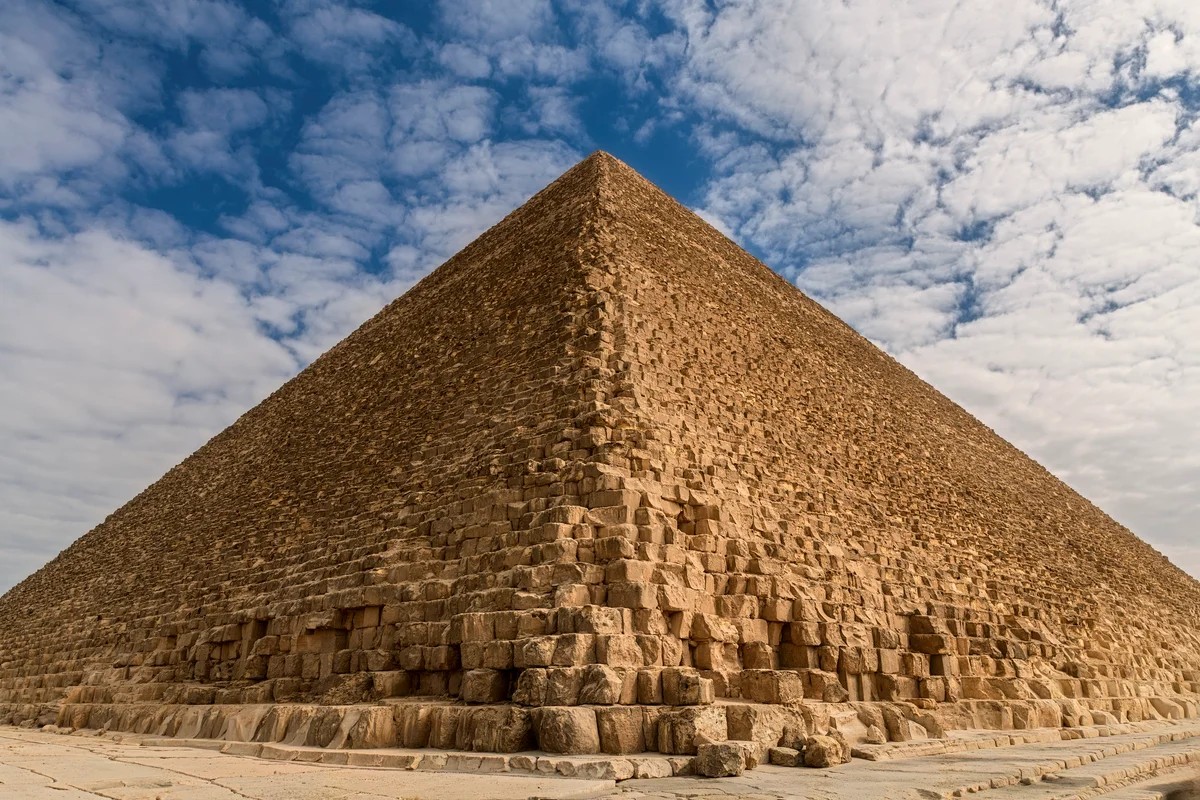
Four thousand six hundred years ago, someone decided to pile massive stones on top of each other. The Khufu Pyramid stands. Still.
It shouldn’t be here. At least not this intact. The ground beneath Giza doesn’t play nice. There was an earthquake in 1847. Another one in 1992. Most buildings crack. This thing just watched them pass. Why?
Until now, we mostly guessed. Scientists didn’t have the data to pin it down. They measured things, sure, but not the inside mechanics of the sway. That changes this week.
A new paper in Scientific Reports lays it out. Led by Mohamed ElGabry from Egypt’s National Research Institute, the team went inside. They took dozens of readings. They were hunting for the “fundamental frequency.”
Think of it like a swing. You’re sitting there, motionless. Pushing hard does little. But if you push at just the right rhythm? The swing goes flying.
Structures are the same. If a building sways at the same speed the ground moves, the earthquake gets amplified. Resonance kills buildings. It shakes the foundation right out of the walls.
ElGabry’s team found something weird about Khufu.
Most of the pyramid hums at about 2.3 Hertz. The ground beneath it? Barely 0.6 Hertz. They don’t match. The pyramid is vibrating way faster than the earth shaking beneath it.
“A similar effect happens in structures… If a structure has the same frequency… that can amplify the effects,” ElGabry explains.
That mismatch saved it. The pyramid refuses to resonate with the quake. It stays rigid relative to the moving floor.
Why?
Inside the stone belly, there are pressure-relieving chambers. Hidden pockets. They seem to tune the structure’s stiffness. Plus, they built on limestone plateau bedrock. Massive stone. Strong as hell.
ElGabry wasn’t surprised. But he was impressed.
Did the ancient builders know physics? No. Please.
“It doesn’t mean they knew, at that time… all the physics we know today.”
They didn’t have seismographs. They didn’t have computers.
Look at the other pyramids, though. The Bent Pyramid in Dahshur actually changes angles halfway up. The Step Pyramid of Djoser? Just stacked rectangles. These guys were experimenting. Trial and error. Brutal trial and error.
They were learning by doing. Adapting. Taking what they had—limestone, gravity, brute force—and figuring out how to make it stay put.
Was it luck? Maybe. Or maybe they just paid closer attention to their materials than we give them credit for. They used what they had wisely. Efficiently.
The pyramid survived. The people who built it didn’t.
We’re still figuring out what they did right.