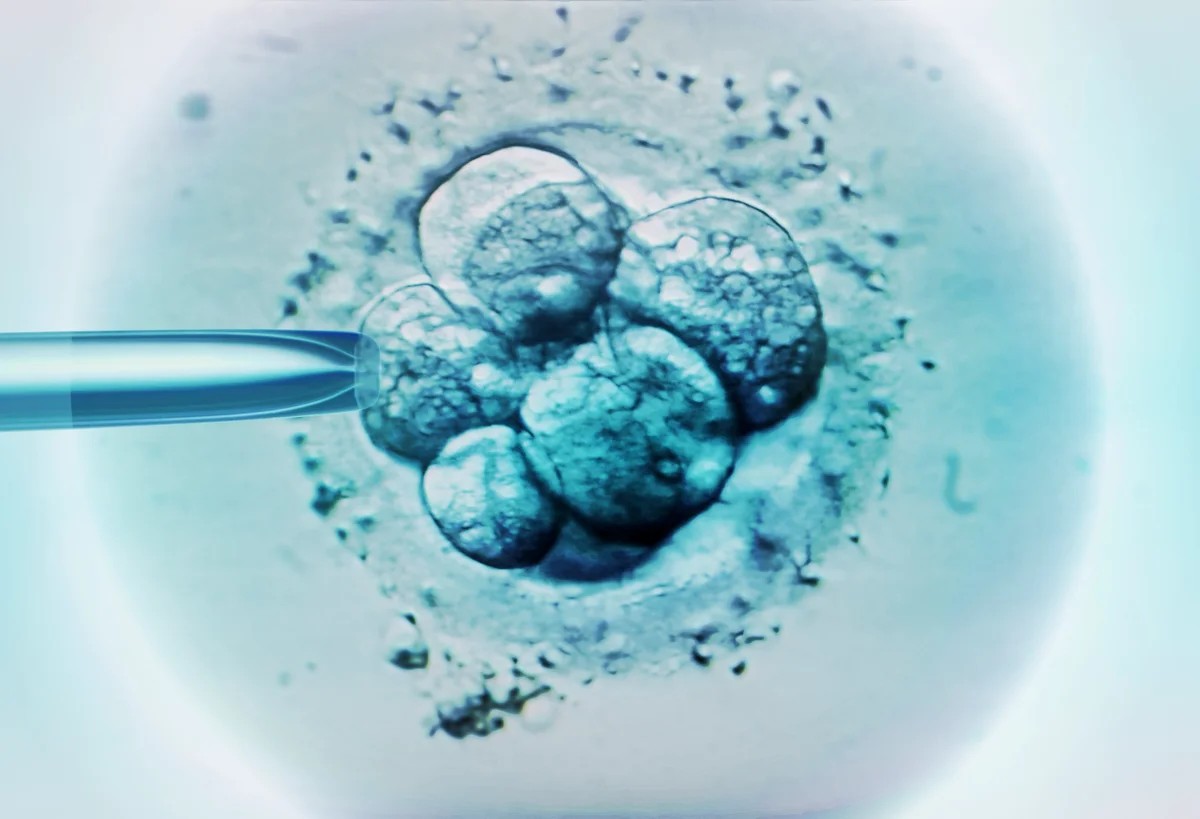
A bunch of artificial human embryos are floating on the Tiangong station.
They aren’t real.
The Chinese Academy of Science calls it the first ever study of these structures in space. We need to get one thing straight immediately. These are stem cells. Just stem cells, shaped to mimic the first few days of actual pregnancy.
Put one in a uterus and nothing happens. No baby.
They exist because international rules block research on real embryos after two weeks. Scientists built a loophole with biology. A model that looks like development but stops before the ethical red line.
“The human artificial embryo is made of man stem cells as raw materials,” Yu Leqian, the project leader, explained. “This is not a real human embryo… However, it can serve for studying early human development.”
The payload launched earlier this month. A control group stays on Earth to play devil’s advocate.
Five days is the window.
That’s the timeline for the onboard samples before they get frozen. Solid frozen, not just chilly. Then the return trip begins.
Yu wants a comparison. Earth samples versus space samples.
“We hope that by comparing the de velopment of space and ground samples… we can iden tify the fac tors af fec ting early hu man em bry on ic growth.”
Long term habitation carries risks. Yu wants to know what breaks first.
Space fertility is a mixed bag of history. Some successes, mostly failures.
In 1994, NASA astronauts mated Japanese rice fish on a shuttle. It worked.
Then things went wrong.
Fruit flies in low earth orbit produced larvae with higher death rates. Mice embryos? Failed to rise. Rats tried mating in 1977. Nothing. No pregnancy.
Then there was 2014.
Geckos.
Russian satellite. Lost contact. Contact returned too late.
The geckos were dead. Before they could reproduce. Before we could know.
So why bother?
Maybe the fake embryos hold answers that dead lizards did not. We might find out why human life falters in weightlessness. Or maybe the data comes back and says the same old thing. Space is hard. Biology is fragile.
The capsules are frozen. The results are pending.
We wait.