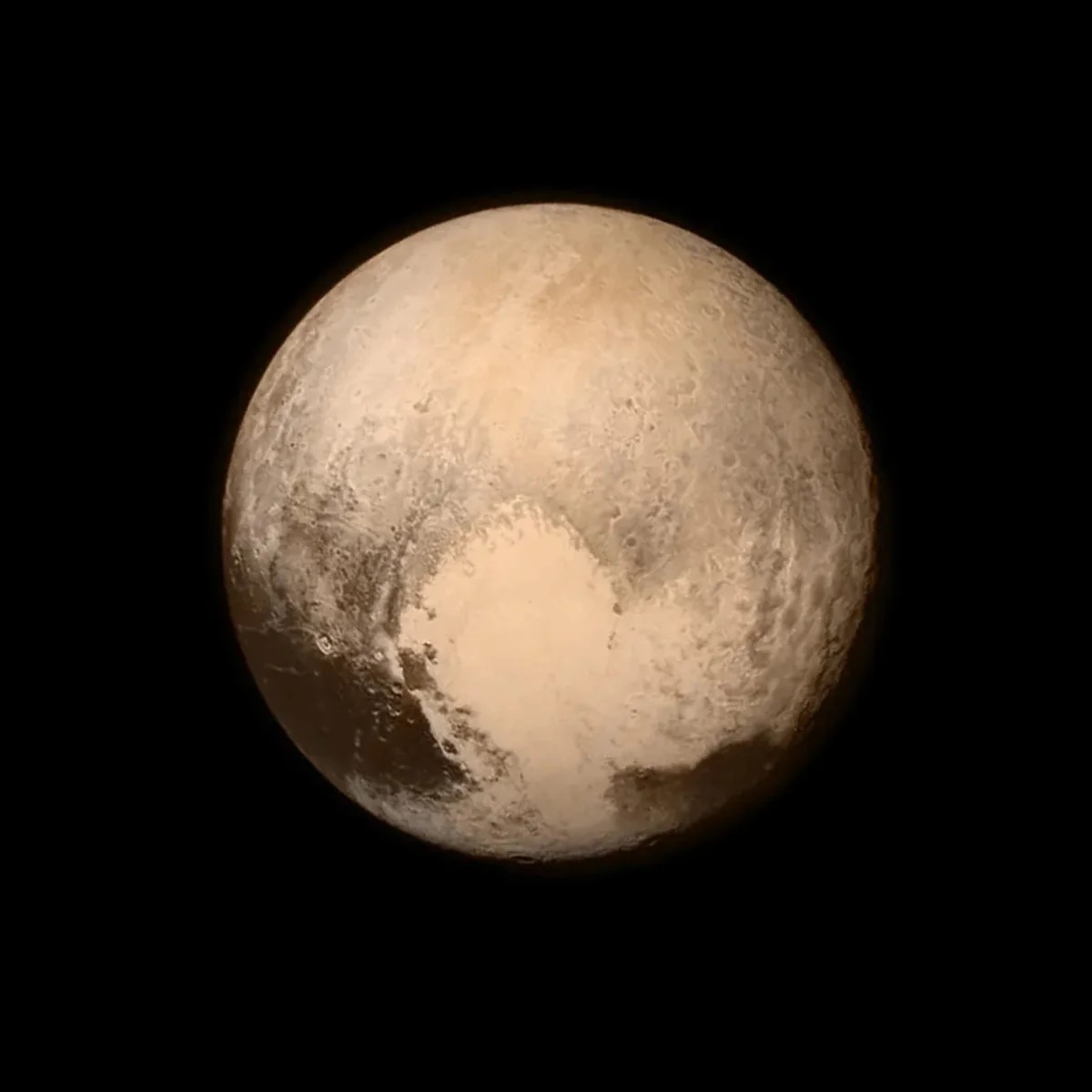
NASA Administrator Jared Isaacman has signaled a renewed interest in revisiting the classification of Pluto, suggesting that the agency is preparing to re-engage the scientific community in the debate over whether the celestial body should once again be recognized as a planet.
The Battle Over Planetary Definition
During a recent Senate committee hearing, Isaacman expressed his support for “making Pluto a planet again.” He revealed that NASA is currently developing scientific papers intended to escalate the discussion through the global astronomical community.
This is not a new debate, but it is a deeply contentious one. To understand why this matters, one must look at the history of how we define our solar system:
- 1930–2006: Pluto was recognized as a planet from its discovery until the early 21st century.
- The 2006 Shift: The International Astronomical Union (IAU)—the governing body for astronomical nomenclature—redefined “planet.” Under these new criteria, a planet must orbit the Sun, be spherical, and have “cleared the neighborhood” around its orbit. Pluto, residing in the crowded Kuiper Belt, failed the third requirement and was downgraded to a dwarf planet.
- The Current Friction: While political figures have occasionally suggested that planetary status could be changed via executive order, such moves lack scientific weight. The IAU remains the ultimate authority on celestial classification; any lasting change must be rooted in scientific consensus rather than political decree.
Accelerating Space Exploration: New Telescopes and Mars Missions
Beyond the Pluto debate, Isaacman provided updates on several high-stakes NASA initiatives that aim to expand our understanding of the universe and our ability to travel through it.
The Nancy Grace Roman Space Telescope
The upcoming Nancy Grace Roman Space Telescope may arrive sooner than expected. Currently slated for a September launch, Isaacman indicated that the mission could potentially move up to August. This telescope is a critical tool for modern cosmology, designed to:
– Investigate the mysteries of dark energy.
– Discover and analyze exoplanets (planets outside our solar system).
– Serve as a primary tool in the search for habitable worlds.
Nuclear Power for Mars
Looking further ahead, Isaacman reaffirmed NASA’s commitment to the Space Reactor-1 Freedom mission, scheduled for 2028. This mission is a landmark technological leap, as it will serve as the first test of using nuclear fission to power a spacecraft for interplanetary travel—a necessity for the long-duration, high-energy demands of a mission to Mars.
Navigating Budgetary Challenges
Despite the momentum in exploration, Isaacman faced scrutiny regarding the future of NASA’s funding. Specifically, Democratic lawmakers raised concerns about a budget proposal that could see a 46% cut to NASA’s science program.
One major point of contention was the potential elimination of the Office of STEM Engagement, a program vital for fostering the next generation of scientists through grants and fellowships. Isaacman defended the proposed budget shifts by explaining that the core functions of that office—such as internships and university grants—are already integrated into the funding of NASA’s various mission directorates, ensuring that educational support remains intact despite structural changes.
Summary: NASA is preparing to reignite the scientific debate over Pluto’s planetary status while simultaneously accelerating timelines for advanced space telescopes and testing nuclear propulsion for future Mars missions, all while navigating significant potential shifts in science funding.