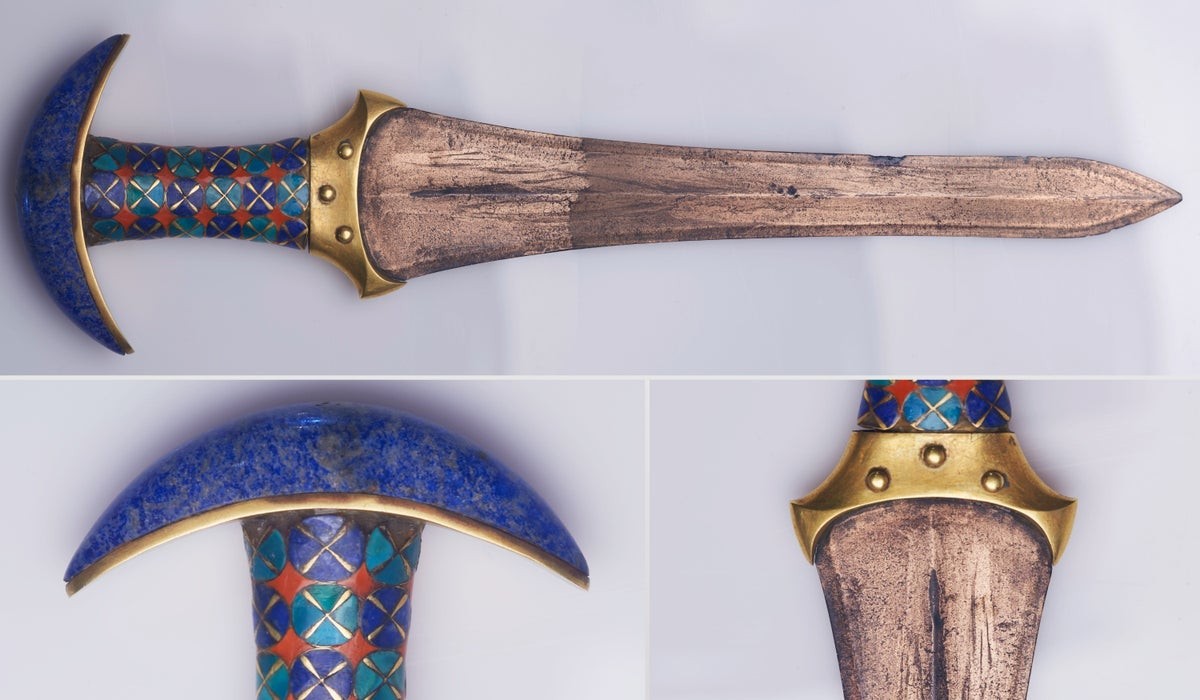
The dagger looks ceremonial. Gold. Lapis lazuli. Beautiful. Found in the tomb of Princess Ita at Dahshur near Cairo. It’s about 4,000 years old, dating back to roughly 1900 BCE.
Historians have always called it a prop. A symbolic gift for the afterlife. Not a weapon.
A new study says otherwise.
Zeinab Hashesh from Beni-Suef University led a re-examination of remains that had been largely ignored for over a century. The goal? To read the bones themselves. To see if the women buried with these shiny objects actually used them.
“The findings challenge the traditional view that elite women were passive and sedentary. They were trained. Powerful.”
It changes the script.
How Bones Reveal Warrior Lives
The story starts in the late 1880s. French archaeologist Jacques de Morgan digs up the site. He looks at King Hor. He looks briefly at Princess Noub-Hotep. But he skips Princess Ita. And her sister Itaweret. And another woman whose name we’ve forgotten.
For 130 years, their remains sit in a box. Then, in 2020 they are found in a basement of the Cairo Museum. Rediscovered. Hashesh calls this second chance “osteobiographies” – life stories told through bone.
She looked at muscle attachment sites. The way bones curve. Chemical traces.
Princess Ita shows signs of habitual gripping. Strong attachment points on hands suggest she held heavy things like daggers or maces. Often. Hard.
Princess Noub-Hotep is clearer. Her hand bones bow uniquely. Hashesh calls it an “archer’s grip”. You only get that curve if you pull a bowstring for a long time.
Itaweret’s body tells a different kind of story. She had major trauma to her ribs and feet. High impact. High risk. Someone who lived dangerously.
Why Skeptics See Symbolism Instead
Sébastien Villotte at the French CNRS thinks we need to slow down. He calls the study interesting but speculates the martial conclusion isn’t solid enough yet.
Arrows found in graves don’t mean the person shot them. Not automatically. Villotte wants more data. Specifically, he suggests comparing these princesses to non-elites from the same period and region. Did they all have bow fingers? Or is it unique to royalty?
“The biomechanical evidence is limited,” Villotte says. “It presents a single interpretation without critical reassessment.”
Fair enough.
But Hashesh pushes back. The skepticism, she argues, stems from a “long-standing tradition.” That tradition assumed weapons in female tombs were just votes for the afterlife. Symbolic.
It relied on old gender stereotypes. The idea that women weren’t warriors.
That view is changing. Or maybe it finally caught up with the bones.
The court was disciplined. These women weren’t sitting on thrones waiting for rescue. They handled metal. They drew strings.
What does a bow finger actually look like under a microscope? That detail changes history more than a golden hilt ever could.
The answer is complicated. And we might only just be starting to read it.