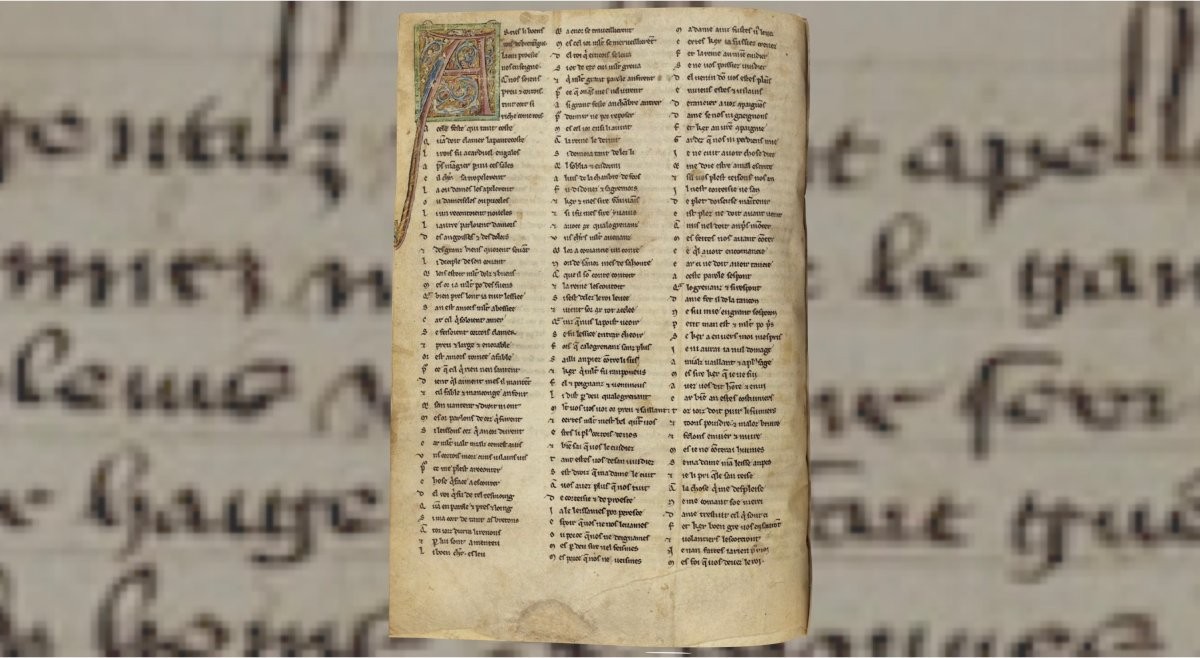
The error propagation of ink and paper
Before the printing press? Copying by hand. Always by hand. Every single scribe made a mistake. Or maybe they changed something on purpose, because why not? The next copier didn’t have the original. They had the slightly-wrong version. So their copy was wrong twice.
This isn’t just sloppy work. It works exactly like genetic mutation. Evolution happens in populations, right? Well, manuscript families evolved the same way. A text drifts. It changes. It dies out. Or it survives, but barely recognizable.
People in the 19th centuries noticed this first. Julien Randon-Furling says they saw the parallel between species and books. He is a mathematician. He looks at data. Specifically, he looks at how stories survive—or don’t.
Mapping the decay
Michael P. Weitzman tried to quantify this decades ago. In the 1970s, he used math to trace manuscript genealogy. Now, Randon-Furling and his team have built computer models. They are simulating chivalric tales from the 1100s onwards. Knights fighting. Knights winning. Knights written down on parchment that eventually rot away.
The results? Brutal.
Up to 60% of chivalric texts are lost. Over 95% of the manuscripts are gone.
Does that sound crazy? Actually, historians already knew we were missing stuff. Ulysse Godreau, one of the authors, says philologists have known for ages that the loss is impressive. But previous theories were vague. They guessed.
This team measured.
Time eats the text
Here is where it gets interesting. They treat time as a variable. War destroys libraries. The plague kills copyists. Popularity fades. A book stops being read so it stops being copied.
The model includes all that noise.
If you only copy a text three times in its first five years? You are probably done. Random accidents happen. Fire burns the only copy. A monastery falls to siege. The original versions of almost everything vanished. The versions we have now are distant cousins, not children, of the originals.
Is it sad? Maybe. Or maybe it’s useful.
“One of the driving questions for us is: how much of the past do we actually have in our hands?”
Randon-Furling poses this sharply. If the manuscripts on your desk represent 50% of history? Cool. Manageable. If they represent 1%?
You don’t know what you’re missing. You don’t know the holes in your story. Knowing how much is gone changes how you read what’s left. It frames the silence as much as the word.
What else is gone?
Now they are looking at ancient Greek plays. Church fathers, too. They want to widen the lens.
Imagine Medieval Europe not as one big box, but as separate ecosystems. France has its climate for ideas. Iceland has another. Spain is different again. Texts move between them like birds migrating. Some thrive. Some freeze out.
We assume continuity because the stories survived. We don’t see the empty space where the majority used to be. The silence is loud, really, if you stop to listen for it.
Maybe we never had the full picture. Maybe the hole in the data is the history.