


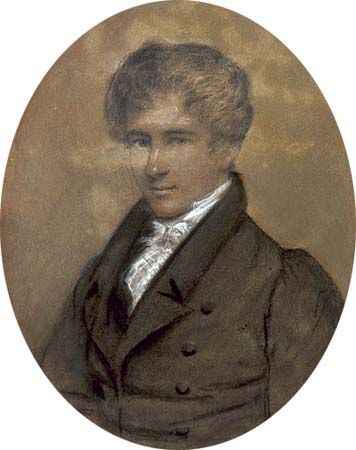
Niels Henrik Abel was born in 1802 on the island of Finnøy near Stavanger in Norway. He died at the young age of 26 in Froland in 1829. However, his short life changed mathematics forever. He was a pioneer in several areas that we now call modern mathematics.
His family was originally poor. His father was a Lutheran priest and his family moved to Gerstad parish. It is located near the town of Risør in southeastern Norway. This happened right after Niels was born.
The change in his life began in 1815. Niels enrolled in a cathedral school in Oslo. His talent is undeniable. However, it remained hidden until 1817. Bernt Michael Holmboe joined them. He was a new mathematics teacher. Holmboe recognized something special. He introduced Niels to the classics of mathematics. He proposed original problems. These are not textbook exercises. These challenges are designed to expand Niels’ thinking.
Niels dove deep. He studied the works of giants. He read the works of the 17th century Englishman Sir Isaac Newton. He studied the 18th century Swiss mathematician Leonhard Euler. He also analyzes the contributions of his contemporaries. Joseph Louis Lagrange, France. Karl Friedrich Gauss, Germany.
Why did he study them? To prepare for his own research. He didn’t just learn the facts; He was learning how to think like them. And then surpass them.
This foundation allowed him to solve problems that others had given up on. He didn’t just solve equations. He questioned the structure of algebra. He looked at why certain methods failed. He asked how to fix them.
His father’s struggle against poverty never left him. But education offered a path. Holmboe saw it first. The rest followed. Niels read Newton. He read Euler. He read Lagrange and Gauss. Then he wrote his own answers.
The stage is set. The prodigy was ready. The world was not ready for what he would prove.
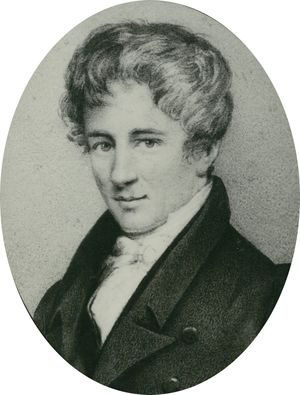

Sponsor Abel’s entry into academia
Abel’s father died in 1820, leaving the family with little property. But his teacher, Bernt Holmboe, intervened. In 1821, Holmboe raised funds for Abel to attend the University of Christiania (now Oslo). Abel received his preliminary degree in 1822 and continued his education. Holmboe continued to fight for subsidies. This support is essential. Without it, Abel’s road would be over.
The Quintic Proof and the rejection of Gauss
Abel published his first paper in 1823. Its focus is on functional equations and integrals. He was the first person to formulate and solve integral equations. His friends noticed his talent. They asked the Norwegian government to grant him a scholarship. They wanted him to study abroad in Germany and France.
In 1824, while waiting for the royal decree, Abel acted alone. He paid to publish a proof that there is no universal algebraic solution to the quintic equation. He hopes to be recognized for this work. He sent the pamphlet to Carl Friedrich Gauss. The most famous mathematician of that time was negative. Gauss did not know that the problem had been solved. For Abel, this was a huge missed opportunity for instant fame.
Birth of Berlin and Crelle’s Journal
Abel spent the winter of 1825-1826 in Berlin with his Norwegian friends. There he met August Leopold Crelle. Krell is a civil engineer and a self-taught math enthusiast. He became Abel’s best friend and mentor. Krell founded the Journal für die Reine und angewandte Mathematik. It is now known as “Crelle’s Journal”. Abel encouraged him to start this.
The first volume in 1826 contained Abel’s papers. One was a detailed version of his work on quintic equations. Other papers cover the theory of equations, calculus and theoretical mechanics. Later volumes published Abel’s theory of elliptic functions. These are complex functions that are generalizations of standard trigonometric functions.
Memories of Paris and loss
In 1826, Abel traveled to Paris. It was the center of the world of mathematics at the time. There he met top mathematicians. He completed an important paper on the integrals of algebraic functions. His key result is now known as Abel’s Theorem. This theorem became the basis for the later Abelian integral theory and Abelian function theory. These generalize the theory of elliptic functions to functions of several variables.
He could not get a appointment for this visit. He submitted his memoirs to the French Academy of Sciences. It was lost He still didn’t get the approval he was looking for.
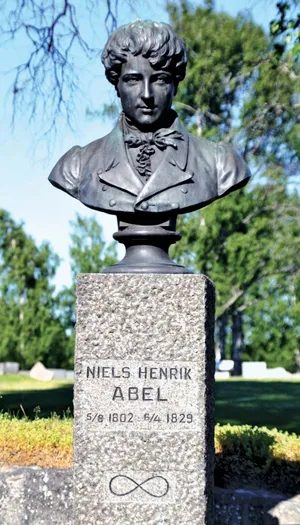

The Price of Genius: Poverty and the Last Days
Abel did not return to Norway penniless. He had a large amount of debt. Tuberculosis ate him alive. Yet, the math didn’t stop.
He makes a living by teaching students. Support was provided by a small grant from Christiania University. From 1828, vacant positions were filled by temporary teacher positions. Money is very tight. The health was thinner. But what about production? It accelerated.
A new breakthrough in elliptic functions
Although Abel was sick and poor, he wrote many treatises. The focus is sharp. Theory of equations and elliptic functions are the main goals. He developed a theory of polynomial equations related to Abelian groups. This is more than just homework. This is basic.
He moved fast on elliptic functions. He was in direct competition with the German mathematician Carl Gustav Jacobi It’s a battle of priorities. Competition for recognition.
International recognition and commitment until the last moment
Abel’s name received a lot of praise at the Mathematics Center. We all know what he can do. The French Academy of Sciences also participated actively. They want to keep him there. They approached the Norwegian-Swedish king Bernadotte directly.
Carl Friedrich Crelle was not idle. He worked tirelessly to obtain the Abel Professorship in Berlin. Efforts are being made. Real, high-level efforts. But time is running out.
Tragic ending
In the fall of 1828, he became seriously ill. The situation is not stable. The situation got even worse.
Desperate, Abel travels in a sleigh at Christmas time. The goal is simple. Visit his fiancée in Froland. This is a journey of love. It ends in death. He died in Froland.
Legacy was released late
This tragedy ended his prolific career. The French Academy finally published his memoirs in 1841, two years after his death. The work stood. The man is gone.

