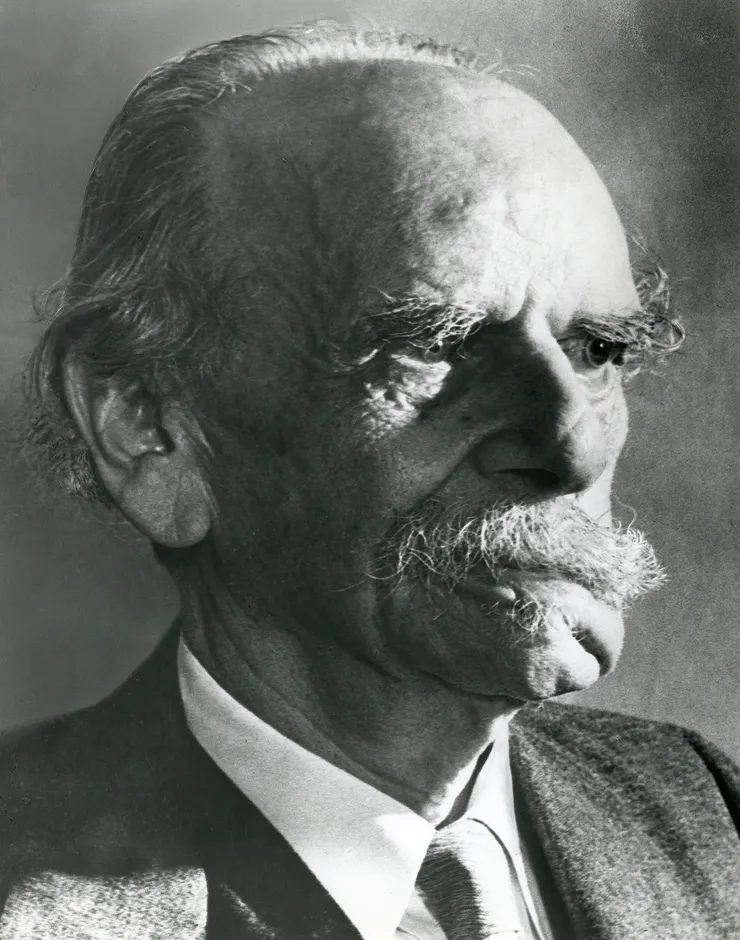
Franz Boas didn’t just change anthropology. He dismantled it and rebuilt it from the ground up.
Before Boas, the field was stuck in a muddy rut. Most anthropists believed in a crude hierarchy of human development. They argued that some groups were inherently more “civilized” than others. It was a racist framework disguised as science. Boas rejected this entirely.
He was born in 1858 in Minden, Germany. His early education wasn’t in the humanities. It was in physics and geography. He earned his PhD in 1881 with that scientific rigor still intact. But his trajectory shifted during an expedition to Baffin Island between 1883 and 1884.
He studied the Inuit culture there. This wasn’t a quick survey. It was a deep immersion. It forced him to question the prevailing theories of his time.
Later, he turned his attention to the Kwakiutl and other native peoples in British Columbia. The work was grueling. The data was complex. And the conclusions were radical.
The Jesup North Pacific Expedition
From 1896 to 1905, Boas directed the Jesup North Pacific Expedition. This wasn’t a casual research trip. It was a massive investigation into the relationships between aboriginal peoples in Siberia and North America.
He was looking for connections. But not the kind that suggested a single origin story for all humanity. He was looking for distinct cultural histories.
The goal was to understand how these groups developed independently. To see how they adapted to their environments. To prove that similarity in artifacts didn’t mean similarity in origin.
This work laid the groundwork for his most famous contribution.
Cultural Relativity Over Genetic Determinism
Boas is largely credited with establishing anthropology as a serious academic discipline in the United States. He taught at Columbia University from 1896 until his death in 1942.
He wasn’t just a teacher. He was an organizer. He mentored the next generation of giants.
Ruth Benedict. Alfred L. Kroeber. Margaret Mead. Edward Sapir.
These names dominate the field because of Boas. But his impact goes beyond mentorship. He shifted the entire paradigm.
Before Boas, differences between groups were attributed to biological or genetic superiority. Boas argued that such views were ethnocentric. He proved that all human groups have evolved equally. They just evolved in different ways.
“All human groups have actually evolved equally but in different ways.”
This distinction is everything. It means that differences in behavior, art, or social structure are not signs of backwardness. They are signs of different historical paths.
Boas attributed human differences to historic “cultural” factors. Not genetic ones. This was a seismic shift. It removed the moral judgment from scientific observation. It allowed anthropologists to study cultures on their own terms.
Why This Still Matters Today
You might think this is old history. It isn’t.
The idea that culture is learned, not inherited, is still central to how we understand society. Boas showed that language, custom, and belief are shaped by environment and history. Not by blood.
His books reflect this shift.
- *The Mind of