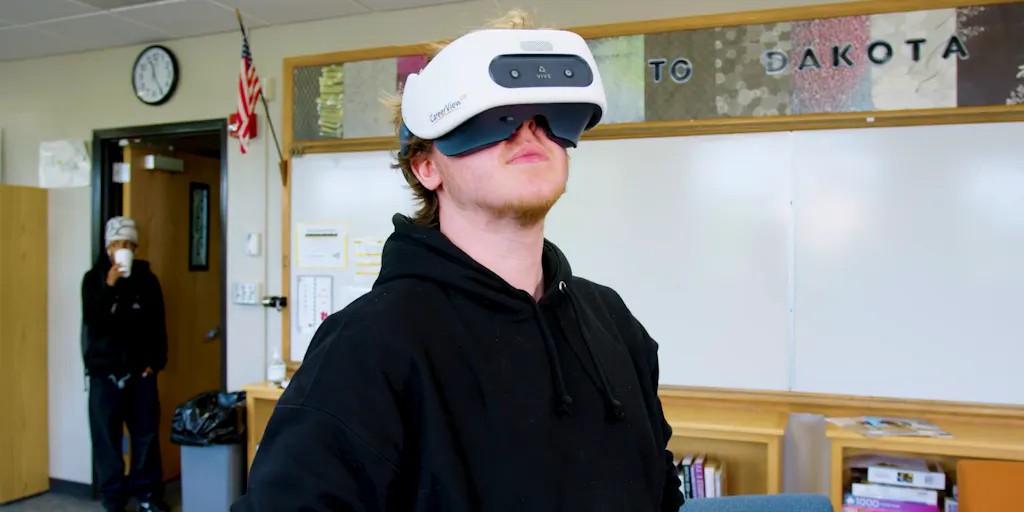
A kid peers over a 300-foot wind turbine. His friend stands by surgeons in an ER. Another is fixing a fender in a garage.
They’re ten years old. And none of this is real.
North Dakota is betting on virtual reality. While schools elsewhere fight to reduce screen time, this state is pushing VR headsets into the hands of younger students. The goal is simple. Keep locals employed. Fill the local jobs pipeline.
It’s a geographic fix.
“This is the first glance to show [what’s out there] without throwing a bunch of students on [a long] bus.”
— Wayde Sick
North Dakota is vast and sparse. Rural kids can’t just walk to a manufacturing plant or a tech lab. Field trips eat up the day. Two hours there. Two back. For what? A blurry memory?
Mackenzie Tadych from Northern Cass School says the hurdles are real. VR bridges that gap.
Fixing the Resource Gap
The program launched in 2023. The legislature handed over $500,000 for hardware. Originally, it was for middle and high schools. Then, late last year, it expanded to elementary schools.
The state uses CareerViewXR. It has 118 modules. It’s tied to the existing RUReady ND program but adds a visual layer that aptitude tests lack.
Meet Ann Pollert. She drives a van loaded with seven headsets across six counties. She used to give fifty-minute lectures. Kids stared blankly.
Now, she shows them how to replace an excavator engine. It’s visceral. It helps her spot interest before a student even thinks about applying to college.
“With this… It helps me identify the students [to further encourage].”
It’s not a replacement for counselors. Especially in high schools, where those counselors are already drowning in caseloads. Small towns often have zero guidance staff.
Pollert is clear about that.
“It’s everything together… It’s not the van.”
Too Soon to Say
So, is it working.
Wayde Sick shrugs. It’s too early for hard data. Has retention gone up? Hard to tell yet.
He targets the younger ones. The idea is exposure. By fifth or sixth grade, a kid knows what a factory looks like. By high school, they can choose actual courses.
VR isn’t just for showing cool stuff. It shows stress.
Tadych remembers one student who freaked out in the virtual ER. It was loud. Fast. Terrifying. The kid hated it.
That’s good news.
“It’s just as beneficial [to] find [what] you don’t [want] to do.”
The tech will likely evolve. Maybe augmented reality later. More interaction. More fidelity.
Sick wants students to stay. To figure out who they are early. To see that options exist right here in their rural landscape.
He believes in rich experience. Early. Often.
The question isn’t just if it works.
It’s whether a headset can actually convince a kid to build a life in the middle of nowhere.
The turbines keep spinning. The headsets are on. Let’s see where they go.