Get the newsletter.
Breakthroughs and DIY tips arrive six days a week.
Email address? You know the drill.
“Sign up and we assume you’re old enough and ready to read terms nobody actually reads.”
Small.
Polka-dotted.
Rice-sized.
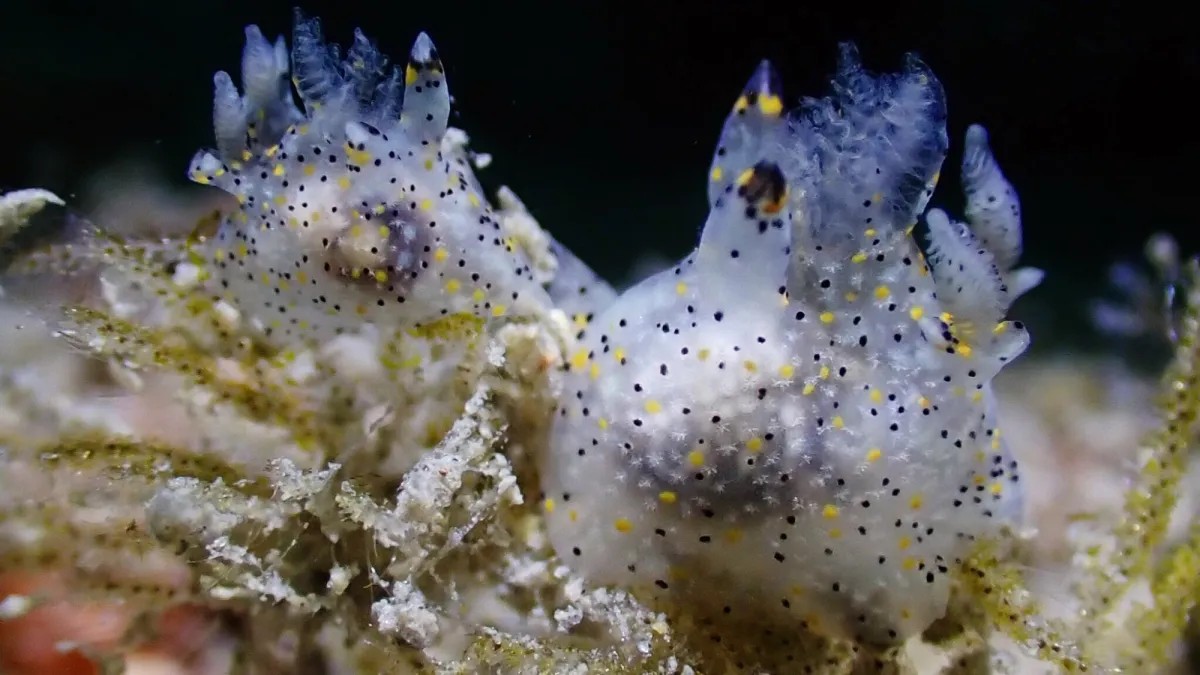
Meet Thecacera sesame —or just T. sesame to the insiders.
A newly identified nudibranch spotted off the coast of Taiwan, this thing is tiny. Like, under an eighth of an inch. The name? It comes from local divers calling it “sesame” because, well, it looks like the seed. Translucent body. Black and yellow speckles. It’s an aquatic everything bagel, if you’re feeling metaphorical.
Ho-Yeung Chan found it.
Back in 2019, when he was just an undergrad, not the lead researcher he is today at the National Taiwan Ocean University. He didn’t know what he was looking at. He posted it on Facebook. Hsini Lin, an expert on slugs who happens to hang out on Facebook, replied. Boom. Discovery. Chan is now the lead author on a ZooKeys paper formally introducing this tiny oddity to science.
The slug has a simple itinerary: feed, search, mate, lay eggs on bryozoans (moss animals). The bryozoans it uses? Probably new to science too. Who knows? The data is thin.
You might think the hard part here was the size. It wasn’t.
The weather was.
Keelung’s coast is volatile.
Summer typhoons. Winter monsoons. Waves that crash in and drop the water below 60.8°F.
The divers can only work a third of the year. Maybe less. The window for seeing these sesame seeds is random. It’s luck. You go, or you don’t, and the ocean decides.
Nudibranchs are key to the marine food web.
They are colorful, yes.
They live on reefs.
But they are often invisible to the naked eye, hidden in the complexity of the sea.
Chan and his team believe there are dozens more unknown micro-species hiding in these waters. Taiwan is full of secrets, just waiting for the weather to break so someone can dive down and see.
What else is out there?
We probably won’t know for a while.
The sea is deep.
The windows are small.
Who has the patience?