


This is the only surviving echo of a language that was spoken in southwestern Europe before the arrival of Rome. The Basque language not only survived Romanization; It refuses to die. Latin swallowed up almost all other languages in the region in the 2nd and 1st centuries BC, but Basque survived. Today, it has become a form of linguistic isolate. No one knows exactly what it is related to. There are no living relatives.
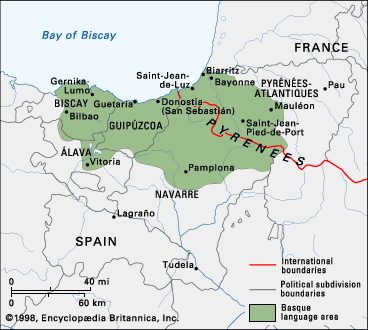
This language is spoken in an area of about 3,900-square-mile zone, which stretches across the borders of Spain and France. It is about 10,000 square kilometers. Although estimates vary, other regions of the Americas and Europe also had significant communities of speakers. According to figures from the beginning of the 21st century, the number of speakers of this language is close to a million. Most of these people are bilingual and can easily speak Basque and Spanish or French.
In Spain, this region includes Gipuzkoa, part of Vizcaya, Navarre and part of Alaba. In France, it is concentrated in the Pyrénées-Atlantiques department. The speaker calls himself “Euskalduna”. The name comes from the word Euskara, which means the language itself. Official status arrived and left quickly. Recognized during the Spanish Civil War 1936-1937. After the publication of the Constitution in 1978, together with Castilian Spanish, the Basque language regained its official status in the Basque Country.
The Mystery of Origins
なぜバスク語は言語学者にとってそれほど異質なのでしょうか?合わないから。 19 世紀、言語学者ルイ-ルシアン ボナパルトは 8 つの異なる方言を定式化しました。 これらの違いは相互理解を損なうほど深刻ではありませんが、顕著です。
学者たちはバスク語をあらゆるものと関連付けようと試みてきました。 ドイツの言語学者ウーゴ・シューハルトは、the extinct Iberian languageとアフリカ・アジア言語との遺伝的関連を提唱した。 そのアイデアは興味深いですね。 サウンドシステムには驚くべき偶然がいくつかあります。 しかし、より深い研究により、この類似性は共通の祖先ではなく、単に長期的な接触の結果である可能性があることが示唆されています。 バスク語が近くにあったからといって、イベリア語のテキストがさらに理解しやすくなったわけではありません。 その後の研究では、アフリカ・アジア言語には共通の言語的特徴がないことも判明しました。
いくつかの特徴は、Caucasian languagesとの関係を示唆しています。 しかし、このリンクは確認されていません。 Basque remains an isolate。 インド・ヨーロッパ語族の海でたった一人の生存者。
A History of Resistance
At the beginning of the Christian era, the Basque dialect was spoken both north and south of the Pyrenees. They extend as far east as the Aran Valley in northeastern Spain. Eventually the Roman government collapsed in these regions. That disruption may have saved the dialect. Without a strong central authority to force Latin, the Basque language had room to breathe.
The language spread to the southwest and into what became Vasconia. It reaches the Old Castile and the Rioja Alta region near Burgos. But not all Basque speakers are so lucky. Romance speakers cut off the eastern dialects. In the Middle Ages, Basque struggled as a written language. This is the language of the countryside, not the language of the cities. Latin dominated the records. The Romance and Occitan languages of Navarre took over to the Kingdom of Navarre.
Since the 10th century, Basque has gradually lost ground to Castilian Spanish. In the north, however, French is a more modern competitor. The area of the Basque-speaking northern region is approximately the same as in the 16th century.
From Oral Tradition to Unified Standard
In the Roman inscriptions of southwestern France, there are several proper names with clear Basque roots. These are the earliest traces of writing. After 1000 AD, there are more and more records. They consist mainly of names, but also contain phrases and sentences. The first Basque printed book appeared in 1545. That began an unbroken tradition of writing.
Literature flourished only in the 20th century.
Until then, things were neither rich nor varied.
From the beginning of the 19th century, the struggle for survival intensified, especially in the industrial centers. The battles took place in the heart of the Basque Country and on its borders.
The community has made significant efforts to include the Basque language in private primary education. They have to pass it on to the next generation.
Written standards have emerged. Its name is Euskara Batua. Meaning “Unified Basque”. It is widely accepted. Not universal, but it is widespread. It gave voice to a fragmented dialect.
The question is not how the Basque language will survive in the next century. The question is how it will change. The dialects merge together. Standardization is homogenizing. Young speakers use it differently than their grandparents. Language lives, but it changes under our feet.
バスク語の発音原則
バスク語の音韻論で問題が起こることはありません。 スペイン語を話す人なら、この地形に見覚えがあるでしょう。システムは厳格です。 さまざまなサウンドの在庫はわずかです。 子音クラスター?それらは厳しく制限されています。 ここではランダムな組み合わせは見つかりません。 歴史言語学によれば、tr 、pl 、dr 、bl などのクラスターは 2000 年以上前の言語には存在しなかった可能性があります。
基本はシンプルです。 純粋な母音が5つあります。 2 つの一連の停止。 1 つの有声シリーズ (b、d、g ) は完全な停止を欠いていることがよくあります。もう 1 つは無声音 (p, t, k ) です。 鼻音は標準です: m 、n 、口蓋音 ñ 。 はい、バスク語の正書法はスペインの標準と一致しています。しかし、これは単なるコピーではありません。
Two rhythms: L and R
Basque distinguishes two types of l. Is a common horizontal l. Next comes the taste. Sounds like lli million. Think l + y. r Not yet. Try tapping the top of your mouth. Compare this to scrolling rr*. The difference is physical. It’s in the movement of the tongue.
ヒス: これが学習にとって重要な理由
ここからが興味深いことになります。 バスク語では、ヒス音を 2 つのグループに分けます。 頂端摩擦音(舌の先端)と前背側摩擦音または摩擦音(舌の中央または奥)があります。 この違いがすべてを変えます。 これは単なる音声上の詳細ではありません。 構造柱です。
文字 z について考えてみましょう。 前摩擦音の略です。 tz という文字は前背側破擦音です。 一流の s や ts と比較してください。 上の s はカスティーリャ語の s のように聞こえます。 違いは明らかです。
摩擦には摩擦が伴います。 空気は狭い隙間を通ります。 完全には止まっていない。 破擦音は停止で始まり摩擦音で終わります。 教会 のch を考えてください。 閉じ始め、摩擦によって解放されます。
“Boo” sound and little words
Basque also has a hissing sound called “hiss”. They are written x and tx. These map to English sh and ch. Why is this important? Context.
These voices often carry emotional weight. It means small or cute. Check the comparison:
- Hazle means “broom”.
-
hexur means “small bone” (especially fish bone).
-
sagu means “rat”.
- xagu means “little mouse”.
The transition from s to x or from h to h +vowel is not random. The scale changes. It makes things smaller. Or even sweeter. This is a grammar tool disguised as voice intonation. The palatal sounds ll and ñ work the same way. They softened their words. It adds nuances that standard consonants don’t have.
東部方言の複雑さ
すべてのバスク語がこのように聞こえるわけではありません。 最東端の方言であるスーレティンはさらに複雑です。 意見が分かれるようになってしまいました。 それは内部発達または近隣言語との接触を通じて第6口頭母音を獲得しました。 角が丸い e または i 。 鼻母音もあります。 有声歯擦音は、他の場所では発生しない場所で発生します。 静かに吸引停止音が静かに現れます。
ここで鍵となるのは欲望です。 停止子音に伴う小さな空気の吹き出し。 単語の最初に?母音の間? 「h」という誤気音が聞こえる場合があります。 この機能はかつては一般的でした。 現在は北部の方言に特有のものです。 しかし、それはまだ存在します。 これは、提案されているバスク語の標準形式に維持されています。
したがって、教科書で学ぶ「標準的な」バスク語は、山間部で話されるバスク語よりもきれいに聞こえるかもしれません。 音韻論は静的なものではありません。 それは呼吸します。 それは違います。
Why this distinction is useful
If you are learning Basque, sibilant segmentation is not an option. z and s are not interchangeable. The meaning will be different. The syntax changes. Frontal fricatives and affricates (z, tz ) form a phonetic system. The above sounds (s, ts ) form another sound. Mix them together and you’ll learn in no time.
A simple use of x and tx provides a shortcut. Want to sound more natural? Do you want to be more about the little things? Use a quiet voice. This is a subtle hint. But here’s a hint.
Souletin’s wish h adds another layer. This is not silence. It’s air. This is history. This is the sound of tongue contact. When you hear it, you hear the border between the Basque Country and its neighboring countries.
Ergative Grip
Basque grammar is more than just following the rules. We need to look at who does what differently. The language is ergative. This means that we treat the subject of a transitive verb differently than the subject of an intransitive verb.
In English, a topic is a topic. Period. In Basque, you have to add the suffix -k if you want to do that which is else. See the phrase oinak zerbitzatzen du eskua (“the foot is useful to the hand”). Oinak is “foot”. It is divided into oin (foot), -a (definite article) and -k (ergative marker). -k indicates that the foot is the active agent.
But in the second verse, eta eskuak oina (“the hands serve the feet”), the hands do the service, so eskuak (hand) changes to -k. The word foot oima in the second sentence is missing -k. Why? Because feet are objects. It’s receiving the action.
What if there is no object? What if the verb is intransitive? The mark then disappears. Consider sabelak jaten ez ba du, Sabela Bera ihartuko da (“If the stomach does not eat, the belly itself will fail”). Sabelak has -k because the belly is eating. But in the second part sabela (belly) is just existing. It’s failing. There is no -k. In this language, a small suffix separates the doers from the experiencers.
The Verb as a Summary
If noun markers handle agency, verbs handle everything else. Basque finite verbs are a powerhouse. It’s not just a show tense. It is a summary of the whole sentence. It inflects for person, number, mood, voice, and tense at the same time.
A single verb form can refer to a subject, a direct object, and an indirect object at the same time. Up to three personal references packed into one word. Take du. It means “he has it”. Consider the dio example. It means “he has it for him”.
Look at this sentence: oinari ez dio eskuak kolperik emaiten (“the hand does not give a blow to the foot”). The verb dio has a third person subject, a direct object and an indirect object (oinari = for feet).
Most verbs also use compound forms. Erori da literally means “he is fallen”, but its function is “he is fallen”. Jaten du means “he eats it”. The line between continuous action and completed state is often blurred due to verb structure. If you speak directly to someone, the relationship can be built into the form of the verb itself.
Addressing the Listener
The Basque language has a third important feature. It’s an alfootory. This is not an option. When using the familiar pronoun hi (“you”), the verb must match the gender of the person in that which is addressed.
Let’s say you want to say, “I don’t know.”
* Ez dakit is a neuter form.
* Ez zekiat is used when addressing men.
* Ez zekinat is used when addressing women.
You need to be aware of the gender of your audience in every interaction. In northeastern dialects, this rule also applies to the polite form zu. You can’t just talk. You have to position yourself relative to the other person.
Stacking Suffixes
Some older prefixes still exist, but are now dead weight. Basque is a suffixing language. It builds the word outward.
There is one important inflectional system that uses suffixes or postpositions to mark case and number. Etxea is “house”. Etxe berria is “new home”. Etxe berriari is “to a new home”.
These suffixes can be stacked. In theory, you can continue to add genitival endings to show possession. In English, it is similar to “the button of the coat of the son of the Major of York”, but cleaner. Basque uses the ending -(r)en for “not”. Attach to a noun. You can continue.
The suffix also deals with subordination. da is “desu”. den is “which is”. Dena is “that which is”. Denean means ‘when’, literally ‘in that which is’, meaning a certain time. Ordu (time) is the understood antecedent.
Prefixes also deal with negation and conditionals. Ez du jaten means “he doesn’t eat”. Add ba (if) to get jaten ez ba du (“if he doesn’t eat”). The structure flips. Language revolves around the logic of sentences.
Borrowed roots, local identity
Despite pressure from surrounding languages for 2,000 years, the Basque language remained central. He is stubborn. But it was borrowed.
Romance languages have a huge number of loanwords. Many have preserved traces of ancient Latin.
* Bake (peace) comes from the Latin word pax, pacis.
* Bicycle (pitch) comes from the Latin word pix, picis.
* Errege (king) comes from the Latin word rex, regis.
Contrary to popular belief, loanwords from non-Latin Indo-European languages are rare. The language absorbed what it needed from the Romance world, but rejected the genetic influence of the wider Indo-European language family.
The derivative is still active. Basque uses borrowed suffixes to create new words. Nouns can also be combined. Bizkar-hezur means “backbone” (literally “backbone”). This formula is alive.
However, the Basque contribution to Spanish, Occitan, French or English is minimal. This is a vocabulary one-way street. However, Basque names can be found all over Spain and Latin America. Alan Sininen. Bolivar. Echeveria. Guevara. The name was teased. The language remains.