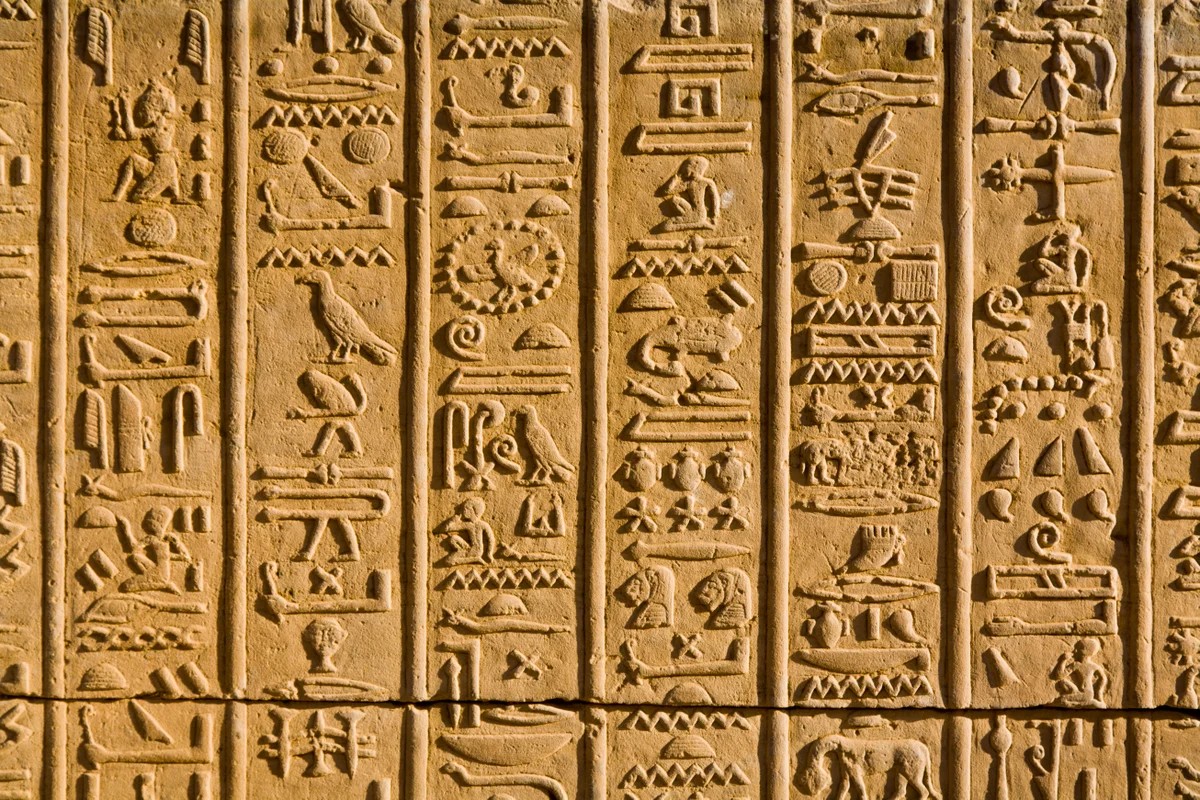
We currently live in a world of roughly 7,000 spoken tongues. Each one holds a unique archive of culture, history, and localized knowledge. But that number might be a fraction of the reality just two millennia ago. According to new research, the planet may have been home to ten times as many distinct languages around the year 0.
This isn’t just about counting dialects. It’s about understanding a lost era of extreme linguistic fragmentation.
The study, published in Science, identifies a period between 1000 B.C.E and C.E. 1000 as a veritable “golden age” for speech diversity. For a brief window of two thousand years, the global number of languages soared. Then, a collapse began. The authors suggest this decline was driven by the rise of hegemonic states like the Roman Empire, which exerted massive cultural and political pressure on smaller communities.
How Many Languages Existed 2,000 Years Ago?
Estimating the language count of prehistory requires a bit of detective work. Ancient languages left almost no physical records. So Damián Blasi, lead author and linguist at Harvard University, and his team had to reconstruct history indirectly.
They started with the Holocene epoch, beginning roughly 12,00 years ago. Experts estimate the global human population then sat somewhere between four and seven million people.
The team made two key assumptions:
* Hunter-gatherer groups were similar in size to those seen in ethnographic records today.
* Each distinct group spoke its own unique language.
By these metrics, the world likely hosted between 5,000 and 6,000 distinct languages. It was a fragmented landscape. Small communities spoke differently from their neighbors, even if the differences were minor.
But that number didn’t stay static. As the study points out, the trajectory shifted dramatically with the advent of agriculture. Farming allowed human populations to grow. More people meant more groups. And more groups, theoretically, meant more languages.
The computational models used in this study show a clear pattern. As agriculture spread and supported denser populations, the number of languages grew. It reached a peak between 20,00 and 75, those languages around 2,000.
After that peak, the decline was rapid. We are still in that downward slope.
“You have this slowly brewing linguistic and cultural diversit.”
Today, languages are vanishing at a rate of one every few weeks. The last speaker passes, and a specific way of seeing the world disappears with them.
Why Did Linguistic Diversity Collapse?
It is easy to blame the last 500 years of colonialism. European expansion often involved systematic efforts to suppress or eliminate Indigenous languages. That played a massive role. But the new research suggests the root of the problem runs much deeper.
Homogenization is a natural byproduct of large-scale society.
When states grow powerful enough, they demand unity. They standardize laws, trade, and education. Smaller linguistic pockets get crushed not by malice necessarily, but by sheer gravitational pull. Blasi notes that it takes less than a “colonial powerhouse” to destroy diversity.
A hegemonic state doesn’t need to actively kill a language to make it extinct. It just needs to make speaking that language economically or socially disadvantageous. Over generations, parents stop passing the language to their children. The chain breaks.
This raises a sobering question for linguists and anthropologists: how much of human expressive potential was wiped out before we ever learned to write it down?
Are We Missing Unknown Language Structures?
Most linguists operate under the assumption that the languages spoken today represent the full range of what human brains can produce. We assume that grammar and sound systems are bounded by our biological hardware.
But if we are only looking at the surviving sliver of a much larger whole, that assumption might be flawed.
If there were tens of thousands of languages, not just 7,000, then our sample size is dangerously small. Blasi suggests we might be missing “exotic phenotypes of language.” Structures that we didn’t know existed. Grammatical rules that seem bizarre to us because no living speaker uses them.
We are studying the tip of an iceberg while the rest is submerged.
This has implications for how we understand human cognition. A richer, more diverse linguistic past might mean the human brain is capable of far more varied modes of thinking than current data shows. We might be underestimating the plasticity of the human mind because we have no living examples to study.
The Debate Over the “Golden Age”
The study is not without its critics. The methodology involves heavy modeling, which inevitably introduces variables that can’t be proven.
Lyle Campbell, a linguist at the university of Hawaii, argues that grappling with remote history is tricky. We simply cannot get a “solid purchase” on these ancient numbers. How large were those ancient ethnolinguistic groups? Did agriculture always lead to fragmentation, or did it sometimes consolidate power immediately? These are impossible to establish with certainty.
Campbell calls the “golden age” scenario “highly speculative.”
Johanna Nichols, professor emerita at UC Berkeley, offers a different skepticism. She questions the very definition of what a “language” is in this context.
When small communities lived side by side, did they really speak different languages? Or did they speak dialects that faded into one another? Nichols suggests a continuum. A web of mutually intelligible speech varieties.
“In a world with few people and varieties that overlap and mingle, it’s just a big continuum.”
In this view, drawing a hard line at “one community, one language” is an artificial construct. The reality might have been a fuzzy, shifting blur of speech rather than distinct, isolated islands of communication.
The Cost of Standardization
Whether the number was 20,000 or 75,000, the trend is clear. Diversity was the default. Standardization is the exception.
We tend to look at our globalized present as normal. We assume the current map of languages is the natural state of things. But this research flips that narrative. It suggests that high linguistic diversity was the human baseline for thousands of years.
The rise of the state, the empire, and eventually the nation-state acted as filters. They filtered out the small, the local, and the unique.
What remains is a shadow.
As languages die, we lose more than just words. We lose classifications of plants, methods of navigation, concepts of time and space. We lose alternative ways to structure reality. The decline in linguistic diversity is mirrored by a decline in cognitive diversity.
We are left with the 7,000 that survived. The rest are ghosts.
And there is no guarantee that the next two thousand years won’t see the rest fade away, leaving us with even fewer voices to tell us who we are.
The question is not just what we lost. It is what we can never recover.