See the bones.
Last year astronauts took diagnostic x-rays of their bodies while in orbit. We are seeing the results now.
On March 31 2025 a SpaceX Falcon 9 launched the Fram2 mission. This was the first human space flight into polar orbit. Four people went up: Chun Wang a crypto investor Jannicke Mikkelsen a filmmaker Rabea Rogge an engineer and Eric Philips a polar explorer.
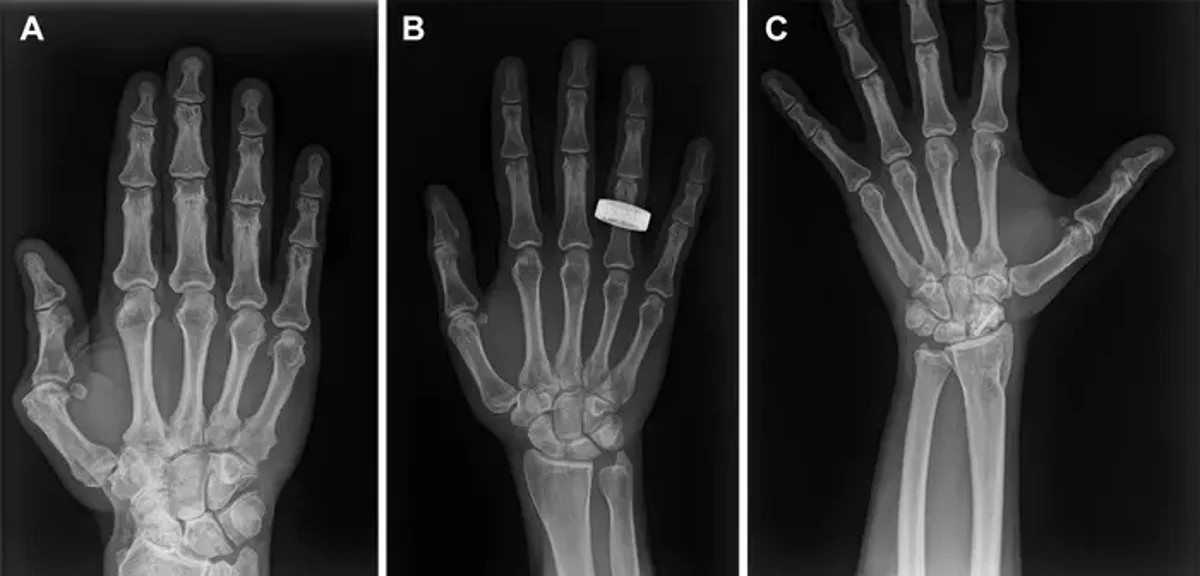
They spent three and a half days circling Earth. They ran experiments. Including taking x-rays. The results dropped into the journal Radiology on Tuesday.
Supporting Science
If you enjoy this subscribe to support award-winning journalism. You help shape the future of stories that matter.
For forty years astronauts on the ISS carried serious medical kits. They had ultrasounds. No x-rays though.
Why not? Old machines were too bulky. They took up space that needed for life support. Now technology has shrunk. Portable units are here.
“It’s been a dream” said Sheyna Gifford. She is lead author on the study and an assistant professor at Mayo Clinic. “We finally have more than one imaging mode for diagnosing injuries.”
This isn’t just about feeling better on the ISS.
NASA is planning a return to the Moon. After that Mars. Long missions mean new problems. Ultrasounds work but x-rays are faster. They are easier. Less training required.
Fram2 proved it can be done.
Microgravity makes it hard to stand still. You float. You drift. Staying perfectly still for a diagnostic scan is a trick. The team used a portable wireless system. Three crew members learned to operate it in just four hours.
That is quick.
They scanned hands forearms abdomens pelvises chests. Radiologists compared the space shots to ground photos. Quality was the same. The setup works.
“X-rays are critical not just for people but for mission components like electronics.”
Imagine your spacesuit fails. You can’t cut it open to find the break. An x-ray might see it.
The crew tried it. They x-rayed a smartwatch. It worked.
Gifford says this changes everything for sustained presence. Health care is part of it. So is checking if a battery pack is intact. Without x-rays you are blind to what is inside.
Maybe the next time you snap your wrist in orbit it gets scanned properly.
Maybe