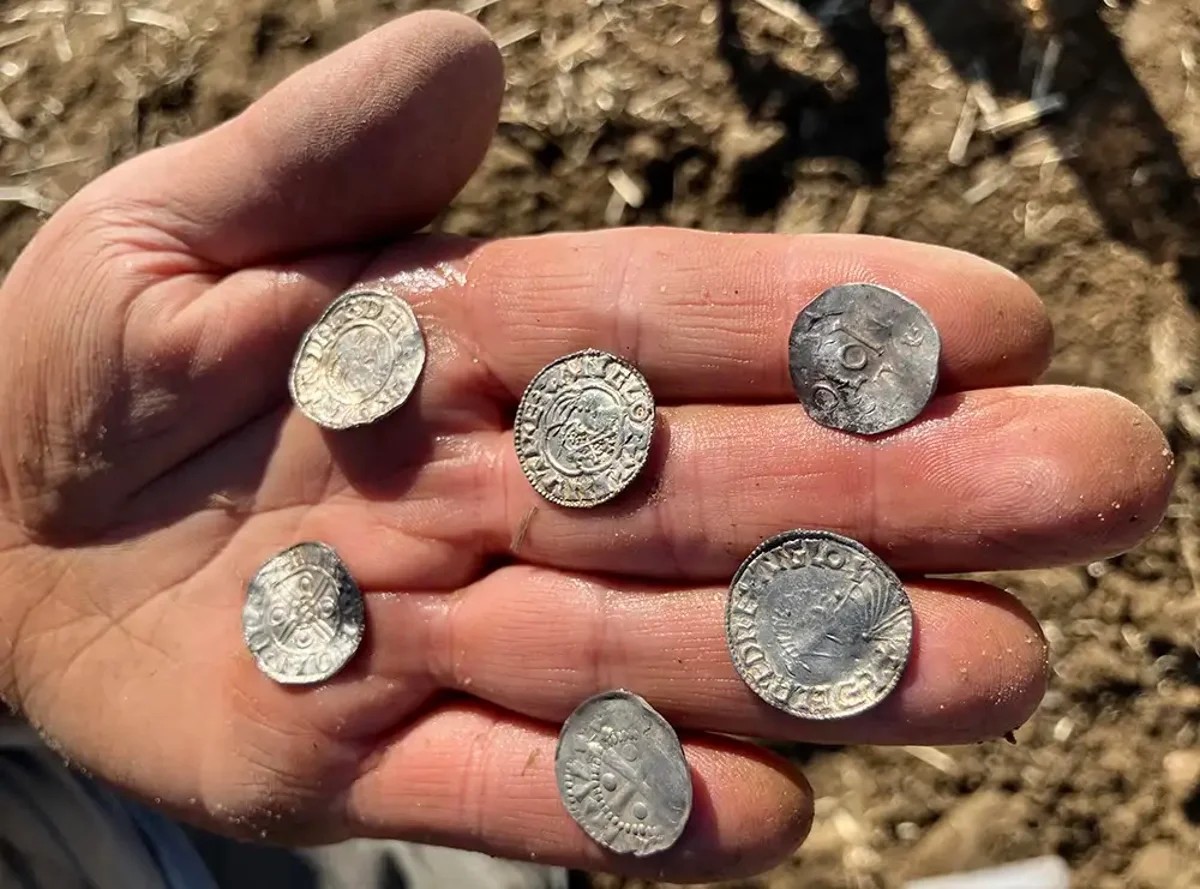
Archaeologists have confirmed the discovery of a massive Viking Age coin hoard in Eastern Norway, potentially marking the largest find of its kind in history. The cache, consisting of nearly 3,000 silver coins, was unearthed by two metal detectorists near Rena in the Østerdalen region. While the initial count stands at approximately 3,000 pieces, the search is ongoing, and experts believe the total number could rise as excavation continues.
A Window into Viking Trade Networks
The significance of this find extends beyond its sheer volume. The coins date from the 980s to the 1040s, a period representing the zenith of Viking power and international influence. Notably, the hoard is predominantly composed of foreign currency, with coins minted in England, Germany, Denmark, and Norway.
This composition offers crucial insight into the economic landscape of medieval Scandinavia. Before the establishment of a unified national currency, foreign coins dominated trade and daily transactions. The presence of these diverse mints underscores the extensive maritime networks the Vikings maintained, connecting Scandinavia to Britain, Iceland, and even parts of continental Europe and the Americas.
“Foreign coinage dominates the circulation of money in Norway up until Harald Hardrada (1046–1066) established a national coinage,” explained Svein Gullbekk, an archaeologist at the University of Oslo.
Timing and Economic Context
The hoard was buried at a pivotal historical juncture. It dates to the very beginning of the transition from a fragmented, foreign-dominated monetary system to a centralized national one under King Harald III (Hardrada). When Hardrada took the throne in 1046, he initiated the production of Norwegian minted coins, which gradually replaced the foreign currency in circulation. This hoard, therefore, captures the economy in flux, just as Norway began to assert greater fiscal independence.
Experts also suspect a direct link between the hoard and the region’s robust industrial history. From the 900s through the late 1200s, the Østerdalen area was a major hub for iron production. Ore was extracted from local bogs and processed for export across Europe. The wealth generated by this industry likely facilitated the accumulation of such a significant quantity of silver, suggesting the hoard may have been stored by merchants or officials involved in the iron trade.
A Rare Archaeological Event
For the archaeological community, this discovery is unprecedented in modern times. The last time a hoard of comparable size was found in Norway was in 1950. Local archaeologist May-Tove Smiseth described the find as a “truly unique discovery,” noting that witnessing such an event is a rare professional and personal privilege.
As excavations continue, researchers aim to determine the full extent of the treasure and uncover the specific circumstances behind its burial. Whether hidden during a time of conflict, stored for safekeeping, or part of a ritual deposit, the hoard provides a tangible connection to a vibrant era of Scandinavian history.
In summary, this near-record-breaking hoard not only highlights the wealth of the Viking Age but also illuminates the critical transition toward a unified Norwegian economy and the region’s central role in European iron trade.