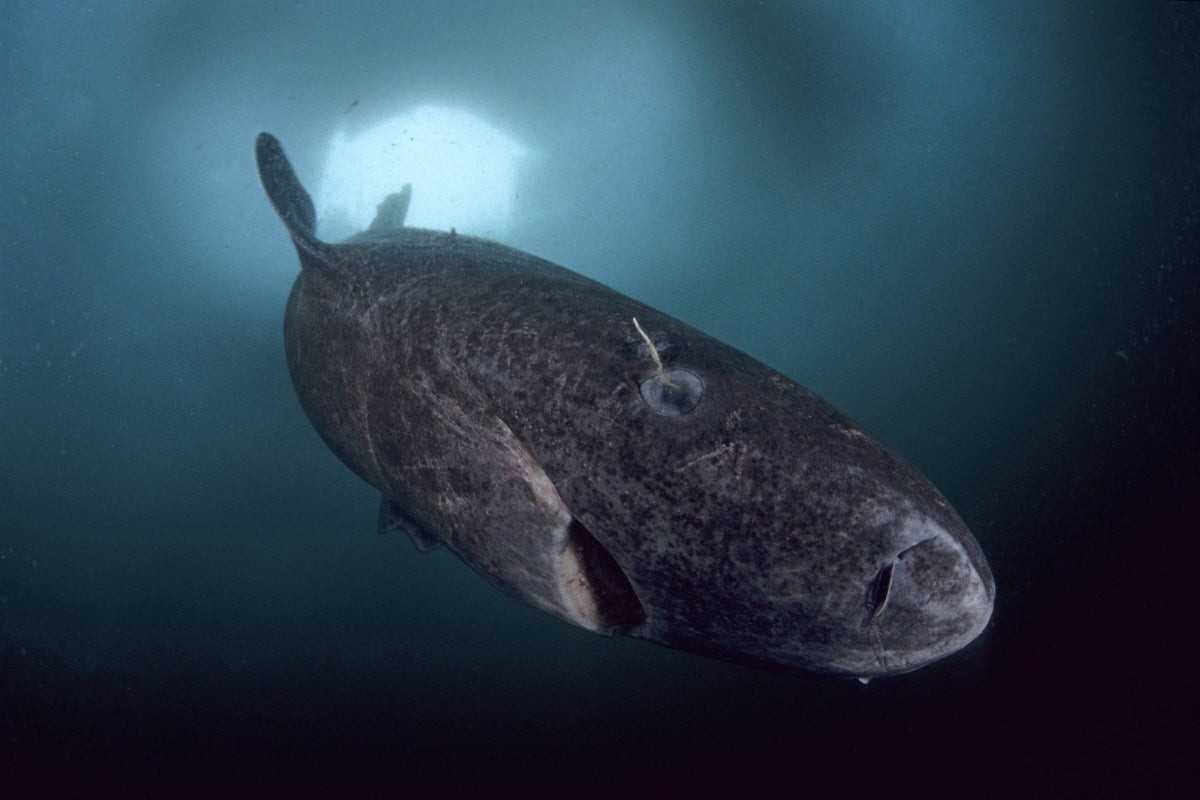
The Greenland shark is a creature defined by extreme slowness. Its heart beats roughly once every 12 seconds, it swims at a leisurely pace of one foot per second, and it grows at a mere centimeter per year. These animals do not reach sexual maturity until they are approximately 150 years old, with lifespans potentially extending to 400 years or more.
For decades, this “sluggish” lifestyle was viewed as a survival strategy for a deep-sea predator. However, recent scientific inquiries have shifted focus from how they live slowly to why they remain functional for centuries. New research reveals a biological paradox: despite showing severe signs of cellular aging, the Greenland shark’s heart continues to pump efficiently for hundreds of years.
The Mystery of Longevity
Long-lived species often possess distinct biological advantages, such as superior DNA repair mechanisms, robust immune systems, and natural resistance to cancer. The Greenland shark (Somniosus microcephalus ), which can grow up to 16 feet long, fits this profile. Its genome is rich in genes associated with anti-inflammation and cellular damage resistance.
Previously, scientists confirmed that these sharks maintain functional vision in low-light conditions for over a century, debunking myths that they were blind. This resilience suggested that their entire physiology was adapted to resist decay. But the heart—the engine of the body—remained a black box. If the shark’s cells are aging, why doesn’t its heart fail?
A Heart Worn by Time, Yet Strong
To answer this, Alessandro Cellerino and his team at the Superior Normal School (SNS) in Italy conducted a comparative study published in Aging Cell on April 23. They analyzed heart tissue from Greenland sharks estimated to be between 100 and 155 years old.
For comparison, they examined the hearts of two shorter-lived species:
* The velvet belly lantern shark, a deep-sea relative with a much shorter lifespan.
* The African turquoise killifish, a model organism used in accelerated aging research.
The results were surprising. The Greenland shark’s hearts were not pristine; they were, in fact, heavily damaged by age.
- Severe Fibrosis: Scar tissue had accumulated, making the heart muscle stiff—a condition that typically impairs pumping ability in other species.
- Lipofuscin Accumulation: The cardiomyocytes (heart muscle cells) contained massive amounts of lipofuscin, an “age pigment” that builds up when damaged cellular machinery fails to break down properly.
- Mitochondrial Damage: The powerhouses of the cells were compromised, and lysosomes (organelles responsible for waste disposal) were oversized and dysfunctional.
In contrast, the hearts of the shorter-lived comparison species showed none of these classic hallmarks of aging. As Cellerino noted, “All in all, the analyzed Greenland shark samples showed clearly recognizable signs of classic aging at the molecular and tissue level.”
How Does It Work?
If the Greenland shark’s heart is structurally decrepit, how does the animal survive? The specimens in the study were caught by longline fishing, indicating they were active predators capable of hunting and capturing bait.
The researchers speculate that the answer lies in mechanical adaptation rather than cellular perfection. Greenland sharks have significantly lower blood pressure than most other vertebrates. Combined with a unique structure of their ventral aorta, this low-pressure system may reduce the mechanical stress on the heart muscle. Even as the tissue becomes stiff and scarred, the heart does not have to work against high pressure, allowing it to maintain elasticity and function despite the cellular decay.
Implications for Human Health
This study offers a crucial correction to our understanding of longevity. It suggests that aging and dysfunction are not always directly linked. An organism can exhibit significant cellular aging markers yet remain physiologically functional due to systemic adaptations.
For human medicine, this is a pivotal insight. Current anti-aging research often focuses on preventing cellular damage. The Greenland shark suggests an alternative approach: perhaps we don’t need to stop aging at the cellular level, but rather adapt the body’s systems to function despite that aging.
“These findings may also inform translational approaches to mitigate age-related cardiac decline in humans,” the study authors wrote.
Conclusion
The Greenland shark teaches us that longevity is not about preserving youth, but about enduring decay. Its heart is old, scarred, and damaged, yet it beats on because the body’s overall design accommodates these flaws. Understanding this balance between cellular aging and systemic resilience could unlock new strategies for treating heart disease and extending healthy human lifespans.