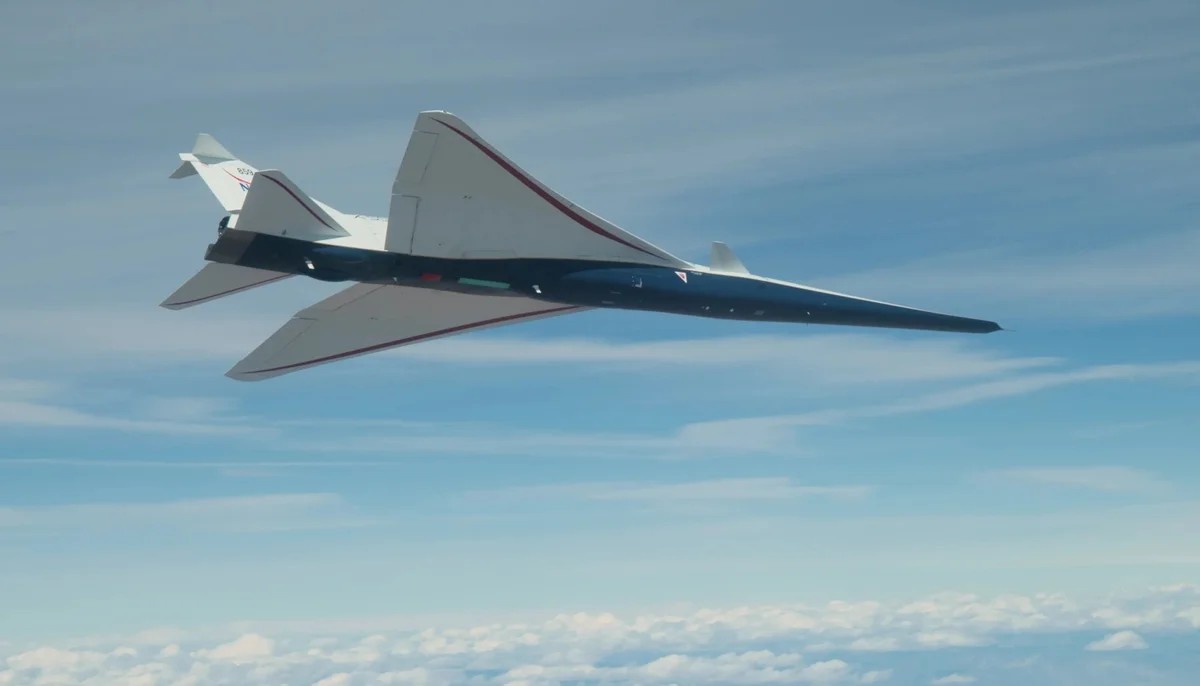
NASA is moving closer to a future where supersonic flight is not just fast, but also quiet. The agency has released new footage of its experimental X-59 jet, showcasing the aircraft’s capabilities as it prepares for a pivotal phase of testing. The goal is ambitious: to break the sound barrier over land without generating the disruptive sonic booms that have long grounded commercial supersonic travel.
The Problem with Speed
For decades, the primary obstacle to widespread supersonic commercial aviation has been noise. When an aircraft exceeds the speed of sound (approximately 767 mph at sea level), it creates shock waves that merge into a single, powerful pressure wave. This results in a sonic boom —a loud, explosive noise that can disturb communities, damage property, and startle wildlife.
Regulations currently prohibit supersonic flight over land in many countries, including the United States, precisely because of this noise pollution. Consequently, while military jets and the retired Concorde could fly faster than sound, commercial airlines were forced to stick to subsonic speeds, limiting flight times and efficiency.
A Needle-Nosed Solution
The X-59 is NASA’s engineering answer to this acoustic challenge. Unlike traditional supersonic aircraft, which feature blunt noses, the X-59 boasts a long, needle-like tip and a sleek, elongated fuselage. This unique design is engineered to stretch out the shock waves generated by the plane.
Instead of these waves converging into a single, loud boom, they are dispersed and weakened. NASA predicts that the resulting sound will be a soft “thump” or “thud,” comparable to the sound of distant thunder or a car door closing several blocks away. The aircraft is designed to cruise at speeds exceeding 1,000 mph—roughly twice the speed of a standard commercial jet—while keeping noise levels within acceptable limits for ground residents.
Testing in the Mojave Desert
The newly released footage captures the X-59 performing a series of maneuvers over the Mojave Desert in California. Viewers can see the jet executing rolls, climbs, and descents, demonstrating its stability and control at high speeds. The video also shows the deployment of its landing gear, a critical component for verifying the aircraft’s structural integrity and operational readiness.
These tests are part of a broader development process. The X-59 is still in the prototype phase, and these aerial maneuvers are essential for validating the computer models that predicted its quiet performance.
The Next Step: Community Reaction
Engineering success is only half the battle. The ultimate test of the X-59’s viability will be social, not just technical. NASA plans to fly the jet over populated neighborhoods in the U.S. to gauge public reaction.
This phase is crucial because perception matters. Even if the sound is technically quieter, public acceptance depends on whether residents find it tolerable. By surveying communities after hearing the “thud,” NASA hopes to gather data that could influence future aviation regulations. If the public responds positively, the door could open for a new era of quiet supersonic travel, drastically reducing flight