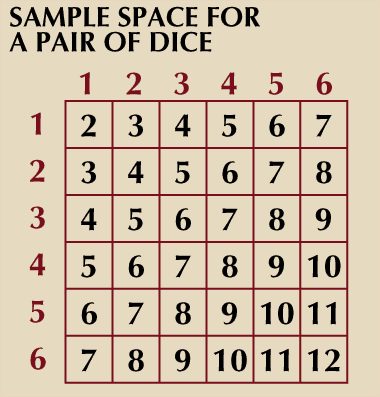
Probability theory is the branch of mathematics that analyzes random events. It assigns a number to the likelihood of something happening, ranging from 0 (impossible) to 1 (absolute certainty). At its core, probability is a ratio. It compares the number of ways an event can occur against the total number of possible outcomes.
Take a standard deck of cards. There are 52 cards in total. Thirteen of them are diamonds. The probability of pulling a diamond from the deck is 13/52, which simplifies to 1/4. That is a 25% chance. Simple. But the implications are not.
The Roots in Gambling and Card Games
Where did this math come from? Not from a sterile lecture hall. It grew out of attempts to understand card games and gambling. People wanted to know their odds. They wanted to know if the house always won or if they had a fighting chance.
As science became more rigorous, the connections between chance and the natural world became evident. Biologists, physicists, and sociologists started seeing analogies between games of chance and real-world phenomena. Consider the sexes of newborn infants. The sequence of boys and girls often follows patterns similar to those of coin tosses. Random, yes. But predictable in aggregate? Absolutely.
Why Probability Is a Fundamental Tool in Modern Genetics
This realization changed everything. Probability became a fundamental tool of modern genetics. You cannot understand inheritance without understanding likelihood. Traits are passed down with specific probabilities based on genetic combinations. The “coin toss” analogy holds up under the microscope.
The sexes of newborn infants follow sequences similar to those of coin tosses.
This is not just a fun trivia fact. It is the foundation of how we predict genetic outcomes. It allows us to model risk, inheritance, and variation with mathematical precision.
How Actuarial Statistics Uses Probability to Build the Insurance Industry
Probability theory is also the backbone of the insurance industry. Specifically, it operates through actuarial statistics. Insurers do not guess. They calculate. They use probability to assess risk across large populations.
How does this work in practice?
- Data Collection: Actuaries gather data on life expectancy, accident rates, and health conditions.
- Risk Modeling: They apply probability theory to estimate the likelihood of claims.
- Premium Setting: They set prices based on these calculated risks, ensuring the company can pay out claims while making a profit.
Without this mathematical framework, insurance would be a gamble. With it, it is a science.
Where You Will Encounter Probability Theory
You will encounter probability theory in many disciplines. It is not just for gamblers or insurance agents.
- Genetics: Predicting trait inheritance.
- Physics: Modeling particle behavior.
- Social Sciences: Analyzing population trends.
- Finance: Assessing investment risk.
The scale from 0 to 1 is universal. Whether you are flipping a coin, breeding plants, or pricing a car insurance policy, you are using the same fundamental logic.
Probability does not guarantee outcomes. It does not tell you exactly what will happen next. It tells you what is likely. And in a world full of uncertainty, that is often the most powerful knowledge you can