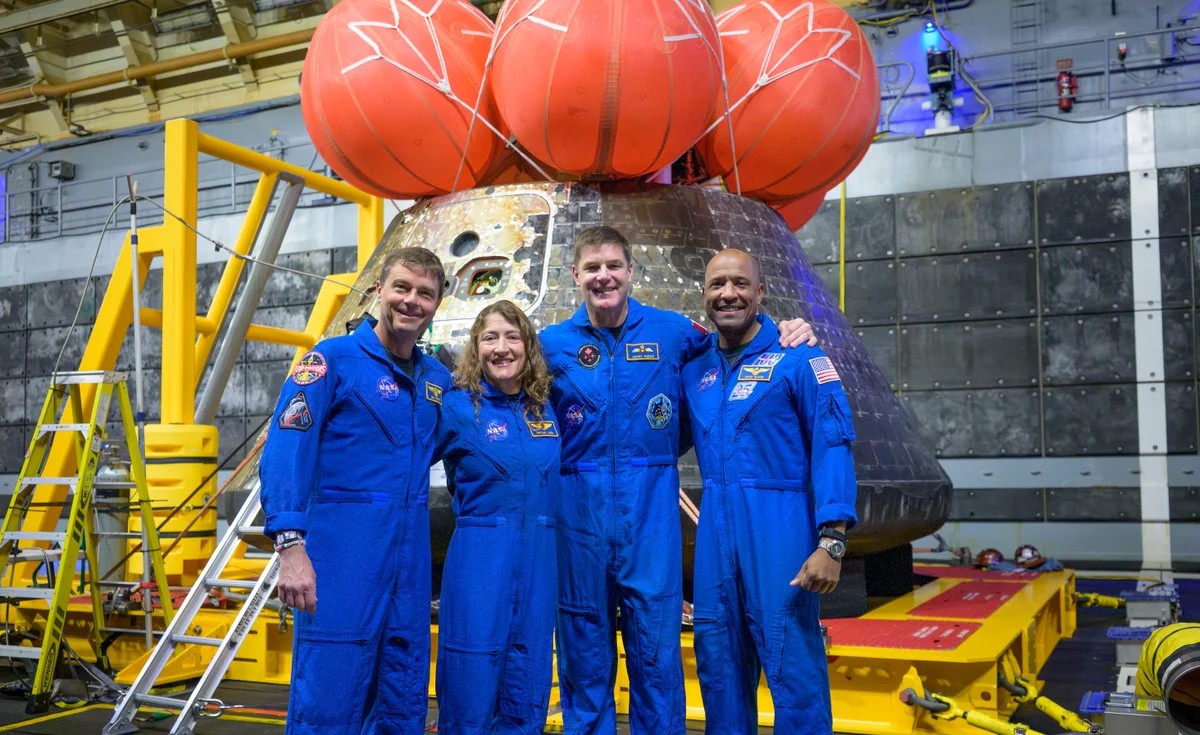
The Artemis II mission has officially concluded, marking the first time humans have traveled beyond Earth’s orbit in over half a century. Following their recent splashdown, the four-person crew—Reid Wiseman, Victor Glover, Christina Koch, and Jeremy Hansen —is now transitioning from the cockpit to the debriefing room, reflecting on a mission that was as much about testing technology as it was about inspiring a global audience.
A Milestone in Deep Space Exploration
The 10-day mission served as a critical high-stakes test for NASA’s Space Launch System (SLS) rocket and the Orion crew capsule. By traveling 212,000 miles from Earth, the crew pushed the boundaries of human endurance and hardware reliability.
This mission was not merely a voyage; it was a functional trial run for the upcoming Artemis III mission, which aims to land humans on the lunar surface. During their flight, the astronauts tested:
– Manual piloting capabilities of the Orion capsule.
– Life support systems in deep space environments.
– Crew ergonomics and daily operational efficiency.
Navigating Technical Hurdles and High-Stress Moments
While the mission is being hailed as a resounding success, the crew provided a candid look at the “tense” realities of operating a spacecraft far from home. Space exploration is rarely seamless, and the Artemis II crew encountered several unexpected technical anomalies that provided vital data for future engineers.
Key operational challenges included:
- Life Support Complications: The mission’s specialized waste management system (the toilet) experienced issues with its vent lines, though the primary function remained intact.
- Emergency Alarms: On the penultimate day of the mission, a smoke detector triggered an automated ventilation shutdown. Wiseman described the experience as particularly jarring, noting the psychological strain of dealing with a fire alarm while 80,000 miles away from Earth.
- Cabin Ergonomics: The crew noted that the interior layout of the capsule could be optimized to make routine tasks—such as preparing meals—more efficient during long-duration flights.
Despite these hiccups, the crew emphasized the importance of mental health support, which was available throughout the mission to help manage the heightened awareness and stress required by deep-space travel.
The Human Impact: A Global Connection
Beyond the technical data, the crew highlighted a profound emotional takeaway: the mission’s ability to foster a sense of global unity. Wiseman noted that the “global outpouring of support” was unexpected and overwhelming, suggesting that space exploration continues to serve as a rare bridge between nations.
Since returning to Earth, the astronauts have been immersed in a rigorous schedule of medical testing and scientific debriefings. Their findings will be instrumental in refining the systems used for the next phase of lunar exploration.
“We wanted to go out and try to do something that would bring the world together, to unite the world.” — Mission Commander Reid Wiseman
Conclusion
The Artemis II mission successfully proved that NASA can navigate the complexities of deep-space travel, providing the essential technical and psychological blueprint required for the next leap: landing humans on the Moon once again.