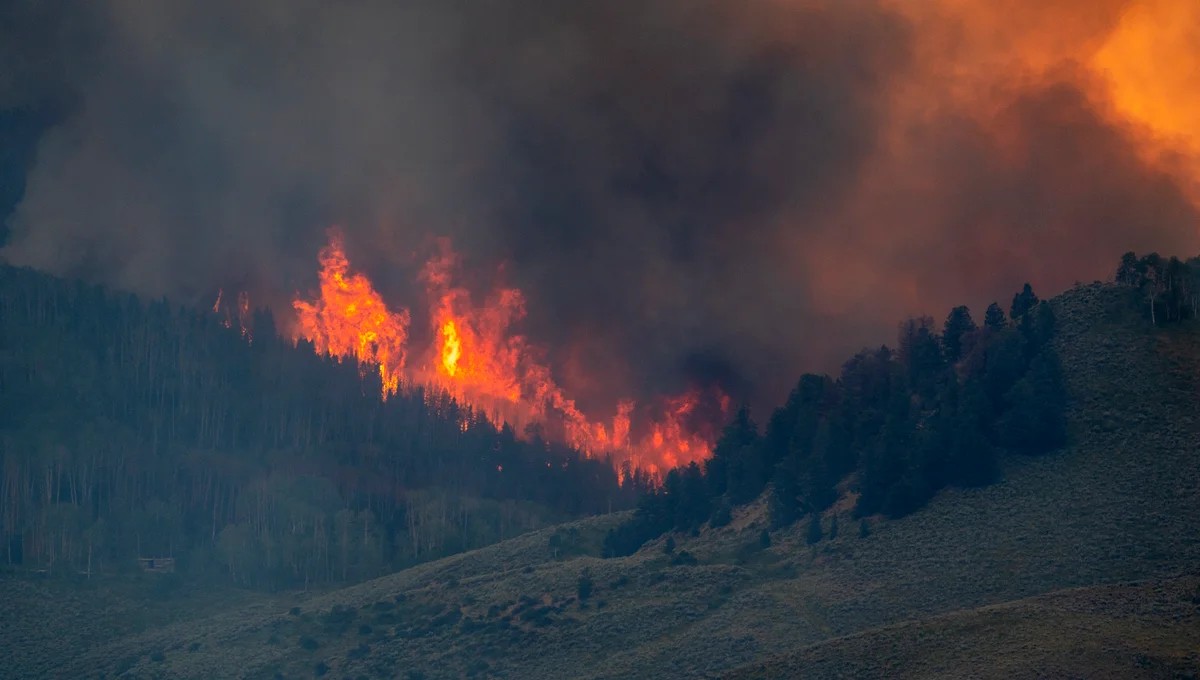
A massive stretch of the central United States is currently under “red flag” warnings, as weather conditions create a high risk for the rapid ignition and spread of wildfires. The warning zone is expansive, stretching from northern and western Texas all the way to the Canadian borders of North Dakota and Minnesota.
The affected regions include:
– Texas, New Mexico, and Oklahoma
– Kansas, Nebraska, and Colorado
– North Dakota, South Dakota, and Minnesota
Understanding the “Red Flag” Criteria
A red flag warning is not a prediction of fire, but a notification that the environment is “primed” for disaster. The National Weather Service (NWS) issues these alerts when three specific environmental factors converge:
- Low Humidity: Relative humidity levels typically drop below 15–25%, meaning the air is extremely dry.
- High Winds: Sustained winds of 15 to 25 mph (measured 20 feet above ground) act as a catalyst for spreading flames.
- Dry Vegetation: Low moisture levels in grasses, leaves, and mulch provide highly flammable fuel.
In North Dakota, meteorologist Todd Hamilton notes that while unseasonably warm and dry weather is currently moving from the western to the eastern parts of the state, these conditions are not entirely unusual for late April and early May. Because spring warming is occurring, the vegetation has not yet “greened up,” leaving much of the landscape dry and vulnerable.
A Growing Global Trend
While seasonal shifts trigger these warnings, scientists point to a broader, more concerning trend: the increasing frequency and intensity of extreme wildfires.
Recent research highlights how changing climate patterns are altering fire behavior:
– Nighttime Warming: NASA reports that warmer nighttime temperatures prevent the land from cooling and rehydrating, allowing fires to spread more aggressively even after sunset.
– Increased Extremity: A 2025 study in Nature Communications suggests the probability of “extreme” fires has risen by as much as 152% since 1900.
– Rising Frequency: Data from 2024 indicates that extreme wildfires are now roughly twice as common as they were two decades ago.
Active Fires and Emergency Measures
The threat is not merely theoretical; active wildfires are already causing significant damage in the Southeast. In Georgia, Governor Brian Kemp has declared a state of emergency across 91 counties, noting that the number of fires this year has already exceeded the five-year average. So far, blazes in the state have consumed more than 35,000 acres. Similar wildfire activity is being reported across northern and central Florida, including areas near Tampa, Pensacola, and Jacksonville.
How to Prevent Accidental Ignition
With the risk heightened, authorities urge residents to exercise extreme caution:
– Dispose of waste safely: Never throw cigarettes or matches from moving vehicles.
– Secure outdoor fires: Use weighted metal covers on burn barrels and never leave a fire unattended.
– Extinguish completely: When putting out a fire, use plenty of water and stir the embers until they are completely cold to the touch.
Conclusion
As dry conditions and high winds sweep across the central U.S., the combination of seasonal weather patterns and long-term climate trends is creating a heightened state of wildfire vulnerability. Public vigilance and strict fire prevention are essential to mitigating the risk of new outbreaks.