June 2026 looks back. Fifty years. A hundred. A century and a half. The timeline is jagged, but the discoveries remain sharp.
1976: When Electricity Gets Wet
Electrons don’t just move. They gather.
Inside a semiconductor crystal, charge carriers can behave exactly like water molecules. Vapor first. Then condensation, provided the relative humidity of electrons and ‘holes’ gets high enough. Holes are just empty spaces where electrons should be, positively charged voids. It sounds poetic until you remember these aren’t H20 molecules. They’re quantum fluid.
The problem? It’s unstable. The electrons and holes keep finding each other, annihilating, spitting out infrared radiation in the process. The whole thing vanishes in a fraction of a second unless you keep feeding it energy. You can’t pour it into a glass. It’s trapped in the solid.
A unique testing ground for the fundamental principles of physics.
This isn’t just liquid. It’s quantum-mechanical liquid. Conventional fluid dynamics take a backseat to weird subatomic effects. Scientists love it. It’s a window into how the universe works when things get really small and really strange.
1926: Looking into the Inferno (Carefully)
The sun was busy. Sunspots were multiplying, getting bigger, spreading across the face of the star like ink spills.
Large enough to see with the naked eye, yes. But don’t do that.
“Unaided” is a trick word here. No sane person looks at the sun unprotected. You need smoked glass or densely fogged photographic film. Back then, that was high-tech protection. With those filters, amateurs watched the spots rotate across the disk day by day. A slow, stately parade across the inferno.
Is the Core Liquid? Hardly.
We’d barely scraped the surface. One mile down is a pinprick on a peach. Yet people insisted the center of the Earth was molten lava.
Wrong.
Volcanoes made it seem obvious. Lava comes up, therefore fire lies below. Simple logic, flawed geology. The pressure at Earth’s center is immense. Too high for rock to melt. The core? As rigid as steel.
Seismologists already knew. Earthquake shocks travel through the planet. Their characteristics don’t lie. They proved the interior is solid. Volcanoes are local affairs, shallow tricks. Not a window into the heart of the world.
(Just a heads up: we’d wait a decade before someone properly described the solid inner core sitting inside the liquid outer core. Progress is slow.)
Eavesdropping at the Top
The North Pole has no north. You can go east or west if you want, but every direction from the pole points south. Radio waves don’t care. They spray across the globe in short bursts, bouncing over ice and storm cradles.
Twelve expeditions were prepping for the summer race. Three were ready to fly. News teams set up camp in Point Barrow, Alaska. Antennas up. Ears open.
Why there? Because low wavelength signals skip. They bounce. They travel far, faster than newspapers, almost instant. Amateur operators with short-wave sets could hear explorers’ voices within fractions of a second. A narrative broadcast directly into the ether, then into your living room.
1876: Architects with Eight Eyes
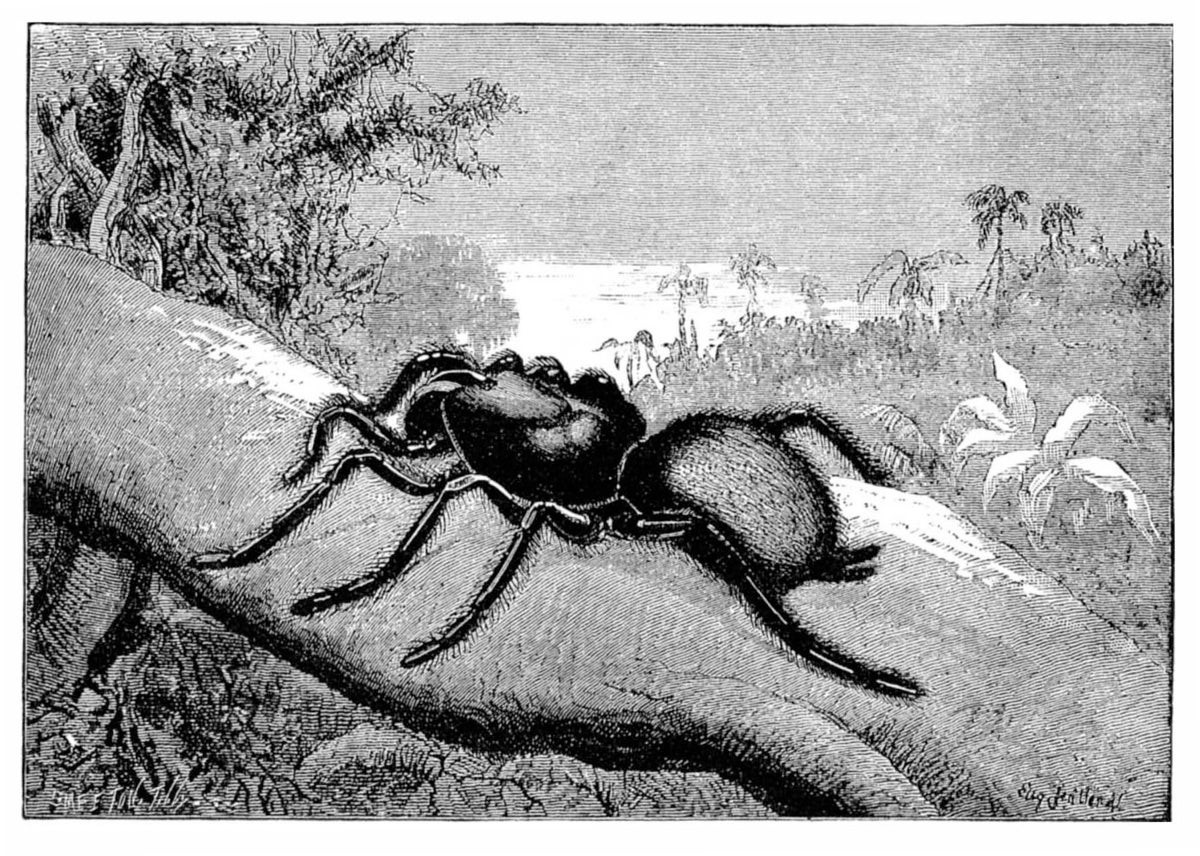
The Paris Jardin des Plantes had a curious specimen. A Mygale spider from Corsica. Light brown, eight eyes, claws retracting like a cat’s.
But its home was the real marvel.
It dug tubes in clay banks, then built them up like a fortress. The walls were vaulted, hardened with mortar, then lined with soft silk. Not just any silk though. The spider worked from the outside in, layer by layer.
The door is the masterpiece.
Thin—barely a tenth of an inch—but built of over 30 alternating layers. Web. Mortar. Web. Mortar. Each one embedded in the next, nested like a set of Russian dolls. Cups within cups. It took patience. It took reasoning, or at least something that looked an awful lot like it.
Does the spider know geometry? Maybe not. But the door holds.