In a landmark move for the energy industry, fusion startup Commonwealth Fusion Systems (CFS) has officially applied to join a major U.S. power grid. This application marks the first time a fusion energy developer has entered the interconnection queue of a large-scale grid operator, signaling a shift from purely theoretical research toward the practical goal of commercial energy production.
The Ambition: Connecting to the PJM Grid
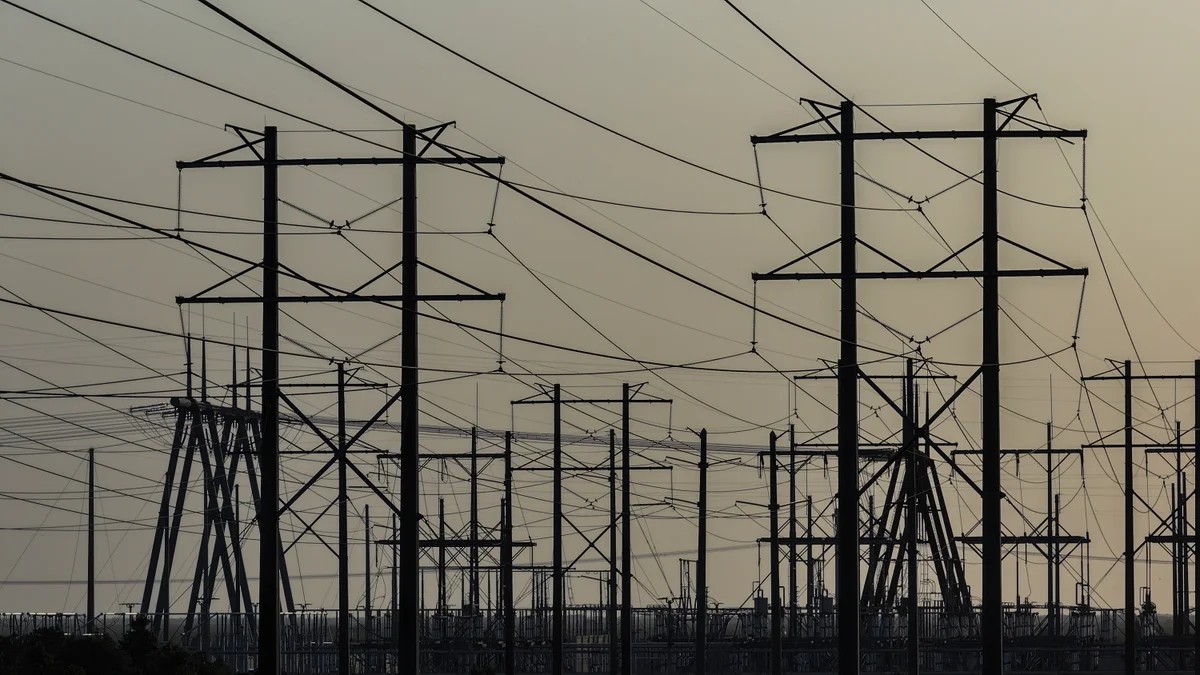
CFS is seeking to connect to the PJM Interconnection, one of the largest electricity grids in the United States. PJM manages the flow of power for more than 67 million people across 13 states and Washington, D.C., providing a massive capacity of 182,000 megawatts.
By filing this application, CFS is moving beyond the laboratory. As CEO Bob Mumgaard noted, the company is attempting to prove not just that fusion physics works, but that fusion power can actually be integrated into the existing utility infrastructure to serve customers.
The Technology: Mimicking the Sun
The company is developing a tokamak reactor, a device that uses incredibly powerful magnetic fields to contain a cloud of superheated particles known as plasma.
The process involves several complex stages:
– Fueling: The reactor uses isotopes of hydrogen—deuterium and tritium.
– Fusion: Under extreme heat and pressure, these particles fuse together, mimicking the nuclear reactions that power the sun.
– Energy Capture: The resulting heat is used to boil water into steam, which spins a turbine to generate electricity.
– Containment: To manage the intense heat, CFS utilizes advanced superconducting magnets to insulate the plasma. In September 2025, the U.S. Department of Energy validated the company’s toroidal field magnet technology, a critical component for maintaining stability.
The Road Ahead: Technical and Regulatory Hurdles
Despite the progress, significant challenges remain before fusion can become a household reality.
1. The “Net Energy” Problem
The ultimate hurdle for all fusion developers is achieving a stable, sustained reaction that produces more energy than it consumes. While experimental reactors like Germany’s Wendelstein 7-X and the Joint European Torus (JET) have successfully contained plasma for periods ranging from 43 seconds to one minute, scaling this to a continuous, commercial power source is an immense engineering feat.
2. A Multi-Year Timeline
CFS has laid out a clear, albeit ambitious, roadmap:
– 2027: Demonstrate the SPARC model (Smallest Possible ARC).
– Early 2030s: Launch its first commercial power plant, ARC (Affordable, Robust, Compact), in Virginia.
3. The Regulatory Maze
Joining a grid is not a simple plug-and-play process. CFS must now navigate a rigorous, multi-year review by PJM Interconnection. This includes extensive impact studies, safety compliance reviews, and technical analyses to ensure that a new, experimental energy source will not compromise grid reliability.
Why This Matters
The transition to fusion energy represents a potential “holy grail” for the global energy crisis. Unlike fossil fuels, fusion offers limitless clean energy without the long-lived radioactive waste associated with traditional nuclear fission. Furthermore, as global electricity demand rises, the ability to add a stable, high-capacity power source like fusion could fundamentally reshape how the world manages its energy security.
“By becoming the first fusion energy developer to enter a major grid operator’s interconnection queue, we’re demonstrating that when you’re serious about building a power plant in the early 2030s, you act now.” — Bob Mumgaard, CEO of Commonwealth Fusion Systems
Conclusion: While the technical path to commercial fusion remains unproven, Commonwealth Fusion Systems’ application to the PJM grid moves the technology out of the realm of pure science and into the serious business of energy infrastructure.