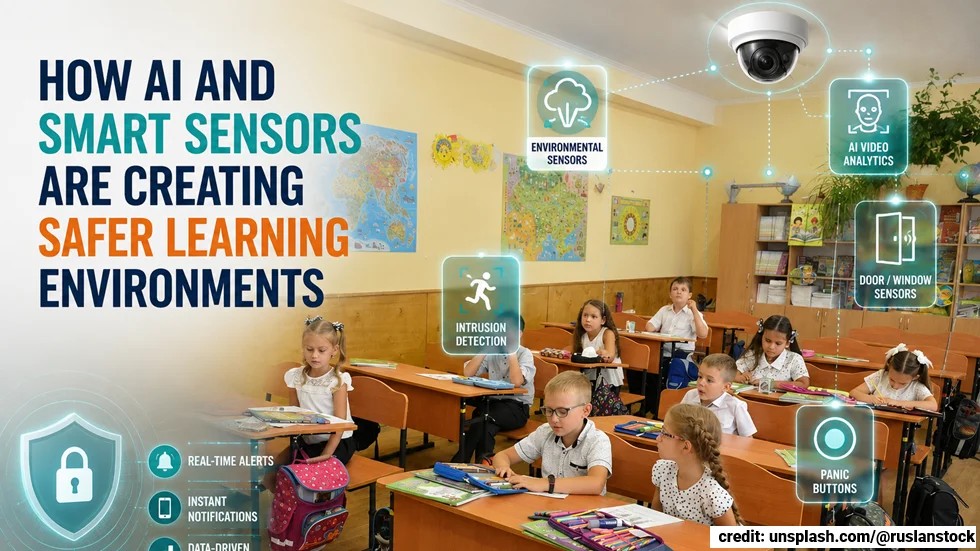
Schools aren’t just places for learning. They are sprawling campuses packed with thousands of people who need protecting. Administrators walk a tightrope. They must keep students safe without turning the campus into a fortress. The pressure is real. According to the National Center forEducation Statistics (NCES), over 93% of public schools in the US use security cameras. The global smart education market? It’s projected to hit $80 billion by 2层30. Why the boom. Because AI and IoT technologies are rewriting the rules of campus safety.
Old-school CCTV systems have limits. Humans watching screens miss things. Tired eyes. Distractions. Large campuses make it hard to spot unauthorized visitors or suspicious packages. That changes now. AI-powered surveillance and smart sensors catch risks before they turn into emergencies. This is how we are creating safer learning environments using AI and smart sensors.
From passive recording to real-time threat detection
Cameras used to be useless until after a crime happened. You watched the tape too late. AI flips that dynamic. Modern systems don’t just record. They analyze. They watch the video stream for anomalies in real time.
Think about what these systems spot. Unauthorized entry. Loitering. A crowd gathering where it shouldn’t. An unattended bag near a classroom. Instead of relying on a security guard to scan twelve monitors at once, the software does the work. It alerts staff instantly. Speed is the main advantage here. Detecting a threat in seconds saves lives. Detecting it in minutes might be too late.
Platforms like Coram show this in practice. They don’t require ripping out existing infrastructure. They plug into IP cameras already on campus. They layer video analytics over access control and environmental data. The result. Better situational awareness. Faster responses.
Technology shouldn’t just document history. It should help shape it.
How smart sensors fill the gaps cameras miss
Video feeds are great. They have blind spots. Literally and figuratively. Smart sensors provide the layer that cameras cannot. They monitor conditions invisible to a lens. They create a net that covers classrooms, labs, and hallways.
Which sensors matter most for school safety?
- Door and window contacts : They scream when someone breaks in after hours.
- Environmental monitors : They track smoke, temperature, and air quality. Early hazard detection is key here.
- Panic buttons : Staff can trigger an instant alert during a medical crisis or lockdown.
- Motion detectors : They flag unusual movement in empty buildings.
When these devices talk to each other, magic happens. A forced entry at a back door doesn’t just trigger an alarm. It wakes up nearby cameras. It pushes a live video feed to a principal’s phone. It tells security exactly where to run. This connected approach cuts down confusion. It gives responders the intel they need before they even reach the scene.
Why AI speeds up emergency response times
Time is the enemy during an emergency. Seconds count. Whether it’s a fire, an intruder, or a health issue, delays breed chaos.
Automation fixes that lag. The system identifies the incident. It geolocates the problem. It alerts the right people immediately. No one has to sift through footage hoping to find the source. Emergency responders also benefit. They see live video and sensor data on the way over. They know what they are walking into.
This isn’t just about disasters. AI helps with daily safety too. It tracks congestion at drop-off times. It monitors visitor traffic. It flags maintenance issues before they become hazards. Schools use this data to supervise arrivals, dismissals, and big events more effectively.
Can you build security that doesn’t scare students?
There is a fear. That high-tech security means high surveillance. That students feel like they are living in an interrogation room. Good design avoids that.
AI systems are built to be subtle. They only highlight meaningful events. They ignore the routine noise. Administrators focus on genuine risks. They aren’t burning out watching kids walk down the hall. The goal is peace of mind for parents and teachers. It is about preventing incidents so the school stays a place for learning.
We aren’t just adding more cameras to walls. We are building intelligent ecosystems. They protect without intruding. Schools investing in this today are ready for tomorrow. The technology gets smarter. The safety measures get quieter.