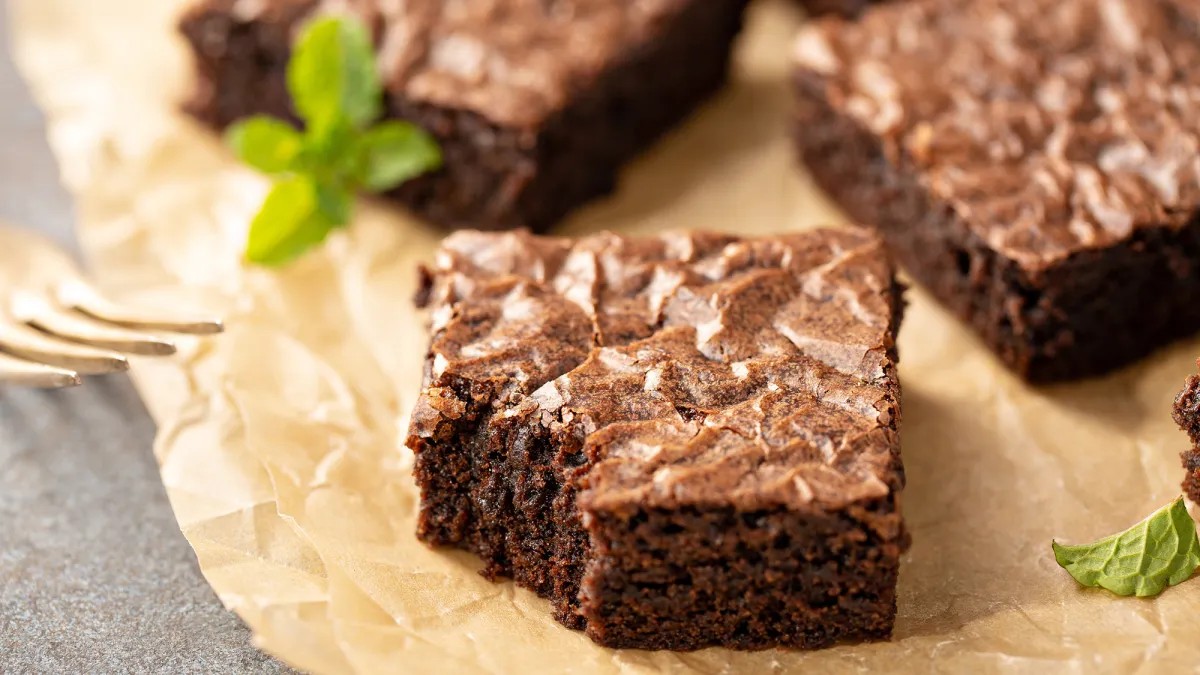
Whether you prefer a dense, fudgy center or a light, cake-like crumb, the “perfect” brownie is entirely subjective. However, according to food science, this preference isn’t just about taste—it is a matter of precise chemical reactions. By understanding how ingredients interact, you can move away from guesswork and begin engineering the exact texture you desire.
The Building Blocks: How Ingredients Shape Texture
The difference between a brownie that feels like a moist truffle and one that feels like a sponge lies in the ratios of flour, fat, sugar, and eggs.
Flour and Structure
Flour provides the structural backbone of the brownie. When flour meets liquid, its proteins (gliadin and glutenin ) link to form gluten, a network that holds the dessert together.
– For Cakey Brownies: Increase the flour and mix the batter thoroughly. This develops a stronger gluten network, resulting in a lighter, more aerated structure.
– For Fudgy Brownies: Use less flour and minimize mixing to keep the gluten network weak and the texture dense.
The Role of Sugar: Flavor and Crust
Sugar does much more than provide sweetness; it is a functional ingredient that affects moisture and surface texture.
– The Maillard Reaction: As sugar heats, it reacts with proteins to create complex aromas and deep flavors.
– The Crackly Crust: That coveted shiny top occurs when sugar dissolves in the batter, rises to the surface during baking, and re-crystallizes.
– Texture Tweaks: Using brown sugar (which contains molasses) yields a chewier result. Additionally, using caster sugar (fine granulated sugar) can result in a softer, moister brownie because smaller particles dissolve more easily and bind moisture more effectively.
Fat: The Moisture Regulator
Fat is the primary driver of “richness.”
– Butter vs. Oil: While butter offers classic flavor, scientific studies suggest that oil-based brownies are often softer, more elastic, and moister. Oil is also liquid at room temperature, whereas butter solidifies, which can affect the “mouthfeel” of the finished product.
– The Rule of Thumb: The more fat you add, the more indulgent and fudgy the brownie will become.
Eggs: The Dual-Purpose Binder
Eggs provide both structure (via proteins) and richness (via fats in the yolks).
– More Egg Whites: Increases protein content, leading to a lighter, cakier texture.
– More Egg Yolks: Increases fat content, leading to a richer, denser result.
Mastering the Chocolate Component
The choice between melted chocolate and cocoa powder fundamentally changes the brownie’s profile.
- Melted Chocolate: Contains cocoa butter, which solidifies as it cools. This is the secret to a dense, fudge-like bite.
- Cocoa Powder: Has significantly less fat, which produces a lighter, drier crumb.
- Tip: Use Dutch-processed cocoa for a smooth, mellow flavor, or natural cocoa for a sharper, more acidic profile.
- Chocolate Chips: Because of their specific fat-crystal structure, chips maintain their shape, creating “melty pockets” of chocolate throughout the bake.
Pro-Tips for the Perfect Bake
Beyond the ingredients, the physics of your kitchen plays a vital role in the final product.
- Leavening Agents: If you want a dense brownie, skip the baking soda and powder. These agents introduce air, which creates lift and a cake-like texture.
- Pan Material: Metal pans heat quickly and create firm edges. Glass or ceramic pans retain heat longer, which can lead to uneven baking if not monitored closely.
- The “Carry-Over” Effect: Brownies continue to cook even after they leave the oven due to residual heat.
- To achieve fudgy centers: Remove them when a toothpick comes out with moist crumbs.
- To achieve cakey centers: Remove them when the toothpick comes out clean.
Summary: Choose Your Formula
The Fudgy Profile: Low flour, high fat, extra egg yolks, melted chocolate, no leavening, and slightly underbaked.
The Cakey Profile: High flour, low fat, extra egg whites, cocoa powder, plus a leavening agent, baked until fully set.
The Chewy Profile: High sugar (specifically brown sugar) and high fat content.