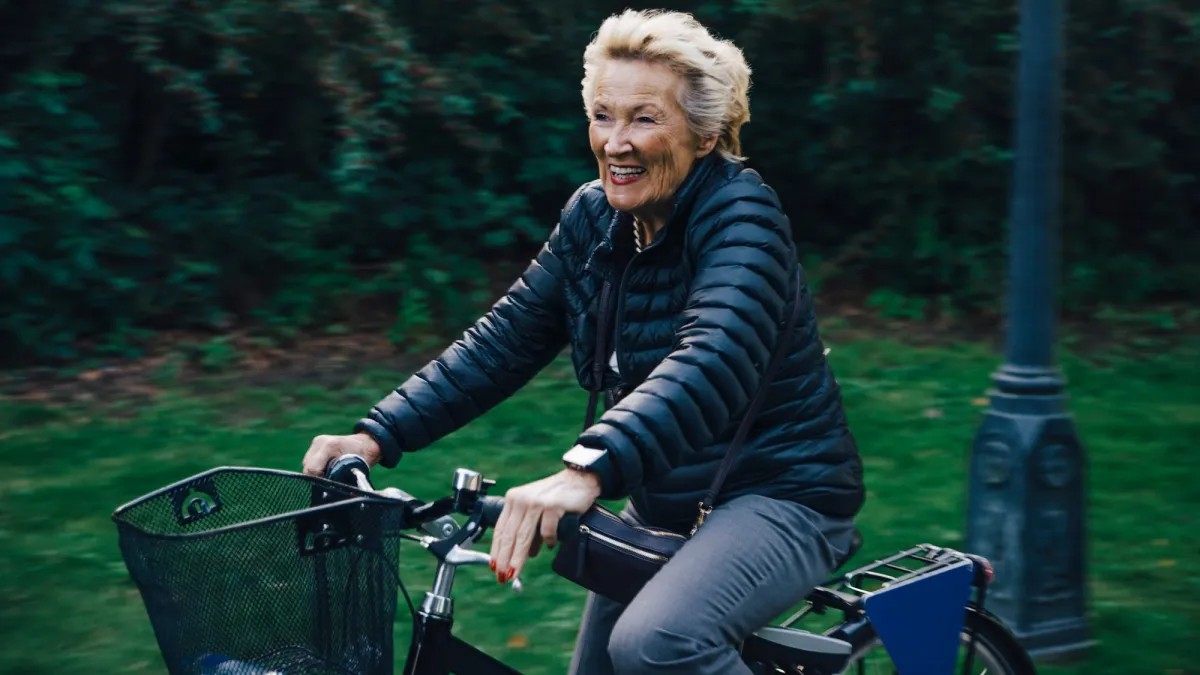
We have all experienced that frustrating moment of forgetting where we left our keys or what we ate for dinner. Yet, even if you haven’t touched a bicycle in twenty years, the moment you sit on the saddle, your body seems to remember exactly what to do.
This phenomenon is more than just a lucky coincidence; it is a fundamental aspect of how the human brain categorizes and stores information. The reason “it’s like riding a bike” is a valid way to describe a skill is rooted in the distinct ways our brains handle different types of memory.
The Three Pillars of Memory
To understand why skills stick while facts fade, we must look at how the brain organizes long-term memory. According to Dr. Andrew Budson, a professor of neurology at Boston University, the brain utilizes three distinct pathways:
- Semantic Memory: This is your “encyclopedia.” It stores facts and general knowledge, such as knowing that a dog is different from a cat or understanding how to use a screwdriver.
- Episodic Memory: This is your “autobiography.” It consists of specific personal experiences, like the memory of your first kiss or what you did last weekend.
- Procedural Memory: This is your “instruction manual.” It involves tasks that become automatic through repetition, such as playing an instrument, typing, or cycling.
While semantic and episodic memories are often the first to slip as we age or experience stress, procedural memory is remarkably resilient.
The Brain’s “Hardwired” Skills
The reason riding a bike feels so permanent is due to where the memory is stored. While remembering a dinner party relies on different brain regions, procedural memory is managed by deep structures like the basal ganglia and the cerebellum.
These areas are responsible for motor control and coordination. Because these structures are deeply integrated into our physical movement, procedural memories become “hardwired.” This doesn’t mean they are unchangeable—you can certainly adapt your balance to a different type of bike—but the fundamental mechanics remain incredibly stable over time.
“What is quite different about procedural memories is that they rely on these different brain structures that are, in general, much more resistant to change over time.” — Dr. Andrew Budson
Why Scientists Can’t Just “Study Biking”
You might wonder why there isn’t more specific research on the act of cycling itself. The answer lies in the difficulty of scientific control.
To conduct a rigorous study, scientists need to control variables. It is nearly impossible to perform an MRI scan on a person while they are actively pedaling down a street. Furthermore, relying on people to “self-report” how well they can ride is unreliable; a person’s perception of their skill might not match their actual ability.
Instead, researchers use proxy experiments. They might ask subjects to perform difficult tasks, such as drawing shapes while looking at their hands through a mirror. This allows scientists to observe the process of a new skill moving from conscious effort to automatic procedural memory in a controlled environment.
The Role of Repetition and Aging
It is important to note that a single attempt at a skill is rarely enough to create a lasting procedural memory. The neural pathways must be “beefed up” through repetition. Once these pathways are established, they become much easier to reactivate. This is why, even after a long hiatus, you will likely find that you “re-learn” a skill much faster the second time around.
This biological mechanism remains useful throughout our entire lives:
– Adaptability: As we age, we can learn new complex motor skills, such as operating a wheelchair or using new technology like a tablet.
– Evolutionary Advantage: From a survival standpoint, it is essential that skills like running or navigating terrain become automatic, allowing our conscious minds to focus on other threats rather than the mechanics of movement.
Conclusion
The permanence of cycling skills is a testament to the brain’s ability to create specialized, highly resistant memory pathways for physical tasks. While our personal histories and facts may fade, our procedural “muscle memory” remains a reliable tool for navigating the world.