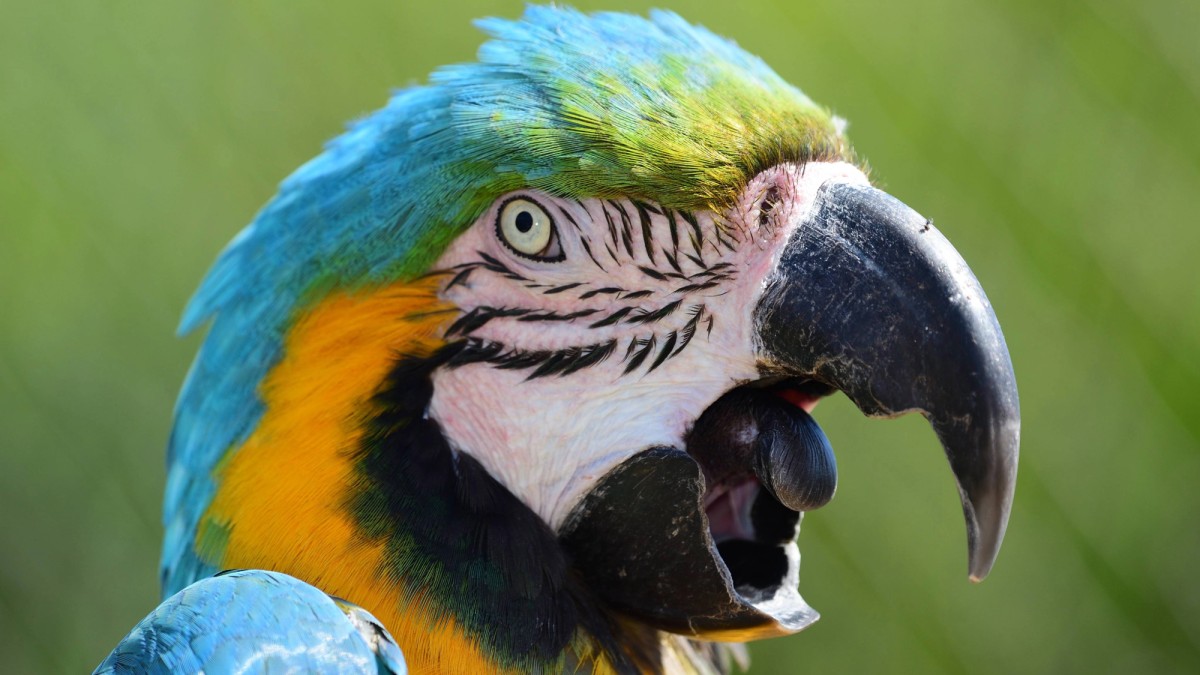
For a long time, humans have been fascinated by the ability of parrots to mimic our speech. We have all seen videos of birds cursing or greeting their owners, but a new study suggests their linguistic abilities might go much deeper than mere imitation. Researchers are now investigating whether parrots use names to navigate their social worlds, much like humans do.
Beyond Mimicry: The Search for Individual Labels
While it is well-documented that parrots can copy human sounds, there is a significant difference between mimicry (repeating a sound) and communication (using a sound to convey specific meaning).
In the animal kingdom, the use of “vocal signatures”—unique sounds used to identify individuals—has been observed in several species:
– African savannah elephants use name-like calls to address one another.
– Bottlenose dolphins utilize learned vocal labels to communicate.
The central question for biologists is whether parrots apply these sounds with the same intentionality and social structure that humans use when calling out a friend’s name.
Insights from the Many Parrots Project
A recent study published in the journal PLOS One sought to bridge this gap by analyzing data from over 889 companion parrots. Led by Professor Christine Dahlin of the University of Pittsburgh at Johnstown, the research team focused on whether these birds could learn and apply names to specific individuals, including both humans and other animals.
The findings revealed a fascinating nuance in avian intelligence:
- Appropriate Usage: A significant portion of the subjects—88 individual parrots—demonstrated the ability to use names correctly to identify specific beings.
- Unique Behavioral Patterns: While their usage often mirrored human patterns, parrots also displayed “atypical” behaviors. For instance, many parrots use their own names as a tool to grab attention, a social tactic that differs from how humans typically use names.
Why This Matters for Wildlife Biology
The ability to use names is more than just a clever trick; it is a tool for managing complex social interactions. For highly social creatures, being able to single out an individual allows for more efficient and targeted communication within a group.
Because companion parrots have shown they can master name usage in domestic settings, researchers believe this provides a window into the wild. If parrots can utilize names in captivity, it is highly probable that wild flocks are engaging in similar sophisticated social signaling to maintain their group structures.
“Parrots are very social animals with impressive mimicry abilities,” says Dahlin. “If they can learn and use names appropriately in captivity, it would not surprise me to learn they are engaging in similar behavior in their wild flocks.”
The Big Picture
This research continues to chip away at the idea that complex linguistic social structures are a uniquely human trait. By studying the “chatty” pets in our homes, scientists are gaining vital clues about the cognitive depth of birds in the wild, suggesting that the line between human communication and animal signaling may be thinner than we once thought.
Conclusion: By demonstrating the ability to use names for both others and themselves, parrots prove that their vocal abilities are driven by social intelligence rather than just mindless repetition. This research highlights a growing trend in biology: recognizing that many “human” cognitive traits are actually shared across the animal kingdom.