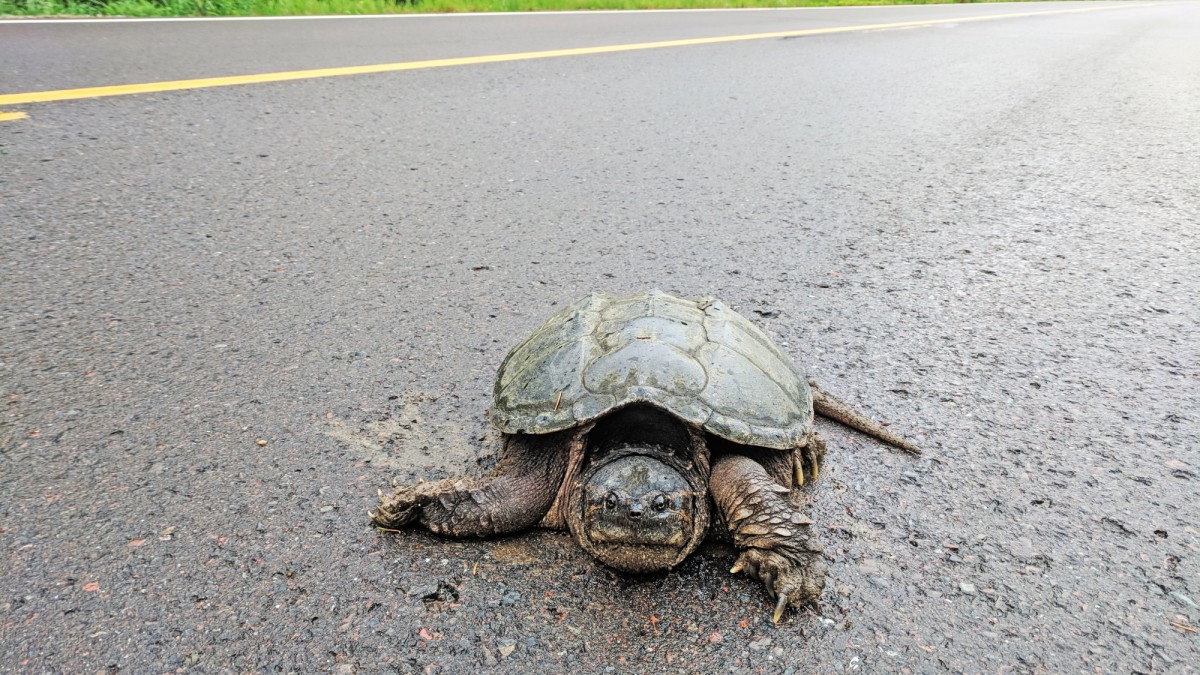
As spring arrives and temperatures rise, wildlife activity increases across the landscape. While many animals emerge from dormancy, turtles are currently waking up from brumation —the reptile version of hibernation. This seasonal movement often brings them into direct conflict with human infrastructure, specifically busy roadways.
The High Stakes of Road Mortality
For many species, a road crossing is a life-or-death journey. While a turtle’s shell provides protection against many predators, it offers little defense against a moving vehicle.
This is not merely a matter of individual loss; it is a significant conservation issue. Out of 356 known turtle species, the International Union for Conservation of Nature (IUCN) has listed 161 as threatened. Because turtles often have slow reproductive cycles, every adult lost to vehicle strikes represents a major blow to the survival of the next generation.
How to Assist a Turtle Safely
If you encounter a turtle attempting to cross a road, you can help—but you must prioritize your own safety first.
1. Secure Your Environment
Before attempting a rescue, ensure you are in a safe position. If you are driving, activate your hazard lights and pull over slowly onto the shoulder. Never attempt to help a turtle if it puts you or your vehicle at risk of an accident.
2. Observe and Assist
Assess the turtle’s progress. If it is moving steadily toward the other side, the best course of action may be to simply stand guard to ensure it completes its journey.
If the turtle is stationary or stuck:
– Direction matters: Always move the turtle in the same direction it was already heading. Turtles follow instinctual paths to find food, nesting sites, and mates; redirecting them can disorient them and waste their energy.
– The “Hamburger Grip”: Never pick up a turtle by its tail. Instead, place your hands on both sides of the shell, much like you are holding a hamburger, to lift it securely.
– Alternative methods: If you prefer not to handle the animal directly, you can use a car mat to transport it across the road.
– The Landing: Place the turtle in a low spot on the ground. Avoid dropping them from heights or placing them on high rocks, as the impact can cause internal injuries.
3. Handling Aggressive Species
Be especially cautious with snapping turtles. Known for their long necks and defensive temperament, they are much more likely to strike than species like box turtles, which typically retreat into their shells. When handling a snapper, keep your hands as close to their backside as possible to avoid their reach. Always remember that aggression is a survival mechanism, often driven by the need to protect eggs.
Reporting and Injured Wildlife
Your encounter can provide valuable data for conservationists. After a successful relocation, consider taking a photo and reporting the sighting to your local fish and wildlife department. These reports help scientists track and assess local population trends.
If you find an injured turtle:
– Do not attempt to treat the injuries yourself.
– Place the turtle in a secure box.
– Note the exact location where it was found.
– Contact a local wildlife rehabilitation center immediately for professional guidance.
Note: Never attempt to keep healthy or injured turtles as pets. Uninjured turtles belong in the wild, and professional rehabilitators are best equipped to handle medical care.
Conclusion
Helping a turtle cross a road is a small act that can have a significant impact on biodiversity. By following these safety protocols, you can protect both yourself and the vulnerable species struggling to navigate our expanding infrastructure.