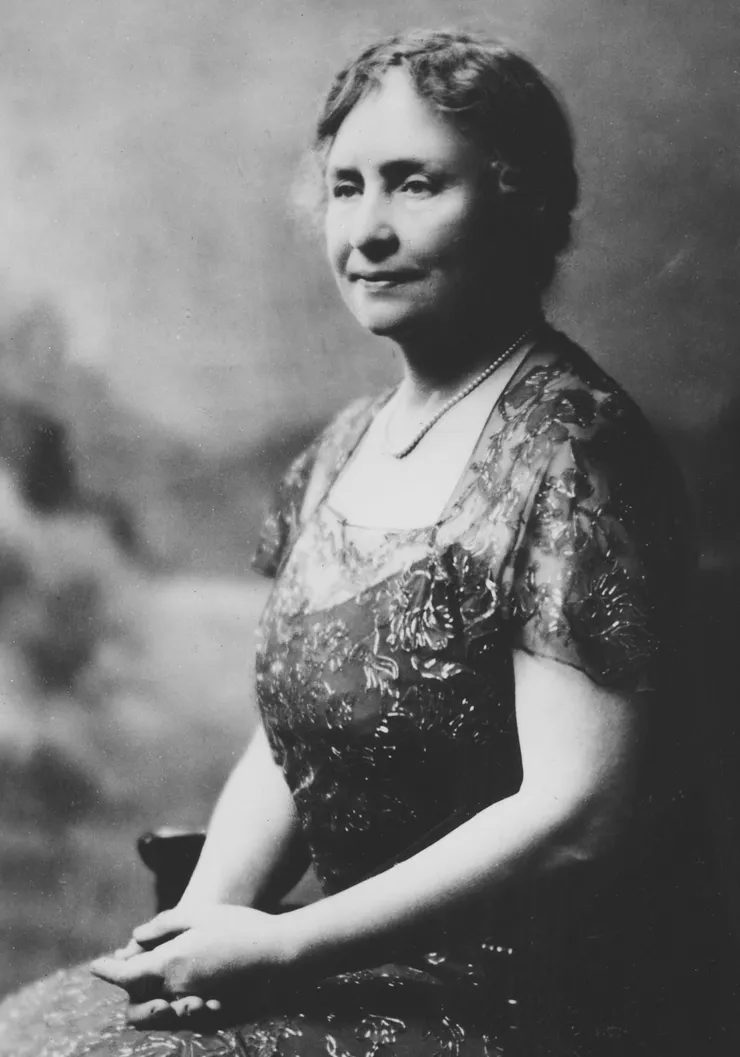
Helen Keller was born in Tuscumbia, Alabama, on June 27, 1880. She lived a life that defied the odds. By age 19 months, an illness had stripped her of sight and hearing. Speech development followed soon after. She was cut off from the world.
Then came Anne Sullivan.
Sullivan arrived at the Keller home in 1887. She was 20 years old. Her job was to teach a child who had no way to understand language. The breakthrough was simple but radical. Sullivan pressed the manual alphabet into Keller’s palm. She spelled out the names of objects. Water. Cup. Tree.
Keller struggled at first. The connection didn’t click immediately. But then it did. The abstract concept of “word” merged with the physical sensation of letters on skin. This moment changed everything. It unlocked the door to communication.
Breaking the Silence
Once the initial barrier broke, learning accelerated. Keller didn’t just learn words. She learned to read Braille. She learned to write. She became an author.
Her most famous book is The Story of My Life, published in 1902. It’s not just a memoir. It’s a manual on how to bridge the gap between isolation and understanding. She wrote other books too. She traveled. She advocated for disability rights. She was an educator.
Her childhood story became a cultural touchstone. William Gibson dramatized it in the play The Miracle Worker in 1959. A film version followed in 1962. The story resonates because it’s not just about disability. It’s about the power of persistence.
Why Her Method Still Matters
We often think of Keller’s success as a miracle. It wasn’t. It was a method. Sullivan used touch to replace sight and sound. She made the abstract concrete.
This approach works today. Whether you’re teaching a child with special needs or learning a new skill, the principle holds. Connect the new idea to something physical. Something real. Don’t just lecture. Let them feel the concept.
Keller died on June 1, 1968, in Westport, Connecticut. Her life spanned nearly nine decades. She saw the world change drastically. But the core of her work remains the same.
How do you teach a language to someone who can’t hear it? You touch their hand. You spell it out. You wait. You don’t give up.
The rest is history.