



Think of a power series as a polynomial that refuses to stop. Instead of ending at $x^2$ or $x^3$, it keeps going infinitely. You might see something simple like $1 + x + x^2 + x^3 + \dots$. It looks friendly. It looks like algebra class. But there is a catch.
You cannot just plug in any number for $x$ and expect a sensible answer. Somewhere out there, the numbers blow up. They get huge. They go to infinity. This happens outside a specific zone around zero. Inside that zone, the series settles down. It converges to a finite sum.
Finding the Safe Zone
The key to understanding this behavior is the radius of convergence. This is a positive number, usually called $r$. If the absolute value of $x$ is less than $r$, you are safe. The series converges. If $|x|$ is greater than $r$, the series diverges. It breaks.
What happens exactly at the edges? At $x = r$ or $x = -r$? That is where it gets tricky. The series might converge there. It might not. You have to check manually. The radius itself tells you nothing about the endpoints.
Calculating the Radius
How do you find this magical number $r$? You use a specific version of the ratio test. It is not the general calculus ratio test you memorized in a rush. It is tailored for power series.
Given a series like $a_0 + a_1x + a_2x^2 + \dots$, you look at the coefficients $a_n$. You take the limit of the ratio of successive coefficients. Specifically, you look at the limit as $n$ goes to infinity of $|a_{n+1} / a_n|$.
The radius of convergence is the reciprocal of that limit. If that limit is $L$, then $r = 1/L$.
Symbolically, the power series converges for all values of $x$ such that $|x| < r$. This simple inequality defines the interval of safety. Outside it, chaos. Inside it, order.
Why This Matters
Students often memorize the formula without seeing the geometry. Visualize a circle on the number line centered at zero. The radius is the distance to the edge. Every point inside that circle works. Every point outside does not. The endpoints are the borderline warriors. They might survive. They might fall.
This concept is not just abstract math. It appears in physics. It appears in engineering approximations. When you use a Taylor series to model a physical system, you are relying on this radius. If your input value exceeds $r$, your approximation is garbage.
The radius of convergence is not a suggestion. It is a hard limit.
There is no “middle ground” for divergence. It either sums to a number or it does not. The power series definition relies on this binary outcome. You get a function back only if you stay within the bounds.
Practical Implications
When you encounter a new series, do not guess. Calculate the limit of the coefficient ratios. Find $r$. Then test the endpoints. Do not skip the endpoints. They are easy points to lose marks on. They are also

Take the infinite series $1 + x + x^2 + x^3 + \dots$ as a starting point. Its coefficients are all 1. This simple structure gives it a radius of convergence equal to 1.
In plain terms, this means the series only works for values of $x$ between -1 and 1. It converges. It settles on a value. Outside that interval, it spirals out of control. But inside that range, the math holds up. You can replace the long, messy sum with a single, clean fraction: $1 / (1 – x)$.
This is a common hurdle for students learning power series. The gap between abstract notation and practical application often causes confusion. Understanding convergence isn’t just about passing a calculus exam. It’s about knowing when a formula actually works in the real world.
The Factorial Factor and Convergence Limits
Now look at a different beast: $1 + x/1! + x^2/2! + x^3/3! + \dots$.
Here, the denominator changes. It uses factorial notation. The term $n!$ means you multiply counting numbers from 1 up to $n$. So $3!$ is $1 \times 2 \times 3$, which equals 6.
Applying the ratio test to this series reveals something different. The factorial growth in the denominator outpaces the exponential growth in the numerator.
The result? The radius of convergence is infinite.
This means the series converges for all real numbers. There is no interval to worry about. No boundaries. Unlike the previous example, you can plug in any value for $x$, positive or negative, and the series will converge.
Why This Matters for Students and Lifelong Learners
Most people encounter these concepts in high school or early college. They see the symbols and feel overwhelmed. The key is to recognize the pattern.
- Constant coefficients often lead to a finite radius of convergence.
- Factorial denominators typically lead to an infinite radius of convergence.
This distinction helps learners predict behavior before they do heavy computation. It builds intuition.
When you see factorials, think “infinite range.” When you see plain powers, think “check your bounds.”
This isn’t just academic trivia. It affects how we model growth, interest, and probability in fields ranging from finance to physics. Understanding the limits of a series prevents errors in estimation. It stops you from trusting a formula where it shouldn’t be trusted.
The beauty of math lies in these rules. They are consistent. Once you grasp the logic behind the ratio test, the rest follows. You stop memorizing and start understanding.
And that is where real learning begins. Not in the answer, but in the question.
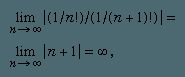

That condition—convergence for every single value of x —isn’t just a nice-to-have. It’s the difference between a function that lives forever and one that breaks down halfway through.
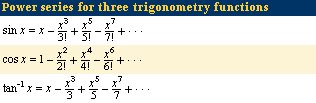
When you look at the big picture, most of the functions you actually use in the real world fit into this box. They can be rewritten as power series. But there’s a catch. They don’t always do it everywhere.
The Interval Rule
You have to look for an interval. Inside that zone? The series works perfectly. Outside of it? It diverges. It explodes. It stops making sense.
See Click Here to see full-size table
Most functions you encounter in calculus or physics will have a specific range where this representation holds true. It’s not magic. It’s just math defining its own boundaries.

When Standard Series Fall Short
You might assume that if a power series converges for every x, you’re home free. The math checks out. The limit exists. But here is the catch: convergence speed matters more than mere existence. If the series converges slowly for certain values of x, you are looking at calculating hundreds, even thousands, of terms just to get a usable approximation. That is not useful. That is tedious. It turns a theoretical tool into a computational nightmare.
Instead of sticking with raw powers of x, mathematicians often shift the center of the series. They use powers of (x − c ). Here, c is a value close to the x you actually care about. This small adjustment can dramatically accelerate convergence. The further x is from zero, the more beneficial this shift becomes. It is not magic. It is just better alignment with the function’s behavior.
Beyond Approximation: Constants and Equations
Power series are not just for approximating functions near a point. They are workhorses for calculating fundamental constants. Consider π. Or the natural logarithm base e. These are not finite decimals. You cannot write them all down. Power series provide the mechanism to calculate them to any desired precision.
But the utility extends even further. Differential equations, which describe everything from population growth to heat transfer, often yield to power series solutions. When a closed-form solution is elusive, expanding the unknown function into a series allows you to solve for coefficients term by term. It is a way of breaking an intractable problem into manageable algebraic steps.
“The choice of center c determines efficiency. A poor choice slows convergence. A good one makes the series nearly instantaneous.”
This approach transforms abstract calculus into practical computation. It allows engineers and scientists to model complex systems without needing exact, closed-form answers at every step. The series becomes a proxy for reality, accurate enough for the task at hand.
Why This Matters for Learners
Students often memorize the Taylor series formula for e^x or sin(x) centered at zero. They apply it blindly. The real skill lies in recognizing when to shift the center. If you are approximating e^x at x = 5, a series centered at c = 5 will converge much faster than one centered at c = 0. You are not just plugging in numbers. You are optimizing the process.
Parents and lifelong learners should see this as a lesson in efficiency. Theory gives you the framework. Practice teaches you which tools fit which problems. Power series are flexible. They adapt to the context. The key is understanding the underlying mechanics so you can choose the right c for the job.
Does the math ever feel disconnected from reality? Sometimes. But when you see a series rapidly converging to π or solving a differential equation that models a physical system, the abstraction collapses into utility. It becomes a tool. A reliable, powerful tool.
The limitation is never the math itself. It is our willingness to adapt the method to the problem. Shift the center. Speed up the convergence. Get the answer faster. The rest is just calculation.