This week’s scientific landscape is defined by massive leaps in human exploration and significant, controversial shifts in environmental policy and climate patterns. From NASA’s historic moon mission to the drying landscapes of the American West, the following report summarizes the most critical developments.
🚀 NASA’s Artemis II: A Historic Leap for Humanity
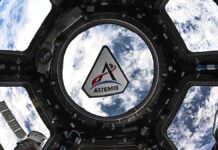
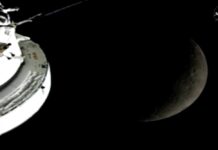
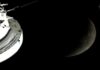
NASA’s Artemis II mission has officially begun its journey, marking a monumental milestone in space exploration. Last Thursday, the spacecraft departed Earth orbit, carrying four astronauts who are the first humans to leave Earth’s orbit in over five decades.
Today marks a pivotal moment for the mission: a historic lunar flyby. If successful, this maneuver will place these astronauts further from Earth than any human has ever traveled, paving the way for future long-term lunar habitation.
️ Environmental Policy: Oil Drilling and Endangered Species
In a controversial move, the Endangered Species Committee has voted to exempt oil and gas drilling in the Gulf of Mexico from the protections of the Endangered Species Act (ESA).
The National Security Argument
The decision was prompted by a request from Secretary of Defense Pete Hegseth, who argued that the exemption is necessary for national security to mitigate ongoing litigation regarding energy production.
Why This Matters
The Gulf of Mexico is a vital economic engine, producing roughly 15% of the nation’s crude oil—about 80 million gallons per day. However, this industrial activity carries immense ecological risks:
– Historical Precedent: The 2010 Deepwater Horizon spill released 130 million gallons of oil, devastating marine life.
– Species at Risk: The spill was linked to the deaths of up to 200,000 sea turtles and a 22% decline in the population of the endangered Rice’s whale.
– Regulatory Concerns: Critics point to the fact that the six-member panel voting on this exemption consists entirely of political appointees, raising questions about the balance between industrial interests and wildlife preservation.
🌲 The Forest Service Restructuring
The U.S. Department of Agriculture’s Forest Service has announced a massive organizational overhaul. The agency will move its headquarters from Washington, D.C., to Salt Lake City, Utah, while simultaneously shuttering nine regional offices and 57 research stations.
While leadership claims this “state-based model” will strengthen connections to local communities, critics warn of a significant “brain drain” and potential conflicts of interest. By moving headquarters to a state currently engaged in legal battles with the federal government over land control, the agency risks becoming more deeply embedded with industry lobbyists and local political interests.
🏔️ Western U.S. Water Crisis: The Shrinking Snowpack
The American West is facing a looming water and fire crisis driven by unusually low snowpack levels.
The Mechanics of the Crisis
In the West, snowpack acts as a “natural reservoir.” Ideally, snow accumulates on mountains during winter and melts slowly through the summer, replenishing rivers and reservoirs. This year, however, the system has failed:
– Rain vs. Snow: Warmer temperatures caused much of the winter precipitation to fall as rain, which runs off immediately rather than being stored as snow.
– Record Heat: An unprecedented heatwave in the Southwest in March further depleted existing snow levels.
– Climate Connection: Experts note that climate change is making these extreme heat events roughly four times more likely.
The Consequences
- Water Scarcity: The Colorado River Basin is in dire straits, with more water allocated to states than is actually available in the basin. This could lead to critical drops in Lake Powell, potentially impacting both water supplies and electricity generation.
- Wildfire Risk: With the ground dry and mountains lacking moisture, many regions are “primed” for devastating wildfires.
🚗 The Physics of Traffic: Why Cars Always Catch Up
Ever wonder why the car you just passed always seems to pull up next to you at the next red light? A new study published in Royal Society Open Science suggests it is a combination of Newtonian physics and cognitive bias.
Professor Conor S. Boland calls this the “Voorhees law of traffic” (referencing the relentless pursuer from Friday the 13th ). The phenomenon occurs because:
1. Cycle Timing: If red lights are long, a faster car has plenty of time to close the gap before the light turns green.
2. Selective Memory: We tend to notice when we are caught, but our brains ignore the many times we pass a car and never see it again.
Summary: From the successful launch of Artemis II to the critical depletion of Western snowpacks and controversial shifts in energy policy, science this week highlights the ongoing tension between human progress, economic necessity, and environmental stability.