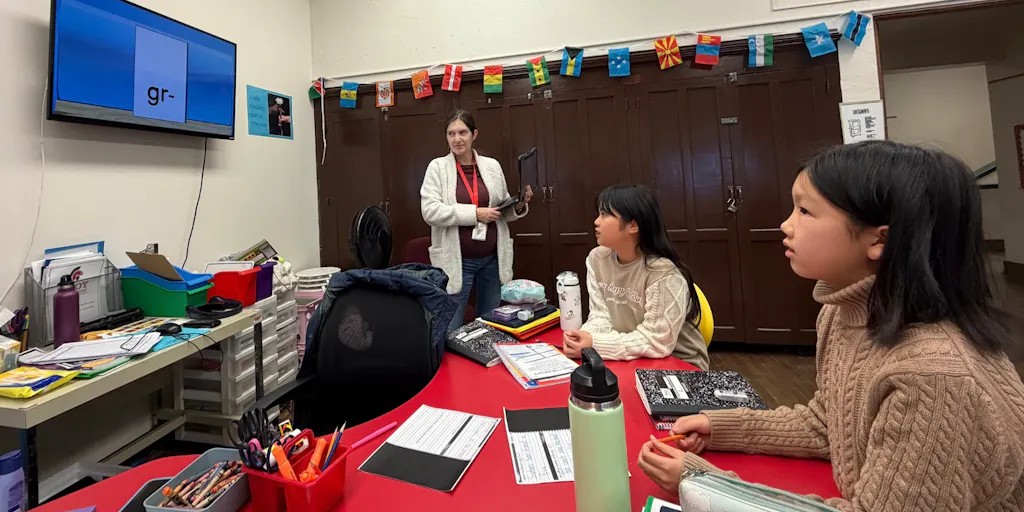
For many children, elementary school is a complex balancing act of mastering multiplication tables, navigating social dynamics, and learning to read. For students who are simultaneously learning English as a second language, these challenges are compounded by the need to decode a new linguistic landscape. This dual burden often leads to significant literacy gaps, a problem exacerbated by the educational disruptions of the pandemic.
In Troy City Schools, a public district located about an hour north of Cincinnati, administrators and educators have implemented a targeted strategy to reverse this trend. By adopting the Orton-Gillingham approach across all elementary campuses, the district is not only improving test scores but also addressing the social-emotional struggles that often accompany language barriers.
The Challenge: Fragmented Instruction and Post-Pandemic Gaps
Troy City Schools serves approximately 4,000 students, with roughly 3% identifying as English learners (ELs). Their primary languages include Spanish, Ukrainian, and Japanese—the latter largely due to a local automotive manufacturer that employs staff from Japan. While this percentage is lower than the national average of 11%, the impact on these students is profound.
Federal data consistently shows that English learners lag behind their peers in achievement scores, with little improvement seen over the last two decades. In Troy, the pandemic widened these disparities. Sarah Walters, a literacy instructional support specialist for the district, noted that students were experiencing high levels of frustration and withdrawal.
“We were seeing a lot of student frustration and wanting to give up,” Walters recalls. “Students being very withdrawn, those social-emotional impacts.”
Prior to 2020, English language instruction in the district was inconsistent and fragmented. Recognizing that phonics—the understanding of letter sounds—was a major hurdle, district leaders decided that a uniform, evidence-based approach was necessary to ensure equitable learning opportunities.
The Solution: A Multi-Sensory Approach
After three years of planning and securing funding through post-COVID relief grants and local budget allocations, Troy City Schools rolled out a comprehensive training program. The initiative certified 116 staff members —including every elementary teacher, principal, intervention specialist, and paraprofessional—in the Orton-Gillingham method.
This instructional approach is distinct because it is multi-sensory. It integrates movement, touch, and visual aids to help students decode words. For example:
* Students might use flashcards for visual reinforcement.
* They may tap their fingers on each letter as they spell out a word to connect sound with physical action.
* Lessons include the history and origin of words, helping students understand why certain words are spelled the way they are, rather than just memorizing rules.
This method is particularly effective for English learners because it demystifies irregularities in the language. Walters explains that students no longer hear, “That’s just the way it is,” when encountering “red words” (words that do not follow standard phonics rules). Instead, they are given tools to understand and decode them.
Early Results and Community Impact
The response from educators has been overwhelmingly positive. Danielle Romine, the district’s director of Elementary Teaching and Learning, noted that once teachers experienced the method’s efficacy, demand for training spread rapidly.
The data supports this enthusiasm:
* District-wide proficiency: Third-grade reading proficiency rose from 56% in 2021-22 to 81% in 2023-24, surpassing pre-pandemic levels.
* Target goals: Concord Elementary, one of the district’s campuses, far exceeded state targets for English proficiency among multilingual students.
* Individual gains: Teachers report dramatic improvements, such as two Japanese students who began conversing in English by December after arriving in September, and another student whose phonics diagnostic score increased by 38 points in the same period.
Looking Beyond the Classroom
The success in Troy City Schools has implications that extend beyond immediate test scores. For many English learners, particularly those from international families, time in the U.S. may be temporary. Ensuring they achieve grade-level reading proficiency quickly is crucial for their long-term academic success in subjects like math and science, regardless of whether they remain in the U.S. or return to their home countries.
“We want students to have success across math, science, everything,” Walters says. “So it’s important that we get them up to speed as quickly as possible, because those long-term impacts could really be harmful for them. That early literacy is key.”
With the district’s specialists now certified to train educators in other districts, Troy City Schools aims to share this model with the broader community. By prioritizing early, multi-sensory literacy instruction, the district is proving that targeted support can help English learners not just catch up, but thrive.