Critical thinking is not just a buzzword found in corporate HR manuals or high school syllabi. It is a functional skill. Specifically, it is the ability to dissect topics using logic and reason. You do not take things at face value. You test them. You break them down to see how they fit together. This process allows you to form your own conclusions instead of accepting someone else’s narrative as absolute truth.
When you apply this skill, you understand issues more deeply. You put matters into question before declaring victory. You study the evidence. You look for flaws. You build a case. Without it, you are just an echo chamber.
Critical thinking does not limit you to accepting or rejecting a new procedure outright. It forces a deep evaluation before you act.
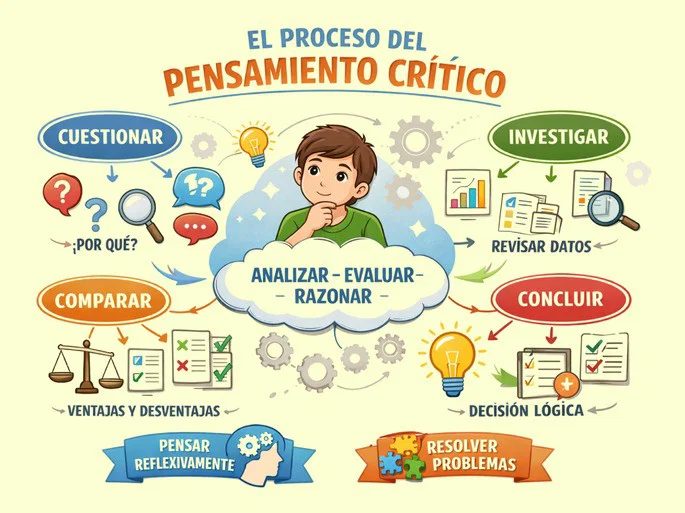
Consider a workplace scenario. A company introduces a new workflow or software. The lazy approach is to nod along or complain immediately. The critical thinker digs in. They ask why the change is happening. They look at the data supporting the decision. They weigh the pros and cons. They do not just accept the new procedure. They evaluate its merit. This same logic applies to everything. News headlines. Social media trends. Personal decisions. You stop being a passive consumer of information. You become an active analyst.
Critical thinking is less about being “smart” and more about being autonomous. It gives you the tools to make decisions without relying on external validation. People who possess this skill set are generally more reflective, confident, and resistant to manipulation.
This isn’t just a soft skill. It’s a hard asset for your career and academic life. Employers and universities value individuals who can navigate complexity without needing hand-holding. But what does this actually look like in practice? And how do you build it?
The Core Mechanics of Critical Thinking
You don’t just “have” critical thinking. You practice it through specific behaviors. Here are the key components:
- Pursuing Objectivity: This means stripping away personal bias. You aren’t looking for information that confirms what you already believe. You are looking for verifiable facts. If an opinion isn’t backed by data, it doesn’t count.
- Observation: You can’t solve a problem you haven’t accurately identified. Observation is the first step. It’s about seeing things as they are, not as you wish them to be.
- Analytical Capacity: This is where the heavy lifting happens. You break down events or ideas. How did they happen? What caused them? You link these facts together to build a logical explanation. It’s about connecting the dots, not just collecting them.
- Curiosity: A critical thinker asks questions. Why? How? What if? This curiosity drives the search for information, which leads to knowledge, which fuels the critical spirit.
- Reflection: You don’t rush to a conclusion. You think about the topic. You turn it over in your mind. You sustain your conclusions with real evidence. Reflection is the filter that keeps your reasoning honest.
Why This Skill Matters in Daily Life
The utility of critical thinking extends far beyond the classroom. It impacts every major decision you make.
Personal Growth
Developing this mindset is a marker of maturity. It signals that you are actively growing as a person. In the workplace, this trait is highly sought after because it suggests you can handle responsibility without constant supervision.
Boosting Creativity
People often mistake critical thinking for being rigid or negative. It’s not. Creativity is about thinking differently. Critical thinking provides the structure for that difference. By analyzing causes and effects, you uncover new angles. Reflection and curiosity allow you to step outside conventional boundaries.
Improving Decision-Making Criteria
Have you ever bought a house or changed jobs and immediately regretted it? Critical thinking reduces those errors. It forces a detailed analysis of the situation. In a professional context, this leads to better strategic vision. You aren’t just reacting; you’re calculating outcomes.
Fighting Misinformation
We live in an era of fake news. Critical thinking is your shield. When you encounter a dubious story, you don’t accept it at face value. You check other sources. You compare. You examine. You differentiate truth from manipulation. This skill is no longer optional. It’s essential for navigating modern media.
Increasing Productivity
Analysis leads to efficiency. When you think through a process, you spot inefficiencies. You find better ways to do things. This isn’t just about working harder. It’s about working smarter.
Conflict Resolution
Disagreements are inevitable. Critical thinking helps you understand the perspectives of all parties involved. By analyzing the root of the conflict rather than just the symptoms, you can facilitate decisions that benefit everyone. It moves you away from emotional reactions toward logical solutions.
Applying This to Your Routine
You don’t need a degree in philosophy to start. You just need to change how you approach information.
- Pause before reacting. When you see something shocking or exciting, wait. Let the initial emotion pass.
- Check your sources. Who said this? What is their agenda? Is there corroborating evidence?
- Ask “Why?” repeatedly. Don’t settle for the first explanation. Dig deeper.
- Consider the opposite. If you believe X, what would prove you wrong? Actively seek out arguments that challenge your view.
This isn’t about being cynical. It’s about being clear-eyed. It’s about taking ownership of your own mind.
The world doesn’t reward those who simply accept information. It rewards those who process it. Start small. Question one thing today. Then another. The habit builds on itself.
You’ll find that the noise of the world gets quieter. And your own voice gets louder.