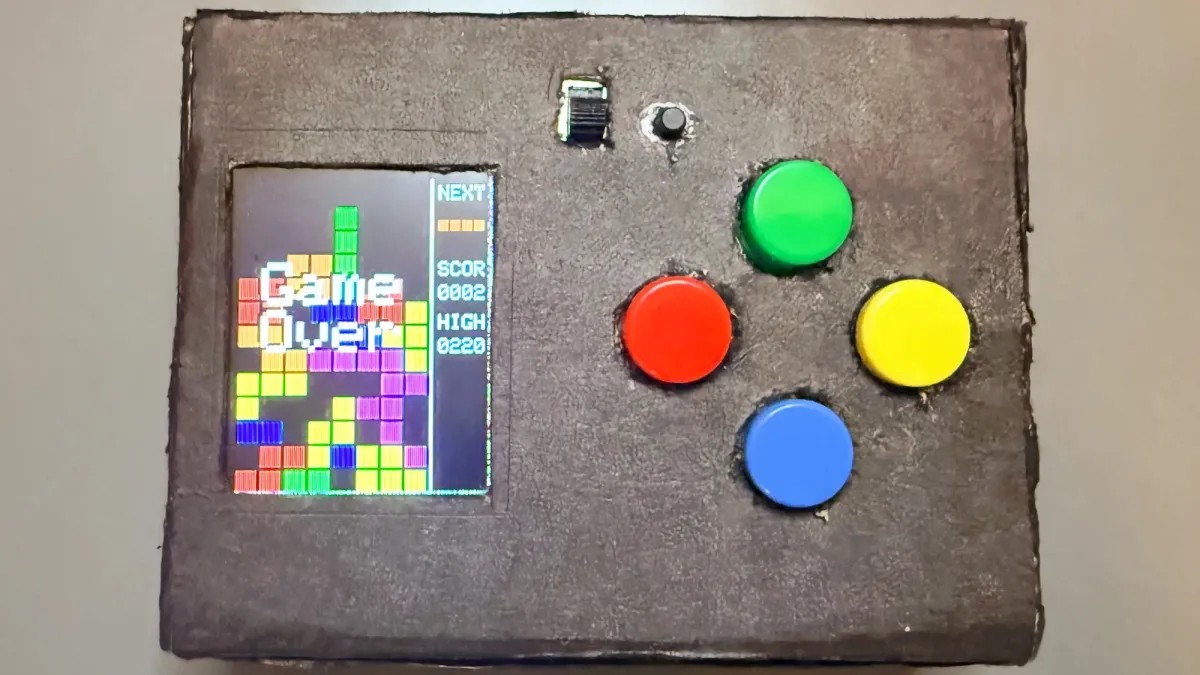
A software writer and hobbyist, William Gaspar, recently completed a project demonstrating that high-tech gaming doesn’t require expensive materials: he built a fully functional Tetris (and Snake) console inside a cardboard box. The project highlights a growing trend in DIY electronics where affordability and accessibility trump polished aesthetics.
The Core Components
The device relies on an Arduino computer powered by an ATmega328P single-chip microcontroller and a 1.8-inch color LCD screen. Gaspar optimized the system for low power consumption by running the microcontroller at 8 MHz instead of the typical 16 MHz. This allowed the entire setup to operate efficiently on just three AAA batteries. The code and detailed construction instructions are freely available on GitHub, making replication accessible to anyone with basic electronics knowledge.
Why Cardboard?
Cardboard enclosures are gaining traction among DIY enthusiasts, particularly for projects in development or casual builds. Gaspar jokingly dismissed speculation about using a specific brand of soda box by claiming the “zero calories” printed on the side refer to the box itself.
The Broader Trend
This project underscores a shift in how people approach technology. Rather than waiting for or paying for commercial products, more individuals are embracing DIY solutions. This trend is driven by factors such as cost savings, creative expression, and the desire to understand technology at a deeper level. The availability of open-source hardware platforms like Arduino further lowers the barrier to entry, enabling anyone to build custom devices with minimal investment.
The Tetris console in a cardboard box serves as a playful yet compelling example of how innovation can thrive outside traditional manufacturing channels.