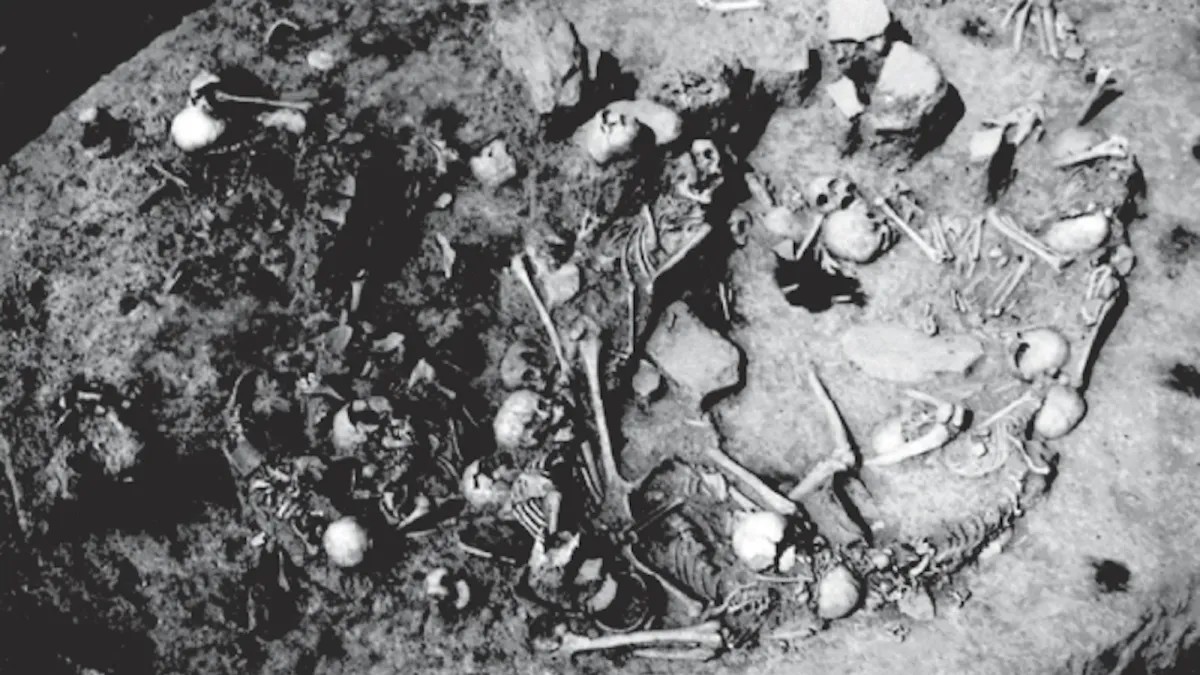
Recent excavations at the Gomolava archaeological site in northern Serbia have uncovered one of the largest known Iron Age mass graves, containing the remains of at least 77 individuals. The victims, dating back over 2,800 years, were overwhelmingly women and children, presenting a disturbing glimpse into the brutal realities of Early Iron Age Europe. This discovery, detailed in Nature Human Behaviour, challenges assumptions about prehistoric violence and suggests a deliberate, ritualistic act intended to assert dominance.
Unexpected Genetic Diversity
Unlike typical mass graves from this period – which often contain the remains of closely related individuals, suggesting familial attacks – genetic analysis revealed that the victims at Gomolava were largely unrelated. This finding is significant because it refutes the assumption that these deaths were a simple byproduct of warfare or localized conflict. Researchers found no evidence of kinship even several generations back, indicating the victims were deliberately selected from diverse backgrounds.
Predominantly Female and Young Victims
The demographic breakdown of the grave is striking: approximately 87% of the deceased were female, with 40 being children between one and twelve years old, and another 11 adolescents. Only 24 adults and a single infant (male) were identified. This skewed ratio suggests the killings were not random, but rather targeted women and children in a specific, purposeful manner.
Ritualistic Treatment of Remains
Despite the violent deaths – evidenced by signs of bludgeoning and stabbing – the bodies were not hastily discarded. Instead, they were buried with care in an abandoned semi-subterranean house, accompanied by offerings. Bronze jewelry, ceramic vessels, and the remains of a butchered calf were found alongside the corpses, demonstrating that the perpetrators took deliberate time and effort to complete the burial. This is unusual for prehistoric mass graves where looting or careless disposal is more common.
Symbolic Violence and Power Dynamics
Archaeologists believe the mass murder served as a warning to neighboring communities, signaling dominance over land and resources. The intentional targeting of women and children may have been a calculated move to sever family lineages and weaken rival groups. The sheer brutality combined with the ritualistic treatment suggests a desire to not just eliminate opposition, but also to send a clear message about the consequences of resistance.
Implications for Understanding Early Iron Age Europe
The Gomolava findings underscore the extreme violence that accompanied the re-establishment of control in the Iron Age. Rather than a chaotic consequence of warfare, these killings appear to have been a carefully orchestrated event designed to destabilize competitors and assert power. The discovery highlights a disturbing pattern of systematic violence, reminding us that ancient societies were not always defined by peaceful coexistence.
The mass grave at Gomolava serves as a chilling reminder that even in periods of recovery and expansion, violence could be a deliberate tool for domination, leaving an indelible mark on the landscape and the human psyche.