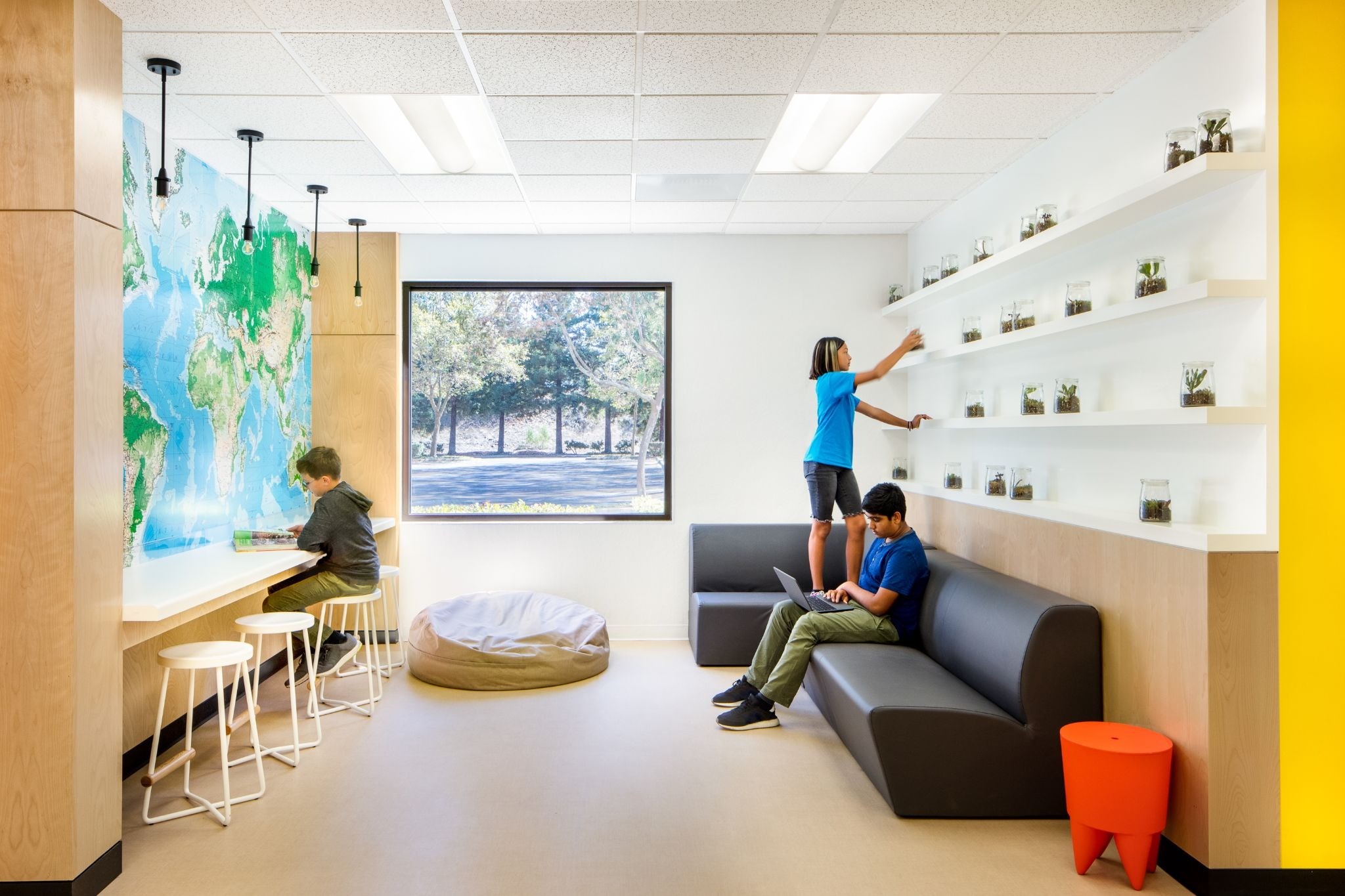
For most children, school is not just a place of study; it is the primary environment where they spend their formative years. From kindergarten through high school, students spend roughly 15,000 hours within school walls. Yet, despite the massive impact these spaces have on human development, most school architecture remains trapped in a “factory model”—a relic of an era focused on industrial efficiency rather than individual growth.
Traditional schools often feature rows of desks, windowless hallways, and rigid structures that prioritize obedience over creativity. This creates a fundamental mismatch: we claim to value critical thinking and individuality, yet we confine students to environments that discourage both.
To bridge this gap, a new design philosophy called Baaham offers a way to transform schools from isolated institutions into vibrant, community-integrated hubs of well-being.
The Baaham Principle: Reciprocity in Design
The term Baaham comes from the Urdu word for “working in tandem.” It represents a reciprocal relationship: we shape our spaces, and then our spaces shape us.
In a Baaham-inspired school, design is not about choosing paint colors or furniture styles; it is about understanding the deep connection between physical environments and human behavior. This approach moves away from the “concrete box” model and focuses on three core pillars: Community Integration, Variety, and Wellness.
1. The School as a Community Pillar
A traditional school is often a closed circuit, disconnected from the world outside its gates. A Baaham school, by contrast, views the entire neighborhood as a classroom.
- Leveraging Local Assets: Instead of building redundant facilities, these schools tap into existing community resources. Students might conduct research at a local library, intern at a nearby business, or use a municipal science lab.
- Symbiotic Relationships: The school becomes a resource for adults as well. By hosting tech workshops, career seminars, or even providing housing for senior citizens, the school fosters intergenerational learning.
- Social Impact: When schools host community events, provide health clinics, or offer food pantries for busy parents, they become essential social anchors. This increased presence of parents and neighbors leads to higher levels of community support and advocacy for the school.
2. Designing for Variety and Agency
One of the greatest failures of modern school design is the assumption that every student learns the same way. The Baaham model rejects the “one-size-fits-all” classroom in favor of diverse learning environments.
Adaptive Learning Spaces
Rather than being forced into a single setting, students are given the agency to choose environments that suit their specific needs:
– Quiet Nooks: For students who require solitude to focus.
– Social Arenas: For collaborative, group-based projects.
– Flexible Layouts: Spaces that allow for movement, whether sitting on the floor, working at a standing desk, or utilizing digital vs. analog tools.
By providing variety, the design prevents the “monotony grind” of traditional schooling. Even the physical movement through the school is reimagined—replacing straight, efficient hallways with meandering paths that allow for spontaneous social interaction and a sense of exploration.
3. Prioritizing Biological Wellness
A school’s physical atmosphere directly dictates the cognitive and emotional performance of its occupants. Baaham design prioritizes “emotional ergonomics”—the way a space makes a person feel.
- Nutritional Environments: Instead of massive, intimidating cafeterias that can reinforce social hierarchies, dining areas are broken into smaller, cozy spaces. Design elements also include subtle “nudges,” such as displaying nutritional information to encourage healthier eating.
- Natural Light and Air Quality: To combat the drowsiness often found in windowless classrooms, Baaham schools utilize large windows, skylights, and views of nature. Advanced systems can even monitor carbon dioxide levels, automatically opening windows to ensure fresh air and mental alertness.
Conclusion
The transition from a factory-style school to a Baaham-inspired environment represents a shift from seeing students as “units to be processed” to seeing them as “individuals to be nourished.” By integrating schools into the fabric of the community and designing for human biological needs, we can create spaces that don’t just house education, but actively inspire it.
The bottom line: When we design schools to respect the rhythms of human life, we move closer to an educational system that fosters curiosity, confidence, and genuine happiness.