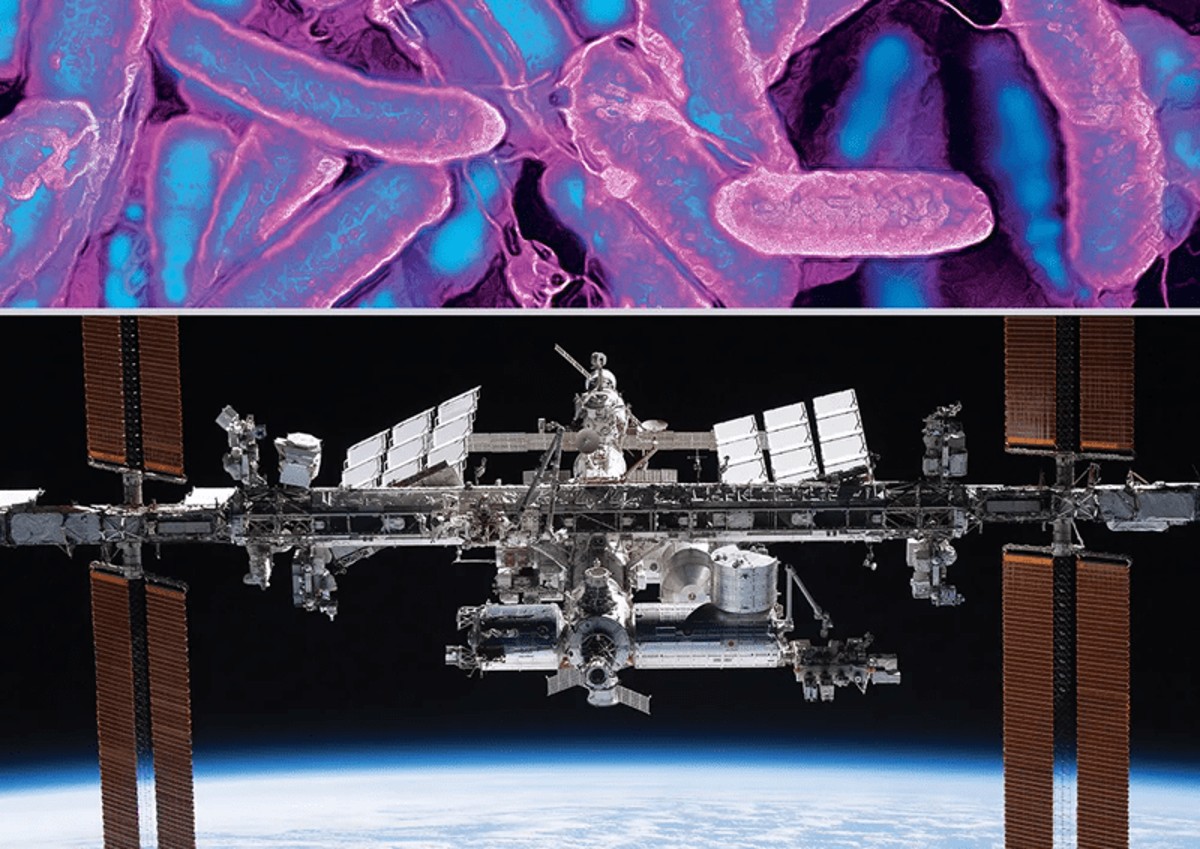
Microgravity environments, such as those found in space, accelerate viral evolution, resulting in more effective infection mechanisms. A new study published in PLOS Biology demonstrates that bacteriophages—viruses that infect bacteria—become significantly better at breaching bacterial defenses after exposure to the unique stressors of low gravity. This finding has implications for both fundamental microbiology and potential biomedical applications.
The Experiment: Viruses in Orbit
Researchers sent samples of the common bacteriophage T7, along with its host Escherichia coli bacteria, to the International Space Station (ISS). In parallel experiments conducted on Earth, viruses infected bacteria within 2-4 hours. However, in the microgravity environment of the ISS, initial infection rates were slower, taking over 4 hours. This delay was likely due to both microbes adapting to the unfamiliar conditions.
Adaptation and Increased Virulence
Once adapted, the space-borne viruses exhibited a heightened ability to infect. The key was subtle genetic mutations that reshaped the viruses’ outer membranes, improving their grip on bacterial cells. This effect was likely exacerbated by the reduced mixing in microgravity; on Earth, constant fluid motion facilitates viral-bacterial encounters. In space, the lack of this natural mixing forced the viruses to evolve more efficient attachment mechanisms.
Real-World Implications: Fighting Resistant Infections
The adapted viruses were then tested against a drug-resistant strain of E. coli responsible for stubborn urinary tract infections. The results were striking: the space-evolved viruses successfully killed the resistant bacterium, suggesting that environmental stressors can be leveraged to create more potent antibacterial agents.
“A simple microgravity experiment exposes these mutations that have much higher efficacy against pathogens,” states study author Srivatsan Raman of the University of Wisconsin–Madison.
The findings suggest that controlled exposure to extreme environments could be a viable strategy for engineering viruses capable of overcoming antibiotic resistance in bacteria. The study underscores the dynamic interplay between microbes and their environments, and how even well-studied organisms like T7 can reveal new insights under novel conditions.
This research highlights the potential for space-based experiments to accelerate microbial evolution, ultimately leading to breakthroughs in combating bacterial infections.