For decades, a mystery lay buried beneath the foundation of one of Japan’s most significant historical sites. Today, advanced technology has finally solved it, revealing a profound connection between ancient Japanese religious architecture and the craftsmanship of the Korean peninsula.
The Mystery Beneath Asuka-dera
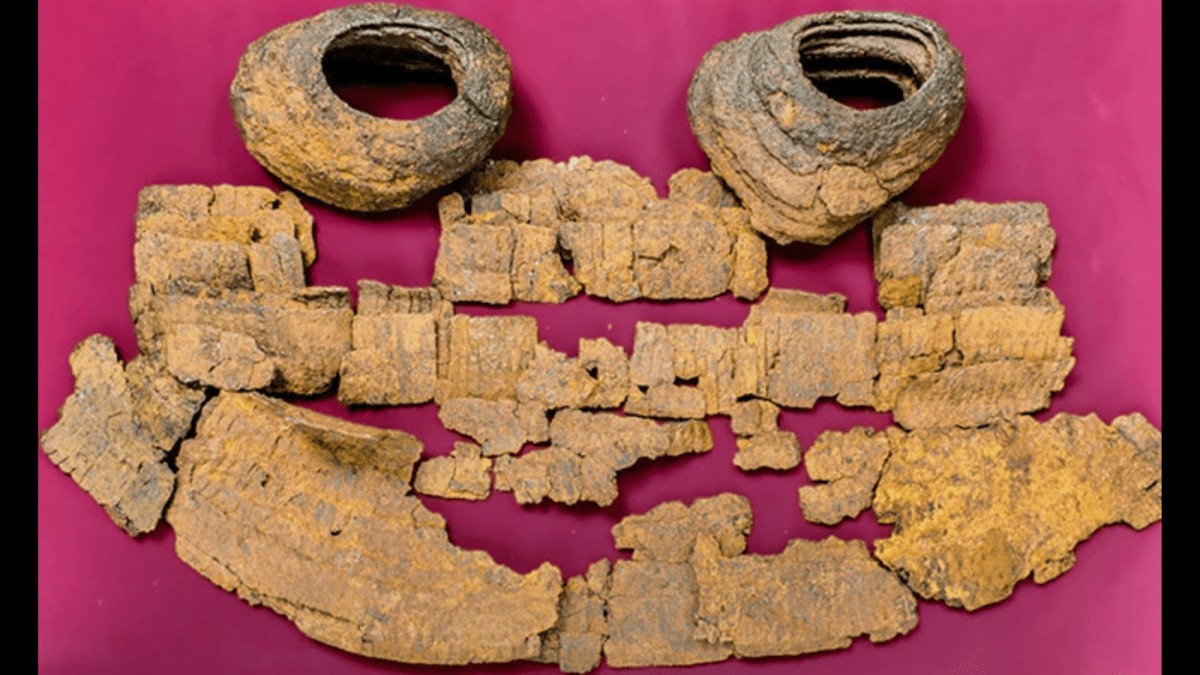
In 1957, archaeologists excavating the Asuka-dera Temple complex—located near modern-day Osaka—uncovered fragments of an ancient suit of armor beneath a pagoda’s foundation. At the time, the discovery was significant, but researchers lacked the tools to definitively identify its origin.
Asuka-dera holds immense historical weight; established at the dawn of the 7th century, it served as Japan’s first full-scale Buddhist temple. This period marked a monumental cultural shift in Japan as Buddhism began to flourish, brought to the islands by monks and emissaries from mainland China and Korea.
Technological Breakthroughs Reveal the Truth
The breakthrough came not from new excavations, but from modern science. Using X-ray and 3D imaging, researchers from the Nara National Research Institute for Cultural Properties were able to analyze the microscopic structure of the armor.
The results revealed a specific “lamellar” construction:
– Design: Small iron plates were interlaced with cords.
– Functionality: This method provided high-level protection while maintaining the flexibility needed for movement.
– Structure: The torso, shoulders, and upper arms were integrated into a single, shirt-like piece.
This specific method of construction mirrored armor found in Korea, but it wasn’t until recent years that the link became undeniable.
Connecting the Dots: From Korea to Japan
The definitive evidence surfaced when archaeologists compared the Japanese find with armor excavated between 2011 and 2014 at Gongsanseong Fortress, a historic site belonging to the Baekje Kingdom.
The Baekje Kingdom was one of the three major Korean empires that flourished for centuries before its decline in 660 CE. The similarities between the two sets of armor are striking:
1. Identical Craftsmanship: Both used the same interwoven iron scale technique.
2. Chronological Alignment: Inscriptions on the Korean armor date it to approximately 645 CE, coinciding perfectly with the era of Asuka-dera’s construction in Japan.
Archaeologist Takehiro Hasumura confirmed these overlaps after examining the Gongsanseong specimens, providing the “smoking gun” that researchers had sought for nearly 70 years.
The Legacy of Cultural Exchange
This discovery does more than just identify an old piece of equipment; it illustrates how deeply interconnected ancient East Asia truly was. The presence of this armor suggests that when Buddhist monks and diplomats traveled from the Baekje Kingdom to Japan, they did not travel alone. They brought with them highly skilled artisans and armorers, effectively exporting Korean military technology alongside religious philosophy.
This movement of people and ideas helped shape the evolution of Japanese warfare, leading to the widespread adoption of keiko -style armor—a flexible, scale-based design that would become a staple for elite Japanese warriors.
This finding highlights that the spread of religion and culture in ancient East Asia was accompanied by a sophisticated exchange of technology and craftsmanship, fundamentally shaping the development of both Korean and Japanese societies.