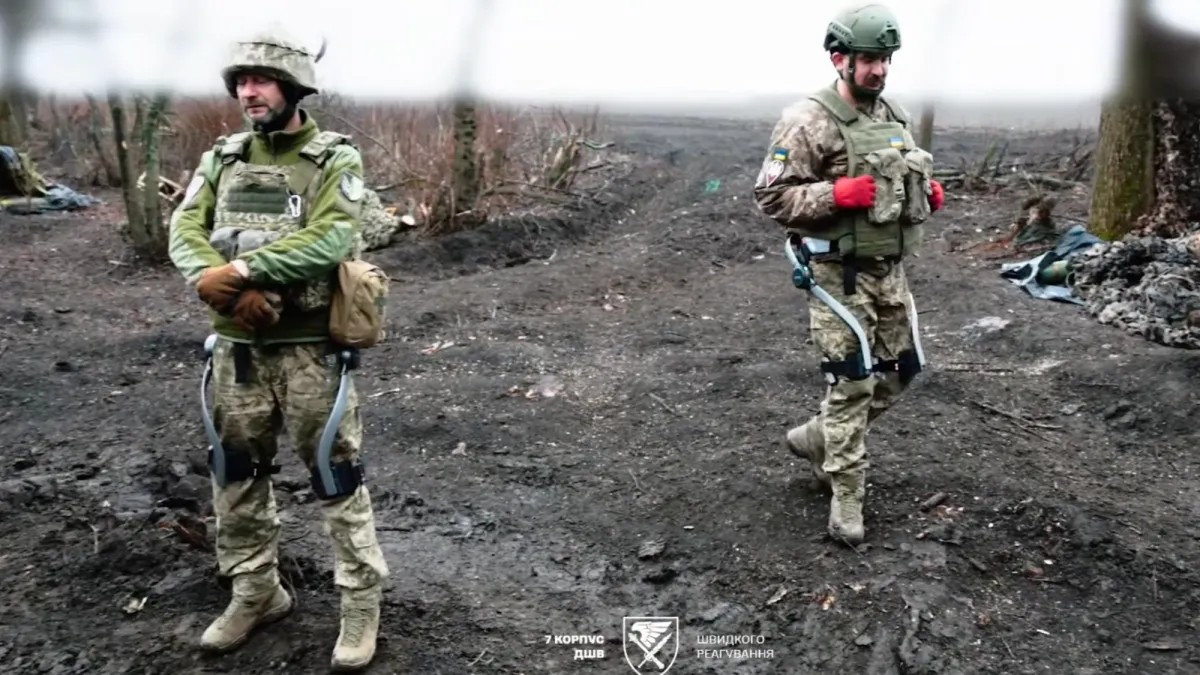
Ukraine’s armed forces are now field-testing powered exoskeletons, marking one of the first known instances of this technology being actively used in a live military conflict. The move comes after over four years of intense warfare, where soldiers face extreme physical strain from carrying heavy artillery and navigating challenging terrain.
Enhanced Endurance and Load Capacity
Footage released by Ukraine’s 7th Air Assault Corps shows soldiers equipping the exoskeletons within muddy trenches. The devices wrap around the waist and legs, supported by a back brace, and are designed to reduce leg muscle strain by up to 30%. This translates to easier handling of artillery rounds, which can weigh over 100 pounds each. Given that soldiers may load dozens of these rounds daily, reducing fatigue and injury risk is crucial.
Beyond load-bearing, the exoskeletons may enable soldiers to sustain speeds of up to 12 mph for extended distances (up to 10 miles), exceeding typical jogging speeds of 6–8 mph. Colonel Vitalii Serdiuk, Deputy Commander of the 7th Air Assault Corps, stated that test results confirm reduced fatigue, faster work rates, and prolonged combat effectiveness.
From Civilian Tech to Military Use
The deployed model is reportedly manufactured by Hypershell, a consumer exoskeleton company. The device weighs around 5.2 pounds and uses AI-driven algorithms to adjust to the wearer’s gait based on height, weight, and gender. It represents the first widely available consumer exoskeleton, priced starting at $800.
While Hypershell maintains that its technology is intended for civilian applications like outdoor recreation and mobility support, the company acknowledges limited control over how buyers use its products. The situation mirrors Ukraine’s early reliance on commercially available drones for military purposes.
Global Military Interest in Exoskeletons
Ukraine isn’t alone in exploring exoskeleton integration. The U.S. military has been testing the Soldier Assistive Bionic Exosuit for Resupply (SABER), while Russian forces are also evaluating exoskeletons for artillery loading. The trend highlights a growing recognition of exoskeletons as a potential force multiplier, despite their original design for civilian or medical use.
The shift from civilian applications to military use underscores the adaptability of modern technology. While manufacturers may not endorse military applications, the reality is that readily available tools can be repurposed for combat, blurring the lines between consumer goods and battlefield assets.
This development raises questions about the future of warfare, where physical endurance could become less of a limiting factor, and the ethical implications of repurposing civilian technology for lethal purposes.