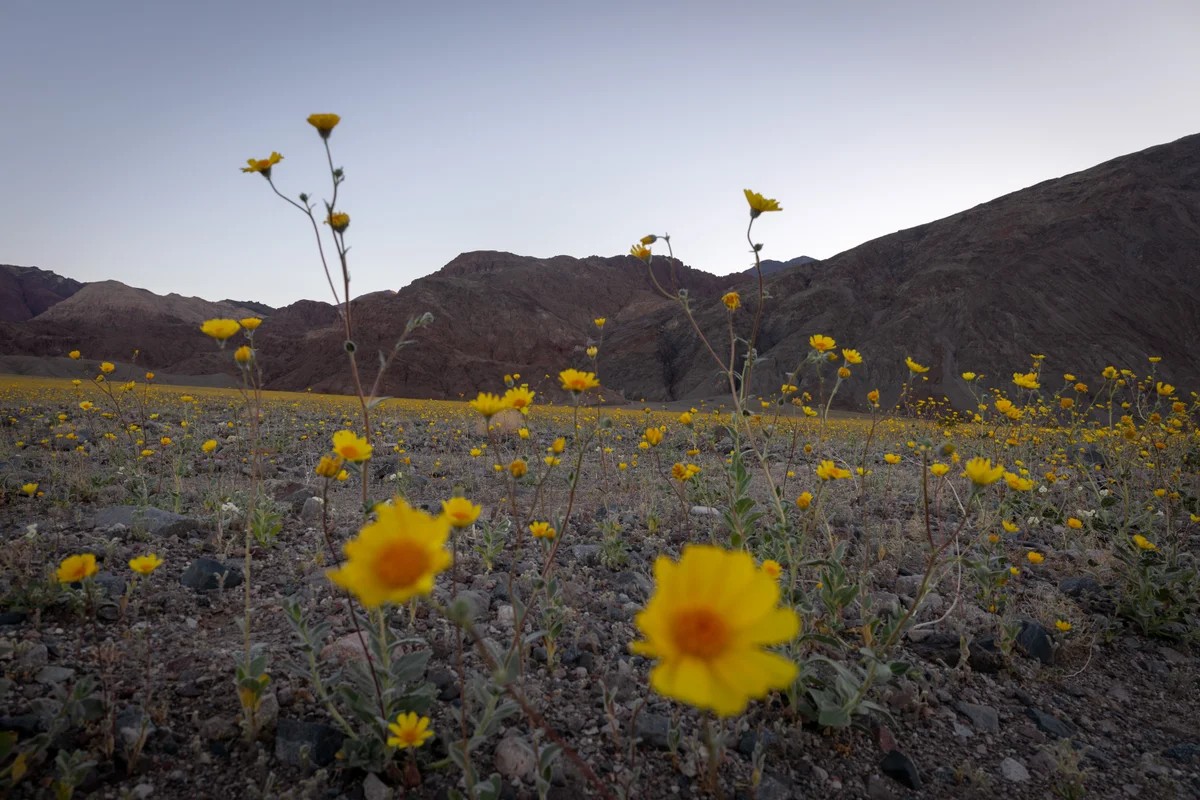
Death Valley, known for its extreme heat and arid conditions, is currently experiencing a spectacular wildflower bloom—the most vibrant display since 2016. The usually barren landscape is now covered in waves of golden and violet flowers, a striking contrast to its harsh reputation. This phenomenon, known as a “superbloom,” is a rare event that occurs roughly once a decade, captivating both scientists and visitors alike.
What Causes a Superbloom?
Wildflower blooms are annual in Death Valley, with species like the desert gold, wavyleaf paintbrush, grape soda lupine, and desert star commonly appearing. However, superblooms require specific conditions: well-spaced rainfall combined with gentle weather as winter transitions to spring. The National Park Service (NPS) explains that consistent moisture allows sprouts to mature without being destroyed by strong winds or extreme temperatures. Last year’s lack of rainfall and high heat resulted in a minimal bloom, making this year’s display even more remarkable.
Why This Matters
Superblooms are not just aesthetically pleasing; they highlight the resilience of life in extreme environments. These events demonstrate how plants adapt to survive in harsh conditions, waiting for the right opportunity to flourish. The rarity of superblooms also underscores the fragility of desert ecosystems and how quickly they can change in response to weather patterns.
When and Where to See the Bloom
The wildflowers are currently visible in the lower elevations of Death Valley and expected to last through mid-to-late March. Higher elevations will see peak blooms in April. The NPS encourages visitors to enjoy the flowers without picking them, ensuring that the spectacle can be appreciated by everyone.
This year’s superbloom serves as a reminder of nature’s power to surprise and thrive even in the most inhospitable places. It showcases the desert’s beauty and resilience while reminding us of the importance of preserving these fragile ecosystems.