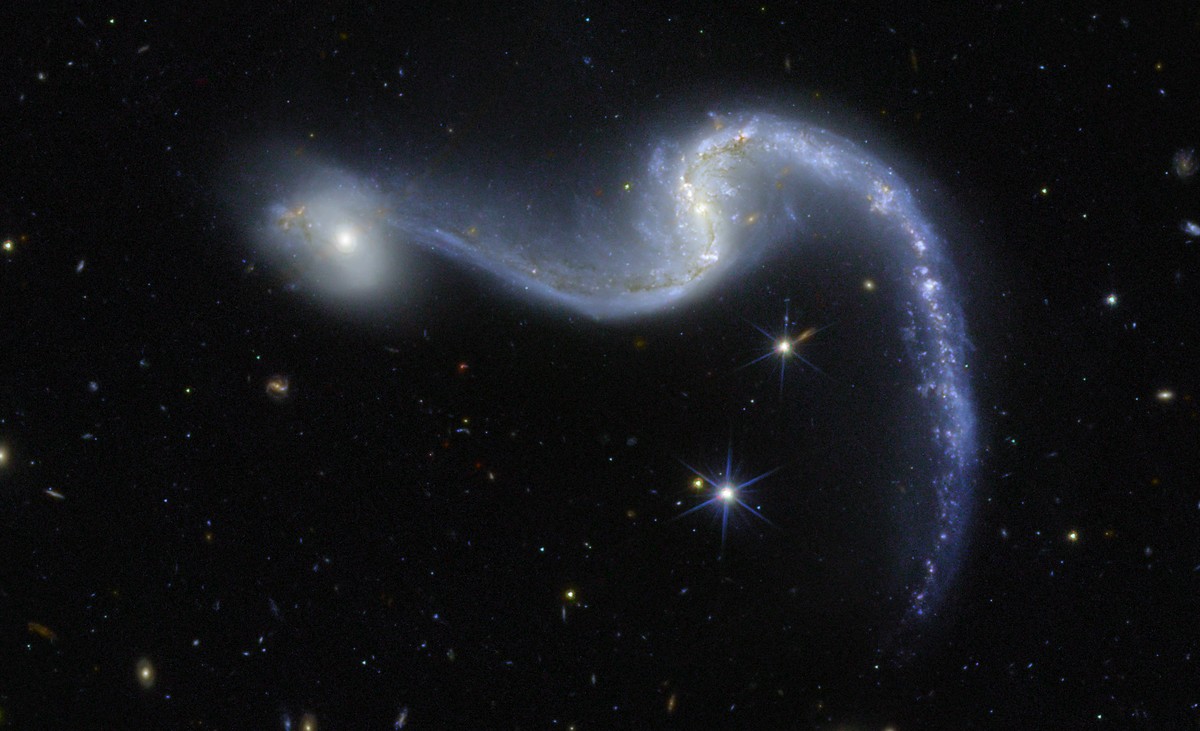
A new image from the European Space Agency’s Euclid telescope reveals a stunning spiral galaxy, NGC 646, at 392 million light-years from Earth. This is just one of billions of galaxies Euclid will map over its six-year mission, which began in 2023.
Why This Matters: Unveiling the Universe’s Secrets
Euclid’s primary goal isn’t just pretty pictures, though they are a welcome side effect. The telescope is designed to chart the universe’s expansion and the mysterious forces driving it: dark matter and dark energy. These phenomena make up roughly 95% of the universe, yet remain largely invisible to us. Understanding them is crucial for completing our picture of reality.
The Data Is Coming
The first major data release is expected next year, covering roughly 14% of Euclid’s full survey area. In the meantime, the team is sharing images like this one as a preview of the telescope’s capabilities.
An Optical Illusion: Two Galaxies in One View
The image also features PGC 6014, a galaxy that appears close to NGC 646 but is actually 45 million light-years nearer to Earth. This illustrates a key challenge in astronomy: distances are not always what they seem.
Looking Ahead
Euclid will observe galaxies as far as 10 billion light-years away, helping astronomers track how structures form and evolve over cosmic time. The insights gained could fundamentally alter our understanding of the universe’s past, present, and future.
By mapping the cosmos at this scale, Euclid is poised to revolutionize our knowledge of dark matter, dark energy, and the expansion of the universe itself.