


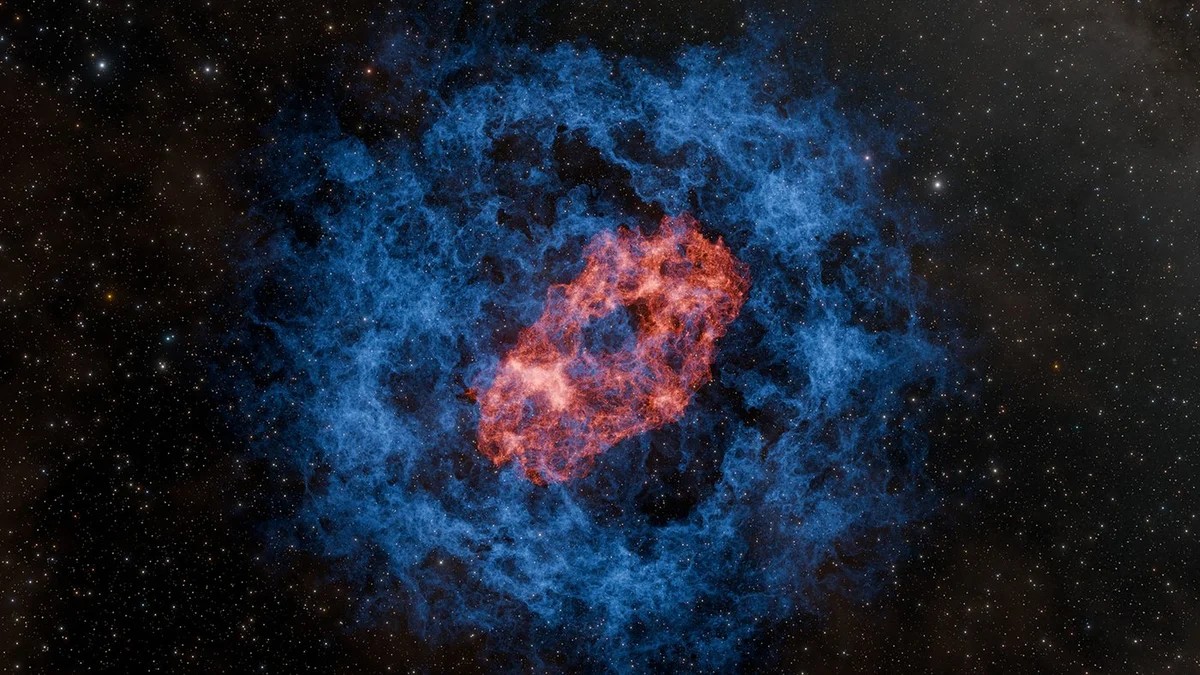
Astronomers believe they have observed a unique cosmic event that merges the characteristics of a supernova and a kilonova—a phenomenon never before confirmed. This potential “superkilonova” offers a new understanding of how massive stars die and what happens when neutron stars collide.
What Are Supernovae and Kilonovae?
Supernovae occur when massive stars exhaust their fuel and collapse, unleashing tremendous energy in a final, brilliant explosion. Sometimes, these explosions leave behind ultra-dense remnants called neutron stars. When two neutron stars spiral into each other, the collision triggers a kilonova —a violent, yet distinct event. Only one kilonova has been definitively observed to date.
The New Discovery
New research suggests a third, even more powerful type of explosion may exist. Observations from gravitational-wave detectors alongside global telescope data point toward this combined blast. According to Mansi Kasliwal, an astronomer at the California Institute of Technology, the evidence strongly indicates this superkilonova.
How It Might Happen
Unlike typical supernovae or kilonovae, this event likely began with a rapidly rotating massive star collapsing. Instead of forming one neutron star, the core split into two during a process called fission. These two newborn neutron stars then collided, generating a kilonova on top of the supernova.
Why It Matters
This discovery could redefine our understanding of stellar death and neutron star mergers. If confirmed, it would be the first observation of a superkilonova—a category of cosmic explosion previously theorized but never witnessed. As Kasliwal notes, “Nature is very creative, and when we attempt to unlock its mysteries, we should do so with eyes wide open!”
The existence of superkilonovae demonstrates that cosmic events are more diverse than previously thought, and further observations will be vital to understanding their frequency and impact on the universe.


