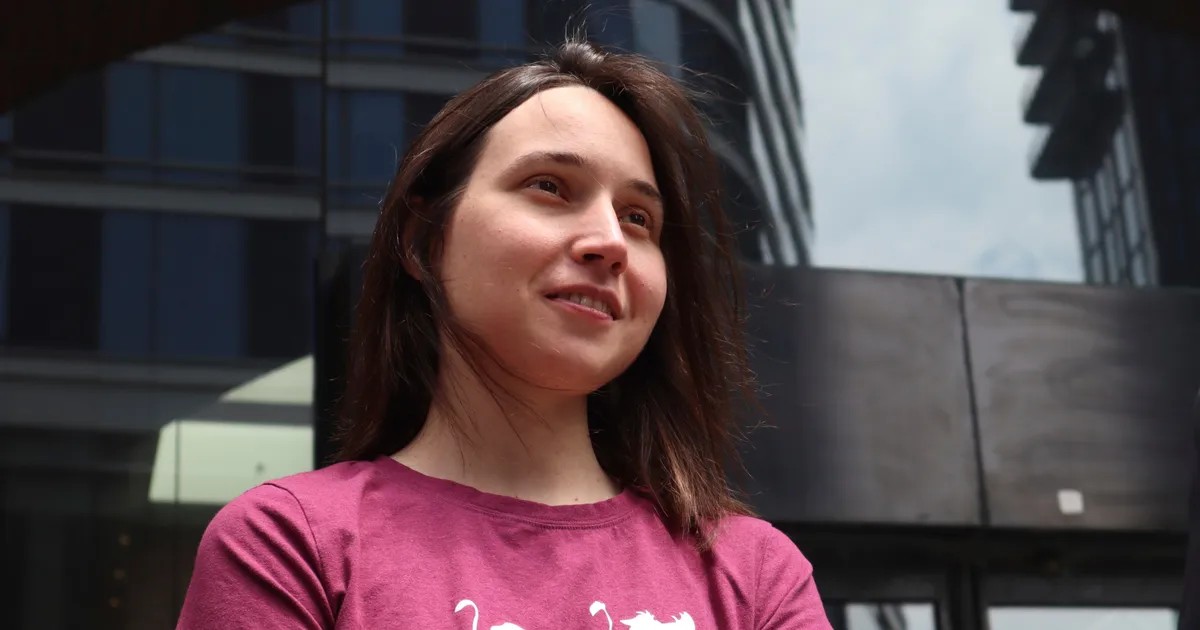
A U.S. District Court judge has ruled that federal customs officers acted unlawfully when they canceled the visa of Kseniia Petrova, a Russian-born scientist and Harvard University researcher. The cancellation stemmed from an incident involving the smuggling of frog embryos, but the court found that the officers exceeded their legal authority.
The Incident at Logan Airport
The legal dispute traces back to February of last year, when Petrova was returning to the United States from a vacation in France. During her trip, she had visited a specialized laboratory to obtain a package of frog embryo samples intended for her scientific research.
Upon arriving at Boston Logan International Airport, Petrova was intercepted at a customs checkpoint. Following an interrogation regarding the biological samples, immigration officials informed her that her visa had been canceled.
The consequences of this decision were immediate and severe:
– Petrova was detained by immigration officials in Vermont.
– She was subsequently transferred to an Immigration and Customs Enforcement (ICE) facility in Louisiana.
– She was forced to undergo a legal battle to regain her right to work and reside in the U.S.
A Ruling on Administrative Authority
In her written opinion, U.S. District Court Judge Christina Reiss determined that the cancellation of Petrova’s visa was “arbitrary and capricious.”
The core of the ruling rests on the specific limits of agency power. While Customs and Border Protection (CBP) officers have various enforcement capabilities, Judge Reiss noted that they possess limited authority to cancel visas. Crucially, the court found that they do not have the power to revoke a visa solely based on the suspected smuggling of biological samples.
“The undisputed facts reveal that Ms. Petrova’s visa was impermissibly canceled because of the frog embryo samples and for no other reason,” Judge Reiss wrote.
Context: The Complexity of Biological Research
This case highlights a growing tension at the intersection of international scientific collaboration and strict border security protocols.
For researchers, moving biological materials—even small samples like embryos—is a routine part of global science. However, these materials are strictly regulated due to biosafety and environmental concerns. Petrova maintained that she did not realize the samples required formal declaration and had no intent to bypass laws.
The ruling serves as a critical reminder that while border security is vital, administrative agencies must operate within the specific bounds of their legal mandates. Overstepping these bounds can result in significant disruption to academic research and the personal lives of scientists.
Current Status
Petrova has since returned to her laboratory at Harvard, having successfully petitioned a court earlier this year for the right to resume her work. Her attorney, Gregory Romanovsky, described Tuesday’s ruling as a necessary step toward correcting a profound administrative error.
In summary, the court has affirmed that customs officials cannot unilaterally revoke visas for the possession of biological samples, establishing a legal boundary for how immigration agencies handle scientific research materials at the border.