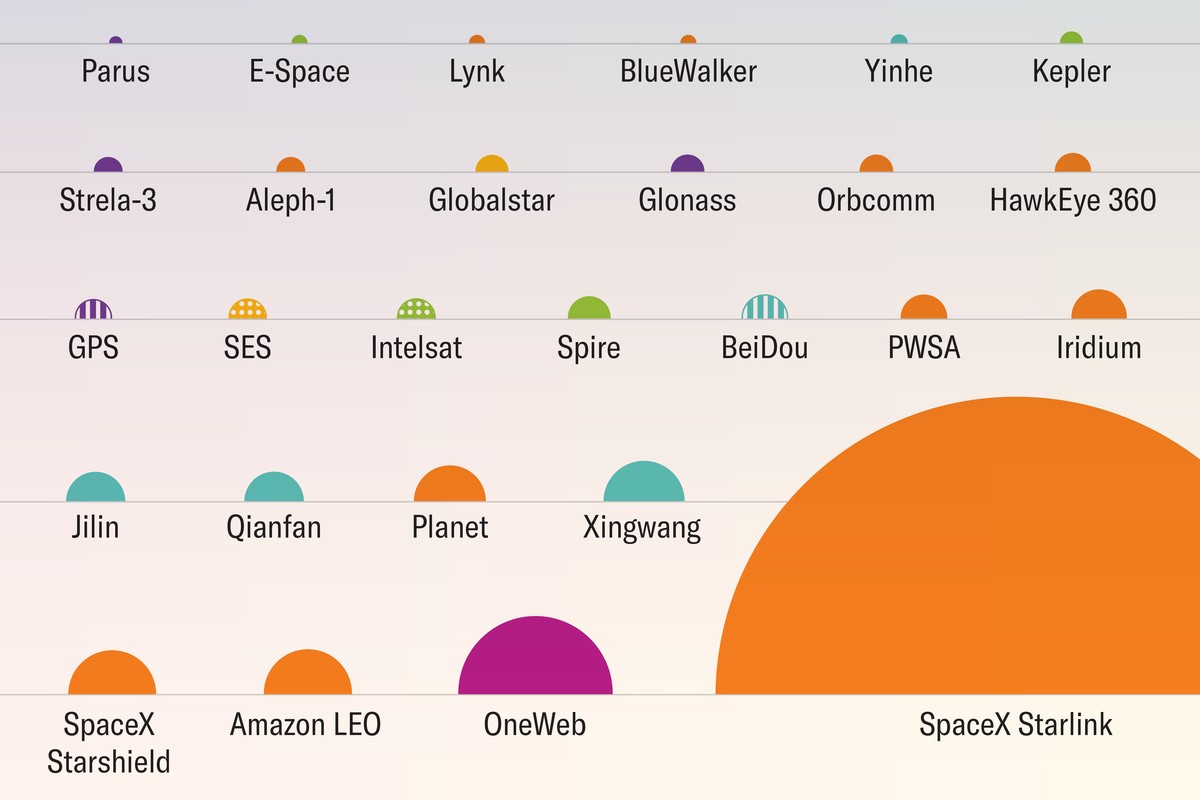
For decades, human presence in Earth orbit remained limited. Until recently, only a few thousand satellites circled the planet. But since 2019, with the launch of SpaceX’s Starlink constellation, that reality has fundamentally shifted. SpaceX has now deployed over 10,000 active Starlink satellites – roughly two-thirds of all objects currently orbiting Earth. This milestone marks a dramatic change in how we interact with space, and experts are still adjusting to the implications.
The Scale of Starlink’s Impact
The sheer scale of Starlink is unprecedented. What began as an ambitious project to deliver global internet access from space has quickly become a geopolitical force. Currently, over 10 million users rely on Starlink, from remote communities to conflict zones like Ukraine. SpaceX, and its CEO Elon Musk, now wield the ability to control internet access for entire regions.
This dominance hasn’t gone unnoticed: competitors like Amazon’s Kuiper (with 200 satellites launched of a planned 7,500) and Chinese government-backed constellations (Qianfan and Guowang aiming for 15,000 and 13,000 satellites, respectively) are racing to catch up. However, SpaceX remains the clear leader, leveraging its reusable Falcon 9 rocket to deploy satellites at an unmatched rate – up to 60 per launch.
Collision Avoidance and Orbital Safety
Maintaining this vast network requires constant vigilance. SpaceX satellites autonomously dodge collisions – performing an astonishing 300,000 maneuvers in 2025 alone. While collisions have yet to occur, experts worry it’s only a matter of time, especially as more constellations enter orbit. The risk of triggering the Kessler syndrome – a cascading chain reaction of debris rendering regions of orbit unusable – remains a concern.
Despite these risks, SpaceX has addressed some issues, like the 2024 incident where debris from a deorbited satellite landed on a Canadian farm. The company also identified and corrected the cause of an in-orbit satellite explosion in 2025. However, the long-term effects of burning up thousands of satellites in the atmosphere each day remain unknown.
The Impact on Astronomy
The expansion of mega-constellations also poses significant challenges to astronomy. Satellite interference is already disrupting observations, obscuring celestial objects. Studies suggest that with half a million satellites in orbit, nearly every image taken by ground-based or space-based telescopes would be affected. Experts warn that there’s “no place in the sky that won’t have any satellites.”
The Future of Space Traffic
SpaceX’s milestone of 10,000 satellites is just the beginning. The company plans to launch an additional million satellites for a new orbital AI data center using the Starship rocket. In total, over 1.7 million satellites are proposed worldwide.
Whether Earth orbit can sustain this level of traffic remains uncertain. Some believe millions of satellites are feasible, while others predict collisions will become inevitable beyond 100,000. As Victoria Samson of the Secure World Foundation notes, “I never would have thought we’d have constellations with thousands of satellites… So I don’t want to say ‘never.’”
Earth’s orbit is becoming increasingly crowded, and the long-term consequences of this rapid expansion remain to be seen. Managing this growing space traffic will be critical to ensuring that orbital access remains sustainable for future generations.